Memories of Michel Hardelay (31 years old in 1944), resident of Vierville
Vierville under occupation
See also various testimonies: Edmond SCELLES, Fernand OLARD, PIPREL, of LOYS, Ms YGOUF
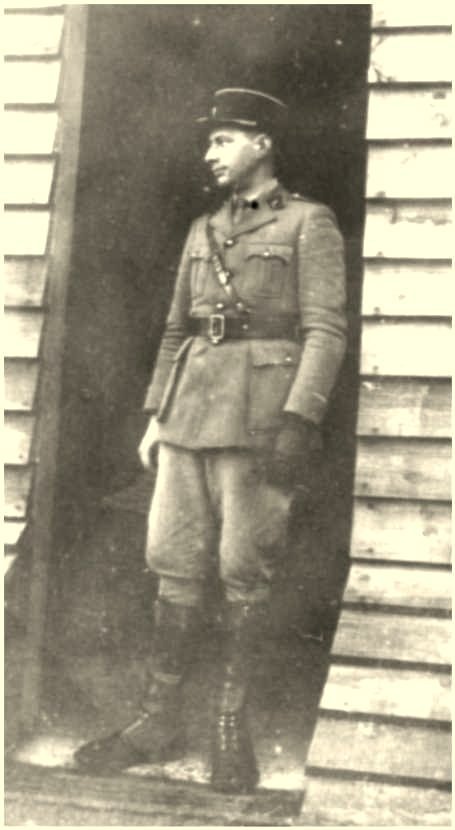
Michel Hardelay, military in 1944/45
Below in calot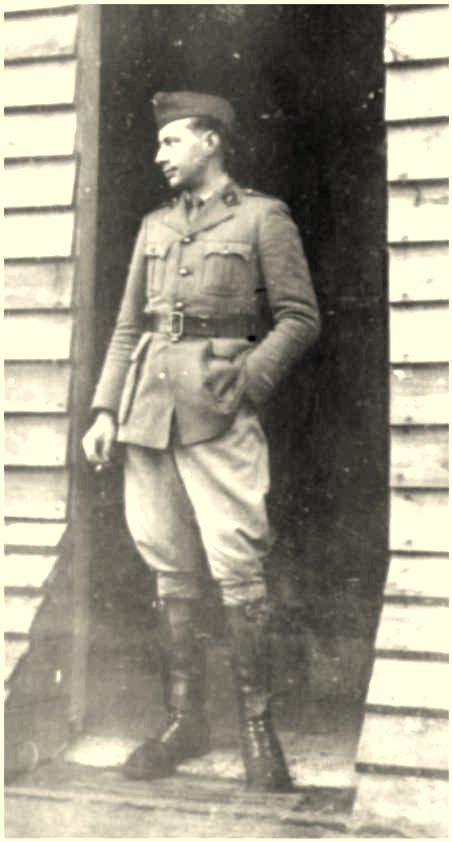
FOR MEMORY, these memories have been separated into several chronologically classified chapters:
Vierville under occupation (0)
The day before and before June 6th (1)
The night of 5 to 6 June and the dawn of 6 June (2)
At the same time, at the bus station of Vierville, at the Colibeufs (2bis)
The morning of 6 June, from 6 a.m. to 12 noon (3)
Afternoon and evening of June 6 (4)
At the bus station on June 7, at the Colibeufs (5b)
The afternoon and evening of June 7, and the bombing of the crossroads (6)
On June 8, in the town of Vierville, with Captain Gardiner (of the Civil Affairs) (7)
A series of photographs taken on June 30, 1943, as the Germans began to destroy the seafront villas

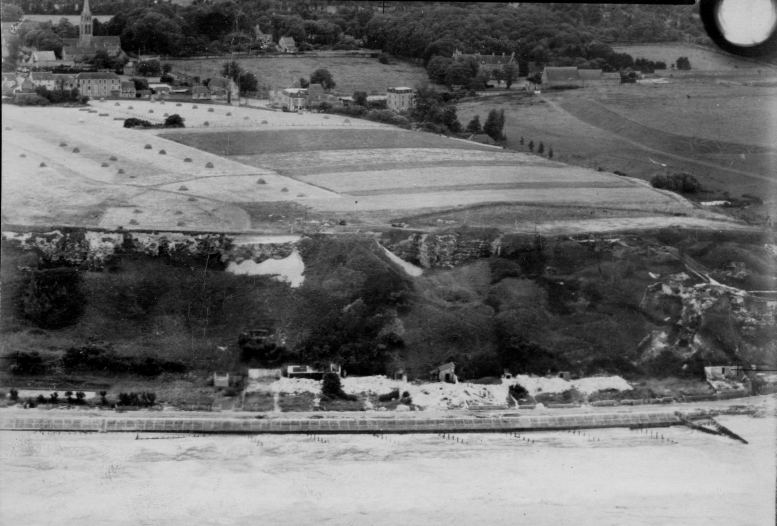


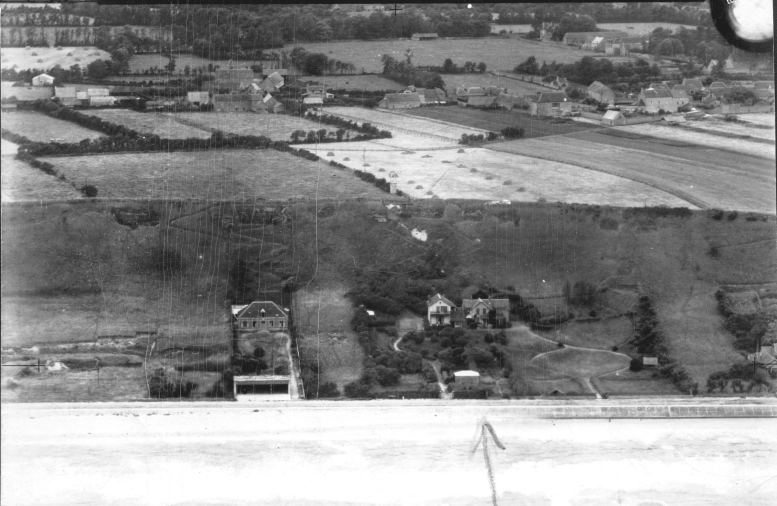


THE GERMAN DEFENCE SYSTEM in 1942 (extract book "Operation Aquatint" by Gérard Fournier and André Heintz)
See also the letters of 2 eyewitnesses of the first months of the war and then of the German occupation
Since October 20, 1941, the Feldkommandantur 723 of Caen has declared the entire northern part of the Calvados department, a strip of land of 15 to 20 kilometres deep, between the coast and the national road from Cherbourg to Caen, via Bayeux, to the west, and the national road from Caen to Pont-L'évêque, via Troarn and Dozule, to the east. Only Calvadosians who can provide a certificate of principal residence issued by the mayor of their municipality of residence are allowed to enter the prohibited area. Those who do not belong to this category are allowed to visit only upon presentation of a special authorisation issued by the German authorities.
In Saint-Laurent-sur-Mer, as in Vierville-sur-Mer, and in many other coastal communes, the Germans have therefore forbidden access to many villas, secondary residences often owned by Parisians, occupied only a few months a year. Several were requisitioned by soldiers of the Wehrmacht or the Luftwaffe, in cantonment in the area, as indicated by a certificate from the mayor of Vierville of 3 April 1942. As of that date, nine officers and approximately 90 non-commissioned officers and troops were employed, and 16 others, which could also be used to house 200 German military personnel, remained available.
Alerted by the people of the country who can still go to the beach, at certain hours of the day, and in well-defined areas, several owners are informed that their villas have been damaged, or thefts, and complaints flow to the mayors of the communes who relay them to the Sub Prefecture of Bayeux. But the claims made by the Sub-Préfet Rochat to Major Hoffmann, commander of the Kreismommandantur 789 of Bayeux, remain, most often dead letters.
At the end of 1941, the strategy of the German army was radically changed after the United States entered the war. It became defensive, as confirmed by the Hitler directive of December 1941, which ordered the construction of a line of defence on the western coasts of Europe. Since June 1941, the supreme command of the West Front has been entrusted to Marshal von Witzleben. He is therefore responsible for defending some 4,000 km of coastline from southwestern France to northern Norway.
The work entrusted to the Todt (O.T.) Organisation is still limited to the defence of large ports, such as
Le Havre and Cherbourg, in our region; to the construction of large concrete shelters for submarines on the Atlantic coast: Brest, Lorient, Saint-Nazaire, La Pallice and Bordeaux, and to some major strategic places, such as the coast of Pas-de-Calais, where it employs 12,000 workers to build five heavy artillery sites.
It is by Directive No 40 (Die Weisung No 40) of 23 March 1942, entitled: Küstenverteidigung (Coastal defences), that Hitler gives birth to the Atlantikwall, the "Atlantic Wall". It sets out its European defence policy and defines its organisation, specifying the command powers and powers given to each of the three weapons.
With its directive No. 41 of 13 August 1942, Hitler entrusted to the O.T. the construction of the wall, which must protect the coasts of France, Belgium and the Netherlands from external aggression. To this end, it is planned to set up 15,000 concrete blockhouses on the Atlantic, Channel and North Sea coasts, which are to be completed by 1 May 1943.
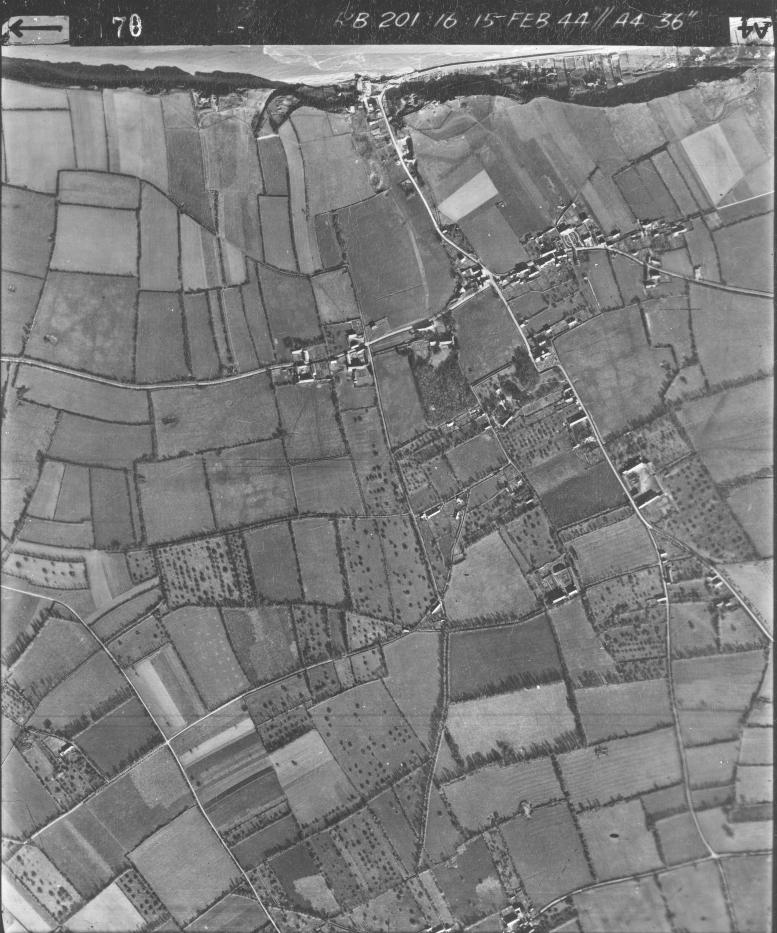


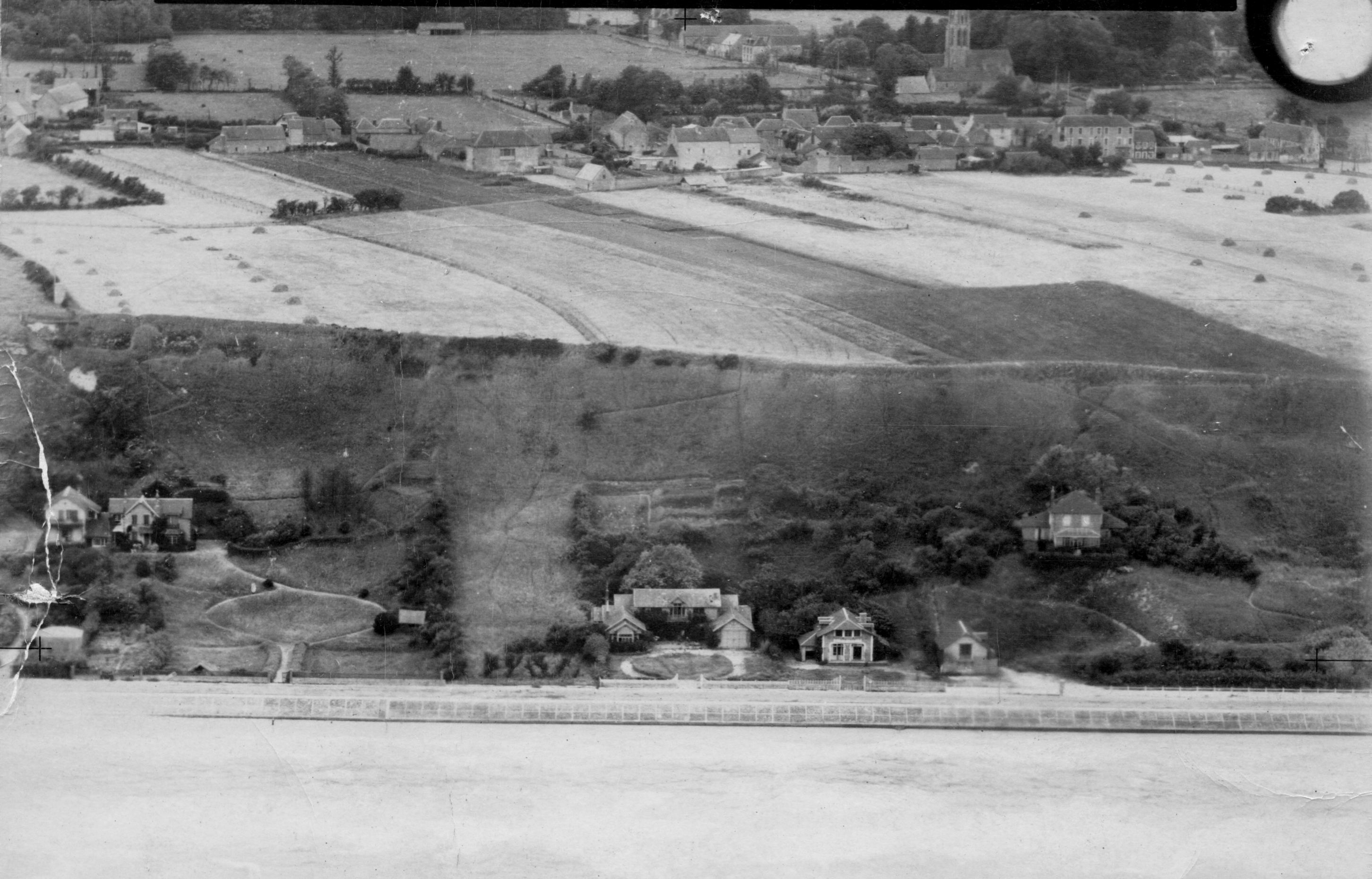

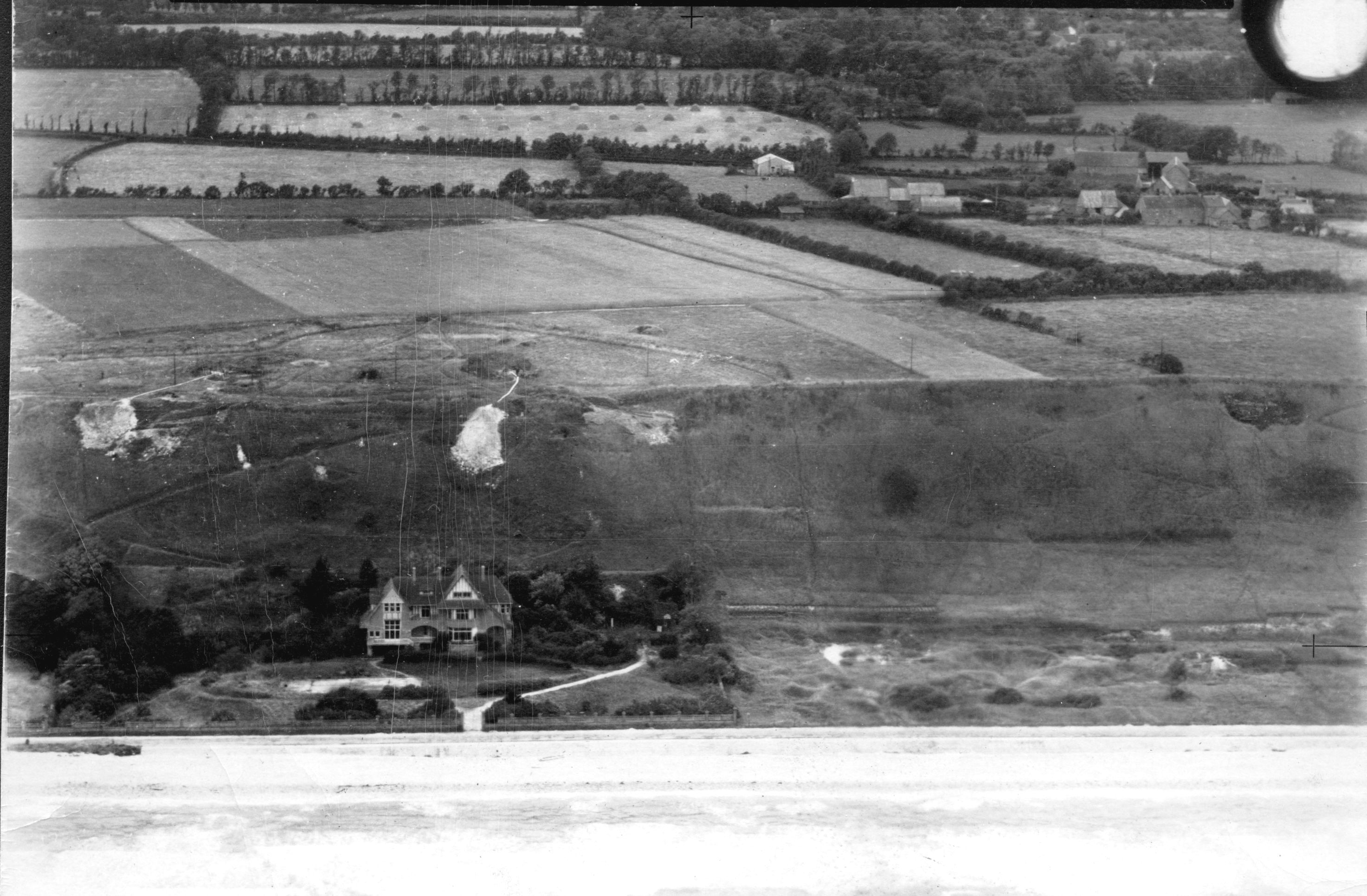


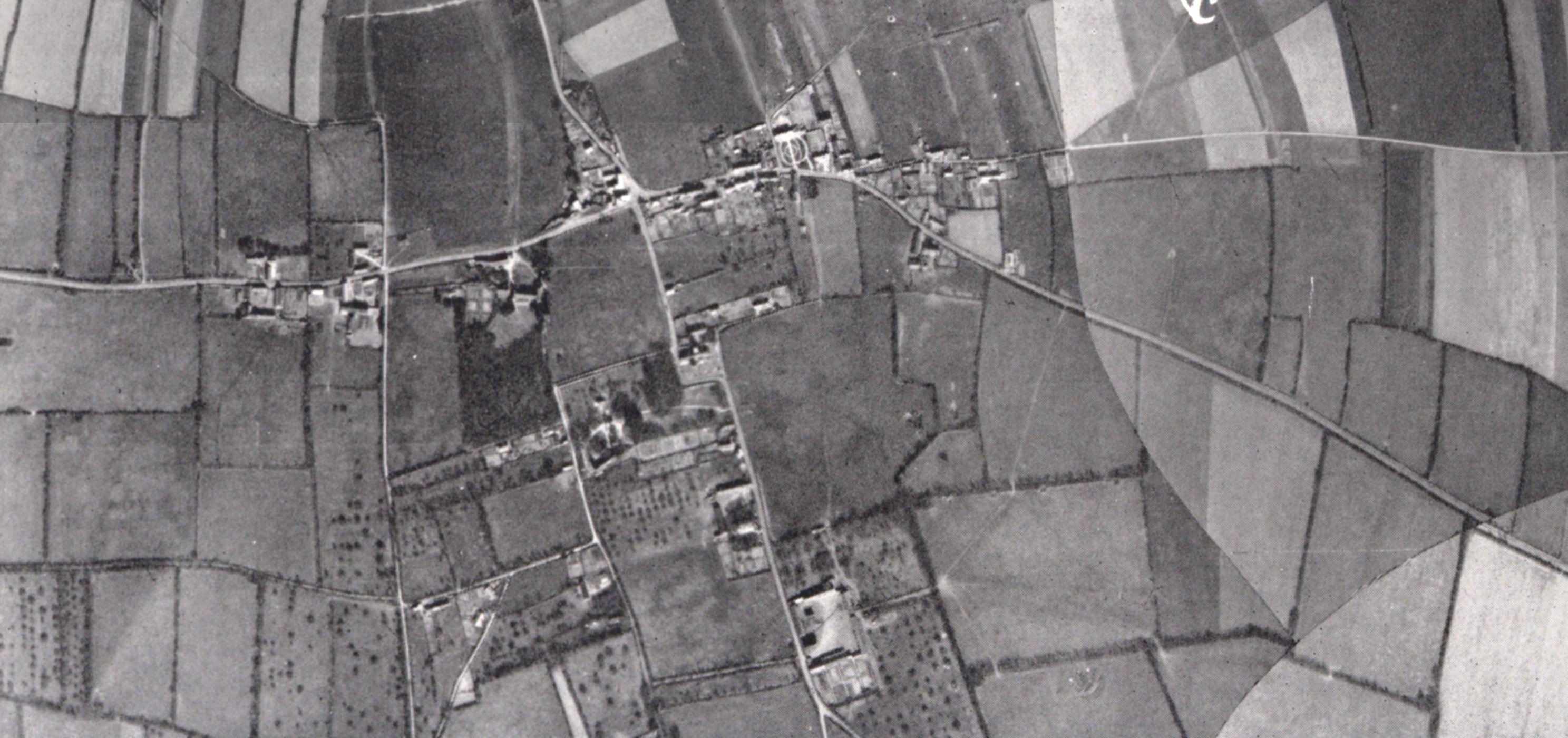

Memories of Michel Hardelay (chapter 0)
1 LUFTWAFFE occupies the seashore.
(Michel Hardelay had made the war in aviation between September 39 and June 40, and was found in unoccupied zon at the time of the Armistice, he did not return in occupied zon until October 40)
"I had passed the demarcation line one evening in late October 1940, in Moulins, a few minutes before the German offices closed. A few days before, Marshal Pétain had met Hitler in Montoire and the Germans were willing towards the French officers who were returning to the occupied area.
I had only heard from my mother about the two lines that were sparingly allowed on the interzone maps; I knew she was back in Vierville after her retreat in Brittany but I did not know how she lived.
I had been able to bring back my faithful 301 (a Peugeot 301) from Miramas, which had taken a lot of steps and time. As soon as I arrived in Paris I hid the car in a shed my mother owned and connected me with it by letter - the only means of communication with the occupied province, (for) parents, businessmen and my notary, because there were many problems to be solved.
It took me five weeks and it was only at the beginning of December that I could finally take the train from Cherbourg after taking a seat.
When I arrived in Bayeux the farmer owner of the Ormel (Fernand Leterrier, the future mayor of Vierville from 1942) who had housed my mother in the house that he was developing for his retirement (the house on Pavée Street, which later housed his daughter Madame Jacquet) was waiting for me at the station with his car. He had sacrificed two precious fuel bills for the trip. My mother had accompanied him; I had not seen him in eleven months.
She explained to me that she had not been able to return early enough to occupy our villa (The Hortensias, on the beach) before the Germans settled there and that all the uninhabited villas upon their arrival, that is, almost all, had been requisitioned. Only "Le Pigeonnier" inhabited by an old friend, Alsatian of origin and thus fluent German, and "La Source" where a former jeweller from the capital (Mr Mathy) had retired had been left to their owners.
In addition to these two exceptions, two households occupied guardhouses: the Bertrams and the Quesnels; the latter were guards of the villa "Ker Maria" (Villa de M. Defortescu today) , of recent construction and which possessed all the modern comforts of this time. The colonel of the Luftwaffe unit had obviously reserved him, leaving his services to settle in the largest.
Thus we had inherited a captain and a lieutenant, various secretaries and an interpreter, a French teacher in Berlin. Since our villa was intended for summer holidays, these gentlemen (it is often as the occupied French called the Germans) had to install stoves in each of the rooms and even a bath with electric water heating by accumulation.
The Germans allowed us to maintain the garden, the flowers and the vegetable gardens. We could pick the fruits after an experiment on unripe figs disgusted them with French fruits. There is always a fig tree in the garden of Hortensias).
One day the captain signalled me to follow him, went up a floor and stood in front of a small piece of furniture that was once in my room, and opened it and gave me pictures. They had been taken to the Biscarosse camp (a French military aviation camp in the Landes for seaplanes) and represented comrade officers serving D.C.A. equipment and guns. modern. I was present in several photos; he gave them to me and said to me: "For you", it meant: "We know everything about your service, but we respect all the French officers who have done their duty and are not prisoners".
Another day the lieutenant asked me, "Jude? (Jewish, in German)" by designating me; I started an answer in English: "I am not the only one who has the right to... But he put a finger on his lips smiling to make me understand that this language should not be used. I was content to say: ''Catholic'' while I wanted to specify to him that my ancestors were Huguenots in the seventeenth century.
I do not know what the functions of this German aviation unit were, bombardment of England, coastal surveillance or exploration on the Atlantic?
In any case, they did not seem to have major concerns during 1941 and enjoyed the beach and the beautiful summer weather: concerts by regimental music, either on tennis or in front of the windows of "Ker Maria", and sea or sunbathing. I saw them lying on transatlantics, getting served on the beach drinks by white-gantled waiters listening to music and information, having not hesitated to unroll a cable to bring the electrical current from the house to the first sandbank.
The only false note took place one afternoon in September 1941; a pilot without a doubt novice wished to greet his colonel and show him what he was capable of; he arrived by grazing the waves and starting a looping, but having not climbed high enough, he could not straighten his aircraft fast enough, and the latter shoved his nose into the sea.
I was watching in the village house (the one where Michel Hardelay took refuge with his mother, at the end of the Dumont grocery impasse) and lost nothing of the show, eye riveted to my long view. The pilot had been able to get out in time and I saw him swim or rather float, his parachute acting as a lifebuoy. A star came to collect it half an hour later. About 30 years after a trawler from Port-en-Bessin brought back the fighter's engine and propeller into his nets.
Then it was the failure of the German army in front of Moscow; by a fresh morning of the beginning of April 1942 I saw the lieutenant walking slowly in the garden accompanied by a ''grey bat''; it was the sign of a close departure of the unit that had spent eighteen months in Vierville. Some were going to leave on the eastern front, but the favourites of Marshal Goering (the Luftwaffe leader) were going to finish the war in Jersey or Guernsey after a brief visit to Granville where I was surprised to eat on a plate of our service in 1945 at the mess of the officers of this garrison. The armies are used to serving the same premises as their predecessors, with cities offering the same buildings for convenience.
The German airmen had warned us that a engineering unit was going to carry out certain improvements, so we decided to recover everything that could be: large furniture rarely intact, doors, electrical appliances.
We had to climb the objects by the cliff; it was a race with other waste pickers because we had to close the villa when we left, we found it open the next day, some Germans did not hesitate to force the doors to enjoy the mediocre bedding left on site, sometimes in gallant company.
The electrification company - it was not yet the E.D.F. - had rushed to disassemble its meters and transformer feeding the beach, to recover its cables or, at least, those which the Germans had not taken; when the poles they were to be used for many uses quite different to the one for which they had been used.
And the destruction began with the arrival of the engineers.
2 – INFANTERIE occupies the village.
Upon my arrival, the infantry had organized themselves to spend the winter and monitor the area assigned to it; it controlled the population, registred the chores, especially the transports, by requests to the mayor. As we were in the coastal area "prohibited" for the inhabitants outside the area, each house had to have inside its front door a paper bearing the number and names of the occupants certified by the German authority and each had to possess an "ausweis" proving that he lived in a prohibited area. The town of Bayeux was out of the area, it began on RN 13 and headed towards Cherbourg at the top of the Vaucelles coast; there was a sign here that indicated that people were entering the coastal zone and warning people that they needed special permission, but there was very little control by the Feld-Gendarmerie. (German military gendarmerie)
On the other hand, this Ausweis was very useful in the event of an identity check in the occupied area and provided me with many services in the metro or upon arrival at Saint-Lazare station, because it assumed that I was known and monitored by the German services.
Returning to German occupation at Vierville, the infantry had established the Kommandantur at the Thaon mansion where the captain was staying (The captain was called Adolf GRUNSCHLOSS. he was born on the 19th of January 1893 and was a straight eye blind. His daughter's looking for her grave. He may have been buried in the trenches of Thaon Manoir Park??) (he was no longer there on June 6, 44, he was in Gruchy), the secretariat, the transmission services and the popote for the troupe. The lieutenant had Mr. Le L's house requisitioned. , municipal councillor (maybe this is Mr. Le Large?), who had taken refuge in an annex. His house was to serve as a reserve of equipment and uniforms, as I learned much later.
For the troupe the premises were not lacking: all the furnished rooms of Fernand (Le Gallois), the owner of the bazaar of the beach, the hotel of the Casino and that of the Beach ‐ later called the "Place" ‐ (the Merlin hotel, destroyed by fire in the 80s or 90s), the "Fontaine" (La Pie qui Tette) and even the town hall, which did not serve much.
The castle of Vierville was to be requisitioned in 1942 (in fact, Michel Hardelay made a mistake, the castle was completely requisitioned that on 2 March 1944, previously only 1 or 2 officers have been housed since 1940, with their ordinances in the communes) and shelter the workers of the company Todt who worked on the construction of the "Mur de l'Atlantique"
3 ‐The KRIEGSMARINE ‐ Reduced staffing.
The German navy was also present in Vierville but had only three or four representatives who occupied "La Rinacente", a villa located almost at the top of a cliff above the Casino hotel. (I think it was Mr. Mary's villa at the time)
These non-navigants were to remain until disembarkation; several antennae were seen from the beach around their post, suggesting that their work was to receive messages from ships and submarines, to transmit orders or to draw up a weather report.
These sailors lived in a closed vessel, except for one that was nicknamed "The Pipe" because he had an eternal "burn-chuckle" at the corner of his mouth. He was a man between two ages, brown, knowing a few words of French, but antipathetic and devious, and that some were pretant to belong to the Gestapo; so the population was wary of it.
4 – The FISH with permission.
The Germans soon realized that they had every interest in tolerating fishing on foot, since it allowed their troops to have a substantial supplement of free or inexpensive food by means of restraint at source.
Indeed, it was possible for the inhabitants to have a permit to go to the beach during the herring season (September to December ) in order to spread their "herring plants". But, as these nets were to be raised at night, this involved spraining the curfew and accompaniment by one or two soldiers at night.
On the other hand, before the fishermen were allowed to go to the fishing grounds by opening the barrier at the bottom of the rue de la Mer, some soldiers had had the time to take some samples when catches were large and before foxes did so, which was not uncommon.
The licences were also valid for fishing in the rocks under the communes of Louvières and Englesqueville, but only by day, and under the supervision of the soldiers occupying the cliff tops. They were not unaware of gun fishing, even if they used the "dvalous" to pick up their targets. which were always big pieces, congresses or bars.
‑0‑0‑0‑0‑0‑
The first serious event occurred shortly after my arrival, that is, during the winter of 1940-1941, when there was snow on the roadside.
Fernand, (Le Gallois) the owner of the beach bazaar that was then at the site of the monument – the current National Guard U.S. – had a soul of shipwreck picker (his family had not bought from the Estates to cut it the wreck of the ship stranded during the First World War in the "dark" of Louvières) – he had during a search on the beach found and brought back a copper object heavy enough.
Arriving in front of the front of his bazaar he threw him down; but the object in question was probably a mine detonator who asked to be handled with caution, he exploded and the breath beheaded Fernand.
Fortunately, none of the nearby soldiers were injured, not even the guard at the roadblock, but the German authorities immediately believed in an attack. It was necessary to intervene by the mayor, (Mr Dubois, farmer in the last farm on the right, Grandcamp road) former prisoner of war in Germany and, who could be made clear to them that it was a accidental accident, that the person responsible had died and that there was nothing but insignificant material damage.
During this time Fernand's head was sought; it was finally found above the false ceiling of the front door which she had pierced and which had closed after her passage.
There was no follow-up to this incident and nothing notable was to take place in 1941. (The exact date can be found. Just look at the death certificates at the town hall of Vierville - it was January 4, 1941)
‑0‑0‑0‑0‑0-
5 – GENIE GERMAN replaces LUFTWAFFE.
The airmen had warned us: you will see that the engineers do not respect the buildings as we do, and you will miss us.
Apart from two canvases from the Italian school that had taken the road to Berlin where a hotelier named Bajus (?) had "collected" them we had found most of our tweezers more or less intact. We had reassembled all the furniture rarely whole because most often without drawers, these used to make crates intended for shipments.(French product packages for families of German soldiers)
I had even managed to save my stamp collection, hidden on a beam in the attic, but another hiding place, very difficult to reach yet bound to be discovered if the building was demolished, contained hunting weapons: two 12-gauge shotguns, an old 16-gauge pinfire shotgun and a rifle chambered for .22 Long Rifle, with ammunition. (these weapons should have been declared and handed over to the authorities)
The engineers had begun to occupy the land above our villa, which was to become the Wn 70 defense point, but he tolerated that we would take the path that led to our garden. It was necessary to pass in front of them on the descent and on the climb. However, they used to see us come back with a bag containing food for our rabbits: grass, dandelions and charcoal branches.
I was preparing a hole in the floor of our cellar ‐ it was a ground floor room not paved ‐ and we went up the weapons in the bag from which only a few leaves were passed; I buried them immediately.
But soon they forbid us to go down to the villa by our path; we had to use that of the villa "Sainte Anne" (probably at the location of the villa of the Ponsards) and cross the vast unbuilt land to the west of our property (where are today the houses Bunouf, Denys, Cordelle and Prost). Then access to our garden was completely forbidden at the beginning of 1944 (or at the end of 1943) when the Germans mined the area above the cliffs, surrounding the village with a network of barbed wires, but did not possess enough mines to make this mine completely effective; thus the mined land stopped (from Saint-Laurent) at the fir trees of the field located above the villa "La Source" (Villa Mathy) and returned west of the rue de la Mer
And meanwhile the engineers worked hard; their goal: to bury himself without leaving visible traces. The earth of the trenches was evacuated and thrown into the cliff, forcing them to dig them up to 1.80 metres and to cover them with a dome of grilling and grass.
In addition, all strongpoints were to have a shelter 12 metres underground with two exits at least 50 metres away. For this work they had developed a technique: they began by digging a well of 12 meters which they surmounted from a winch; from the bottom they led a gallery and a staircase with a landing long enough to mid-rise so that a flamethrower could not reach the bottom. The same concern for the gallery, which had to do an elbow at the foot of each staircase. The half-way room of the gallery had to be large enough for six men to lie down there, six others to sit there and on a small table one could place a telephone and some papers, all the strongpoints being connected by cable buried to a central buried, too, at the Kommandantur.
The galleries were supported with joint frames consisting of 22x08 grids two metres by one metre, leaving a passage of 1.84 by 0.84 metres.
These loggers were of course from the structures of demolished houses and a carpenter was specially assigned to sawing the loggers and to cutting tenons and mortises there. Each strongpoint had its concrete slab fire observatory.
I had the opportunity, after the landing, to travel through the galleries of the Wn 68 in St-Laurent, Wn 70 above our villa and Wn 72 (Hotel du Casino) (in fact it is the WN71). The first and last had a cliff foot access and a mid cliff exit, but as the WN72 had benefited during the excavation of its horizontal gallery a straight track for the evacuation of the stones which made it very vulnerable, another curved access was being drilled on 5 June; the Germans planned to then close the entrance in front of the dining room of the former Casino hotel, they did not have the time and had to abandon their underground on 6 June.
This gallery starter is currently behind Saulnier's creperie.
‑0‑0‑0‑0‑
PLANS
I have never sought to know where the directives to prevent the town hall from destroying buildings that interfered with the firing of coastal batteries came from. The mayor, once notified, wrote to the owner if he had left an address where to contact him and asked if he had the plans of his home for future compensation. Otherwise or without reply to his letter I was designated to make a summary statement: dimensions of the building, number of floors and openings, consistency and thickness of the walls, nature of the cover. I was putting this job back in my house and dropping it off at the town hall. Most often when I arrived at the building it no longer had a roof or a floor, the Germans having the most urgent need of wood to support their underground galleries, but it did not upset my work and even simplified it.
I must say, that later, when the commissions were called upon to read the files filed by the owners and compare the measures of their plans with mine, there were only tiny differences; people were very correct and did not try to "trick" with the war damage, except an old lady who, perhaps unintentionally and without realizing it, gave her architect exaggerated information. (When you have a small villa that measures seven meters by four, just add two meters to each dimension to double the value).
The mayor warned me that such a day, at such an hour, a German soldier would wait for me at the beach post - at the beginning of the boulevard de Cauvigny where was the heavy barrier of madriers and barbed wires usually opened during the day, to accompany me. It was usually always the same, an old guy, who was very happy with this walk by the sea and who, arriving at the designated place, lay in the grass and let me work in peace.
The demolition of all the villas on the valley and on the beach began in the spring of 1943, except for the villa "Rinacente " located at the top of the cliff, which served as a marine radio relay for the U-Boots, the Casino hotel which hosted by rolling detachments on permission to relax, and served as relays for patrols, and a nearby concrete building, rebelling to the pickets of the German engineers (the Cusinberche villa).
The construction of several blockhouses was decided, the main one being to occupy the location of the beach bazaar bar (Legallois), whose demolition began in the summer 43, but keeping most of the facade on the sea side, as camouflage. During this demolition, and around 15 August, a gun (the 88mm anti-tank PAK 43 that is still there) was supplied to the unit for the future blockhouse, during formwork and ironing. The Germans had noticed that the villa "Madeleine" located almost opposite the bazaar was built on a large slab of reinforced concrete. They demolished the villa as well as the adjoining cottage that was inconvenient with the perspective on the beach, and then installed the cannon, hidden under a tarpaulin, on this slab and brought boxes of shells. As a beautiful 88 was painted on these cases, it was easy to deduce the calibre of the cannon. The blockhouse was completed in the winter of 1943-44 and the cannon was introduced. At the same time the road was barred by an anti-tank wall with a chicane leaving a passage of 75 centimetres. The top of the blockhouse was embellished with a few panels of wall to simulate ruins. A hedge of tamaris, which overcame the slope of the road on the sea side, was preciously preserved, for it masked, the view of the beach, the anti-tank wall and was confused with the blockhouse's clutch."
My work began with the last houses in Vierville, bordering St. Lawrence, and I even had the opportunity to raise two buildings in St. Lawrence, including the Hôtel du Cheval Blanc. It was during these journeys and returns that we met "the inseparable", (I had to call them that way afterwards), an old soldier with a white hair and moustache who seemed to have the well-known retirement age and a kid to whom we would have given at the most fifteen years. I always wondered if he wasn't the grandfather and his grandson. The latter when he saw us put a question to my attendant and this question ended with " SCHWEINKOPF" (pighead, an insult in German) I do not speak German but I know what this word means. The two old soldiers stopped chatting, embarrassed; I made him who had not understood, but my eyes crossed the boy's, and knew that I had understood, he stood there. I had to find the inseparable united in death on 8 June 1944 at the door of the Kommandantur (Than Manor) , the rifle in hand.
Prior to the construction of the blockhouse, which was to house the 88 gun, it was stationed on the slab that supported the villa "Madeleine" (currently the party room) The range of fire of this room was limited on its right side by the villa "Les Embruns" (currently the location of the beach bazaar) which because of the advance of the cliff had been built with a very small step back on the boulevard.
They decided to demolish her and her neighbor "La Reposery".
So I was told to find me a certain morning at the guard station. When I arrived, I found a senior who was waiting for me; he was a big, slender, jovial type; his uniform was not in bulk sheet like that of his captain, but "to measure" in a good cloth. He made me sign to follow him, and instead of commanding two of his men to open the gate, he entered a garden on the right. This garden for lack of maintenance for three years was rather an uncultivated field invaded by tall grasses. He walked five or six metres and stopped, and showed me an iron wire ten centimetres from the ground, the enjamba, and made me sign to imitate it; and for a second wire he did likewise, and went and put a pin in a detonator which I saw in the grass; and he made sure that I walked in his footsteps, and we found ourselves on a free and clear ground. He then invited me to carry out my readings because we had arrived near "La Reposerie". When I did my job I noticed after an hour that two soldiers opened the fence, so my work was finished and I could go through the normal path.
But then I always wondered if the captain's deputy (I had to find him later in a chore in the kommandantur garden) wanted me to know the traps at the bottom of the cliff or if he had not been able to find two soldiers to open the gate, fearing to damage his uniform.
I have to admit, I don't know the ranks in the German army. Was he a lieutenant, a sub-Lieutenant or an adjutant? I don't know.
On the other hand I did recognize Marshal Rommel when he came, in May or June 1943 (I think there too Michel Hardelay might be wrong, I think Rommel came only 2 times in autumn 43 and January 44), inspect with his Mercedes the post being installed in one of our meadows above our villa. He had his country uniform with a red-banded black panties. I was kicking hay in a nearby herbage and I was able to see two soldiers removing a camouflage canvas that masked a mortar position. The same night the B.B.C. said that Marshal Rommel had begun the inspection of the Atlantic Wall by western Calvados and that he had been able to see his shortcomings. But who could have informed the Allies so quickly?
Maybe I have a little idea about this... by putting another one. Who was better informed than the deputy captain of the German company of Vierville? …. PERSON
(various testimonies tend to assume that this officer was an agent of the Allies, but it is still unlikely)