Memories of Michel Hardelay (6)
The afternoon of June 7, the evacuation and bombardment of the crossroads
FOR MEMORY, these memories have been dispersed into several chapters chronologically classified:
011 - Vierville under occupation (0)
1101 - The day before and the day before June 6 (1) 2321 - The night of June 5 to 6 and the dawn of June 6 (2) 2322 - At the same time, at the bus station of Vierville, at the Colibeufs (2bis) 3131 - The morning of June 6, from 6:00 a.m. to noon (3) 401 - The afternoon and evening of June 6 (4) 511 - The morning of June 7 (5) 516 - At the bus station on June 7, at the Colibeufs (5b) 561 - In the afternoon and evening of June 7 with the bombing of the crossroads (6) 701 - On June 8, in the village of Vierville, with Captain Gardiner (of the Civil Affairs) (7) 7011 - June 8 at Than Manor and Vaumicel (8) 7012- June 8 in Vacqueville (9) 702 - June 9 and subsequent days (10)

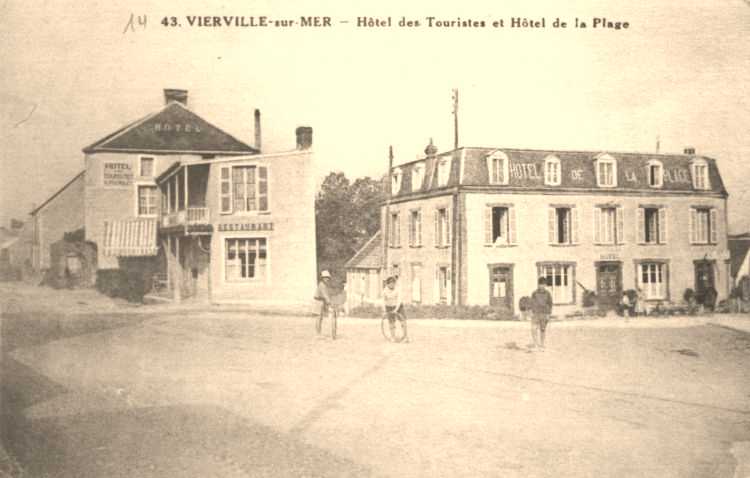
(details) The crossroads

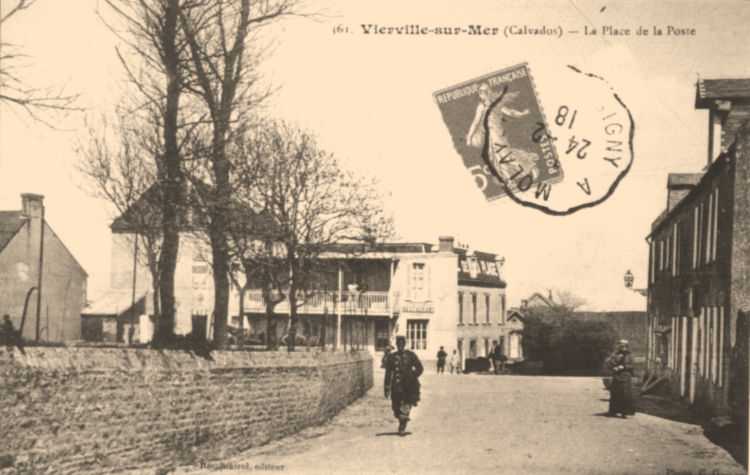
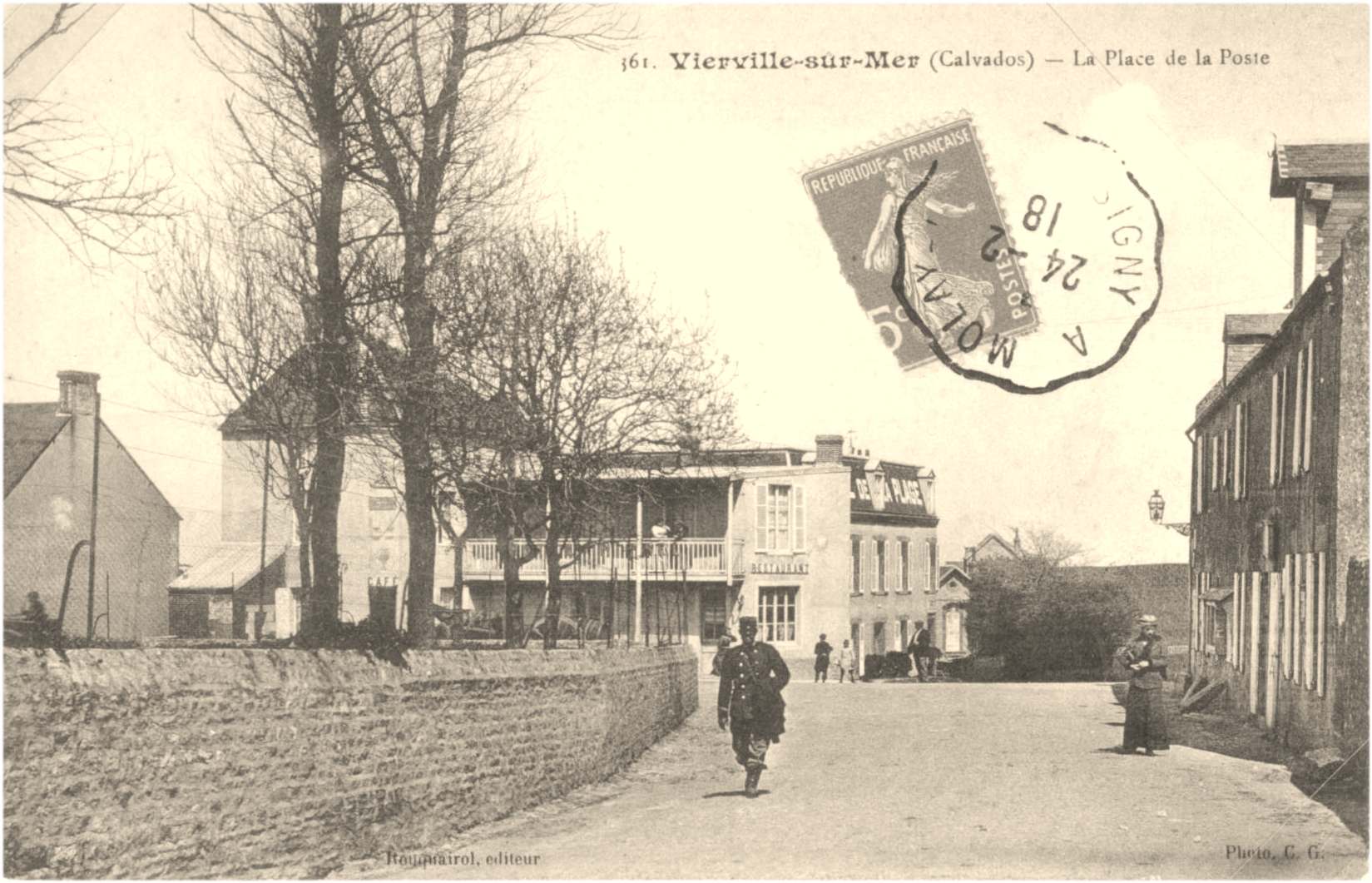
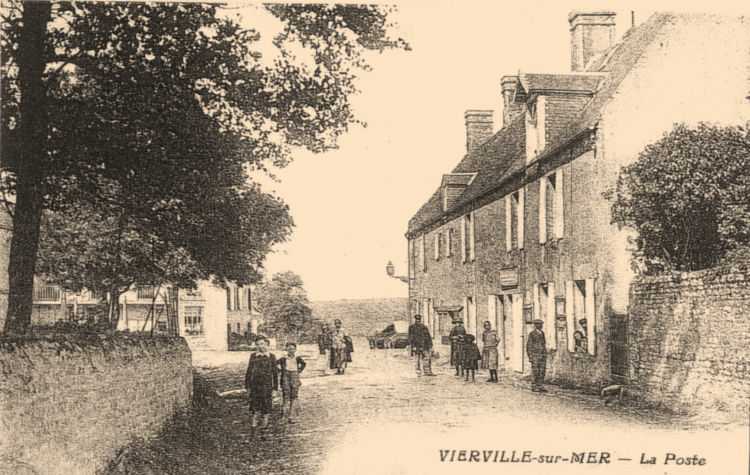





(on 7 June)
We had lunch quite quickly because the shots seemed to be repeated in the vicinity and returned to our shelter.
At about 21⁄2 p.m. an officer came to warn us to stand ready to evacuate the village and ordered us to go to a first group at 3 p.m. in the courtyard of our neighbour the mason. We filled two briefcases with our most precious possessions, placed them in a wheelbarrow to which our two spanners were attached - we abandoned the oldest, blind and deafest, slightly wounded by a shrapnel - and returned to the mason's court.
There was, on a pillar of the entrance, a flag with a red cross, signaling this place to visiting doctors and nurses. A tomb was placed on his stretchers under an awning; he had been garnished with straw on which was lying a seriously wounded soldier under infusion. A neighbour, slightly wounded in her arm, dressed in a white coat, monitored him and reported him to the visiting nurses who changed the light bulb or gave him a shot. A German, original Austrian, sat in a corner and looked very happy with his fate, while two G.I. they were trying to break a Mauser's butt.
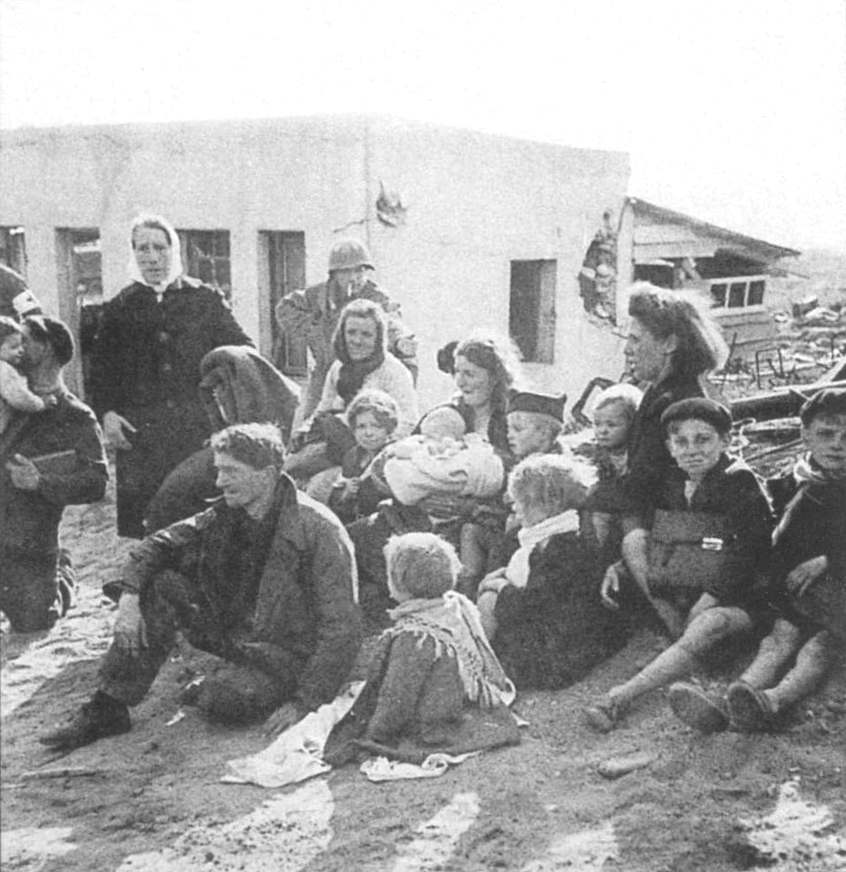
We were about fifteen inhabitants of the eastern end of the commune to be gathered in this courtyard and the most diverse noises ran some that the Americans had begun to board and that they were taking us away, others that were going to take us to Saint-Laurent, a common better held by the allies, others that were finally going to abandon us to our fate.
An officer came to warn us that all the inhabitants were to be in the school yard at 5 a.m. for a general identity check and that there we would know the fate that was reserved for us.
We arrived in the school yard at the prescribed time and at the time when a sharp shooting began: some G.I. were struggling with a detachment of five or six Germans who, taking advantage of the fence walls, had reached about 20 meters from the school. A young German lifted his arms, jumped the wall and went; he was immediately taken in by an American soldier who searched him and ordered him to sit in a corner. The other Germans escaped by taking advantage of the confusion caused and the gardens of nearby houses.
This German counter-attack, which was certainly carried out with very limited resources, was proof of the fragility of the American settlement in the Vierville area and of the concerns of the Americans, on the one hand because of the permeability of their defence lines, on the other because they had just realized that the Germans had prepared the ground far behind the coast by setting up paths in the ditches, under the truncated ones, and of the positions allowing them to make their way. go from one meadow to another through small tunnels in the slopes separating two important fields and thus be protected from aerial observations.
It was the beginning of the "Hedge War".
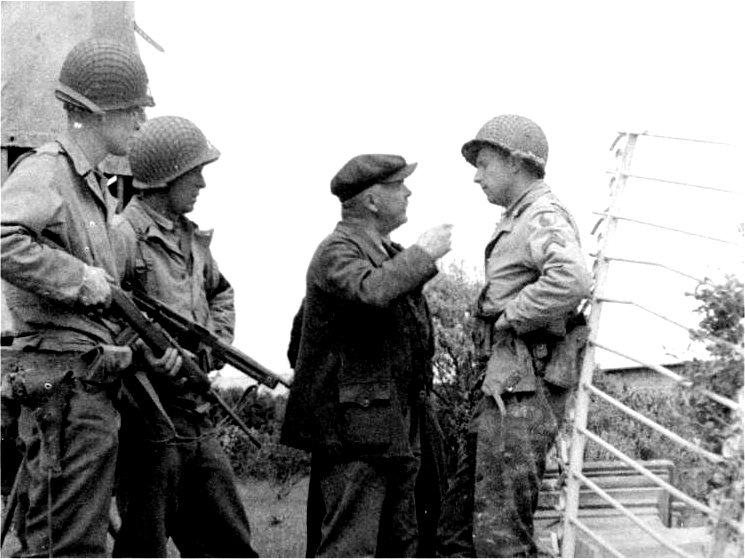
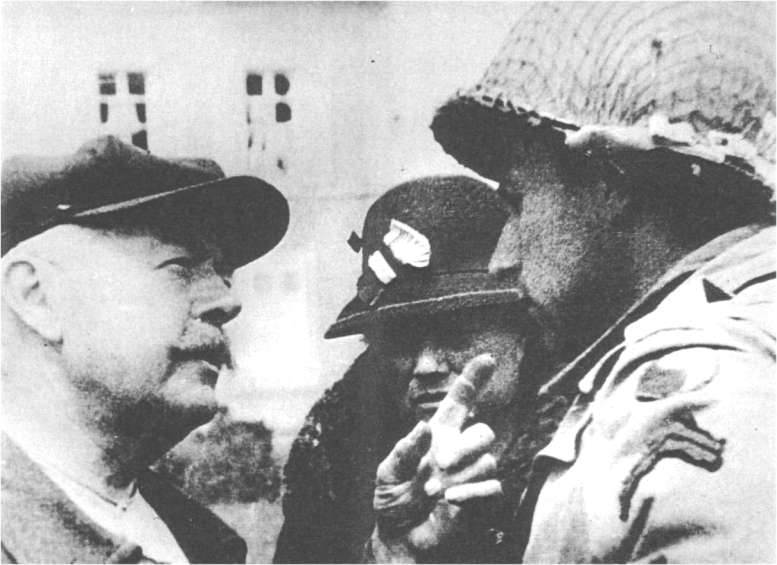
This warm alert issued by Captain Gardiner (?) of the C.I.C. (the counter-intelligence) present turned to the mayor and asked him if he knew each of the civilians, about forty were then in the school yard, as a resident of his commune. The mayor replied yes after taking a quick examination.
The captain announced that an evacuation of the village had been decided by the high command.
Two facts, fortunately, changed this decision: The postwoman, having requested permission to go to her office to take away the caisse for which she was responsible and having been granted permission, entered her premises by a door to the court, accompanied by her husband and a soldier delegated by the captain to supervise her. This slight delay was heavy with consequences.
First one heard a large convoy so long awaited: jeeps, armored, half-tracks, and men, (including a 105mm battery of the 110th Field Artillery Battalion) convoy that provoked a German reaction by interposed watchtower (probably a German watchtower hidden in the bell tower): a 88mm incendiary shell dam fell on the crossroads, post and school.
A shell fell in a classroom and exploded with a deaf noise; I sheltered behind my two suitcases while my mother sat in a toilet. with her old friend, Mrs. G. (Ms. Guignard?) extended above them a cover that had merit, not to protect it from shrapnel, but from pieces of slate that were untied from the awning.
At that moment the couple of postal workers arrived in the courtyard without the soldier who had followed them; he had been killed in the office. The couple came to stand before me, appearing indifferent to the events, the man gave his wife his arm and I saw that at each beat of his heart a stream of blood escaped from his carotid and inoned him, without he seemed to see it. (This is the 3rd civilian of Vierville who died as a result of the fighting of the landing, François ALIX, who died of his wounds in Saint-Laurent on June 9, probably in the American hospital of Saint-Laurent)
The first person who came out of this court-trapped was the German prisoner, followed as his shadow by the soldier who had custody of him; then it was a household with his three young children, at last it was the general debanda while I heard the captain repeating himself, in French, "Never park at a crossroads".
On leaving we saw in part the effects of the shooting on the convoy: the vehicles, filled with ammunition, exploded by firing around them and added to the massacre.
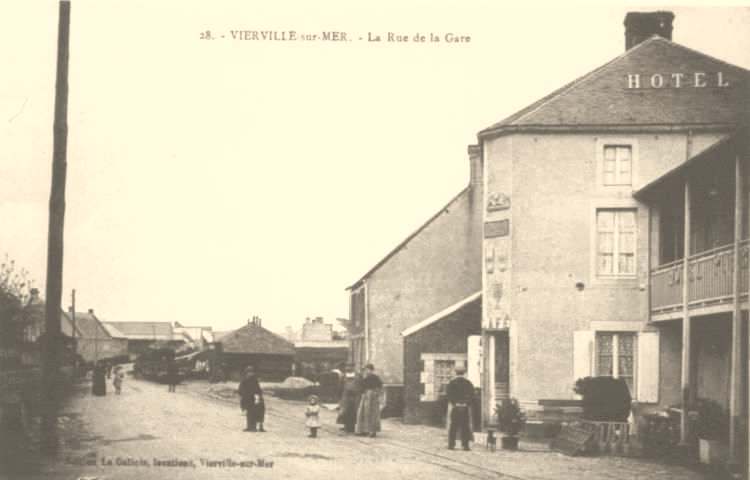
{ When a half-track was fired at the crossroads, trying to escape by the road to Grandcamp, set fire to the station. The occupants of the cellar (the Colibeuf family) had just enough time to get out and jump down the retaining wall that bordered the land, abandoning the pig and dog. Curiously, when one was able to access the cellar again, the latter still lived and had a full bucket of water to revive life. But the pig was dead." }
We returned to our shelter, and later an American came to tell us that we could stay there for the night."
Suzanne Hardelay, born Colibeuf, 12, was in the basement of the station:
"My mother went out to get water. When she came back, she said, "There's an ammunition truck stopped in front of the house and the Americans shoot him to put him on the side." There, it started to cannon. We went back down to the cellar. It lasted a long time and the truck exploded. The house has moved. My father got on the stairs and told us we'd only go out when he told us. After a while, he told us we could go out."