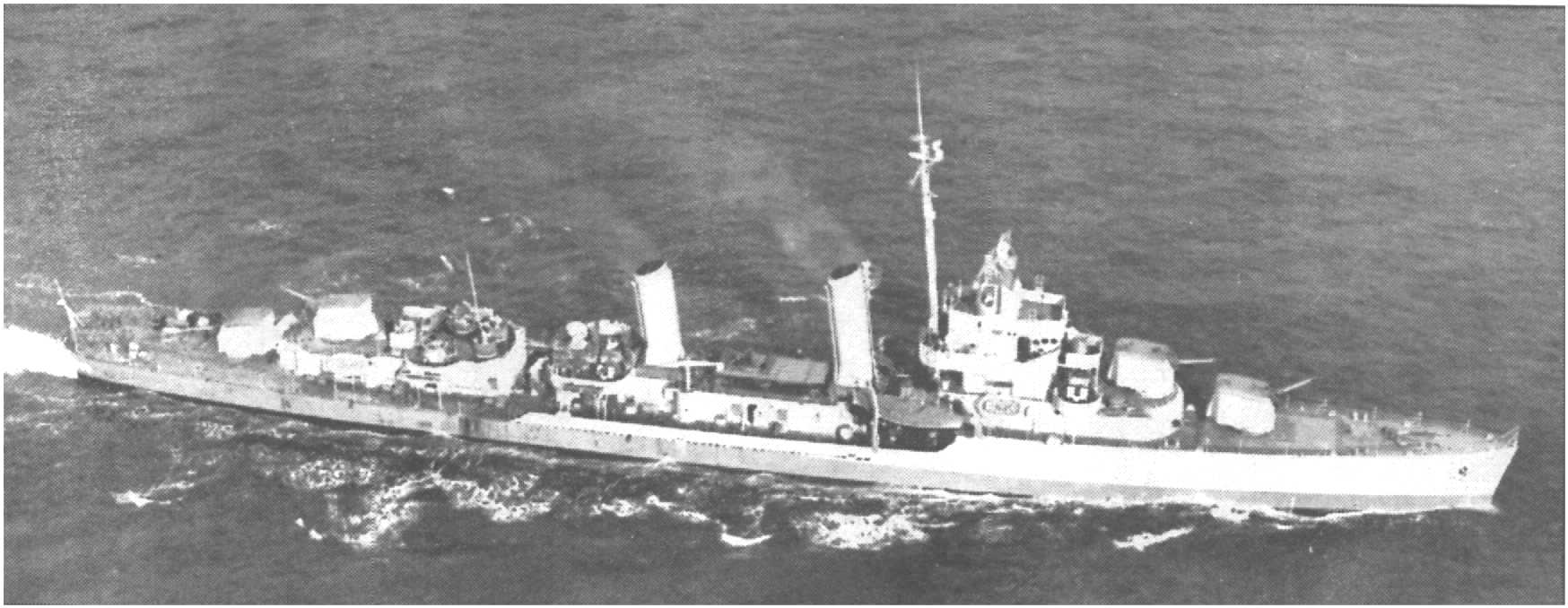



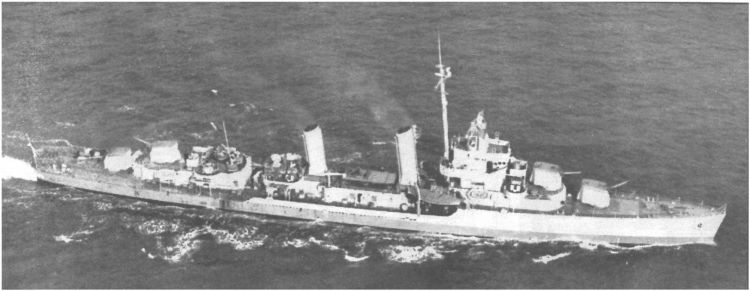


The Navy's contribution to the battles for Vierville involved destroyers Thompson, Mc Cook, Carmick and Harding, the English cruiser Glasgow and the American battleship Texas.
In fact, the naval fire stopped when the barges reached the shore.
The ships were ordered to stop firing, except on clear targets or when the link was well established with the fire control groups (the NSFCPs, "Navy Shore Fire Control Party"). Indeed the German fortified positions could be infiltrated by American infantry.
Throughout D-Day, naval fire on inland targets was mainly based on observation aircraft. At first, the targets were hard to find. At approximately 8:00 a.m., a land-based NSFCP group, in contact with ships, was told by General Cota that it was not reasonable to designate a target.
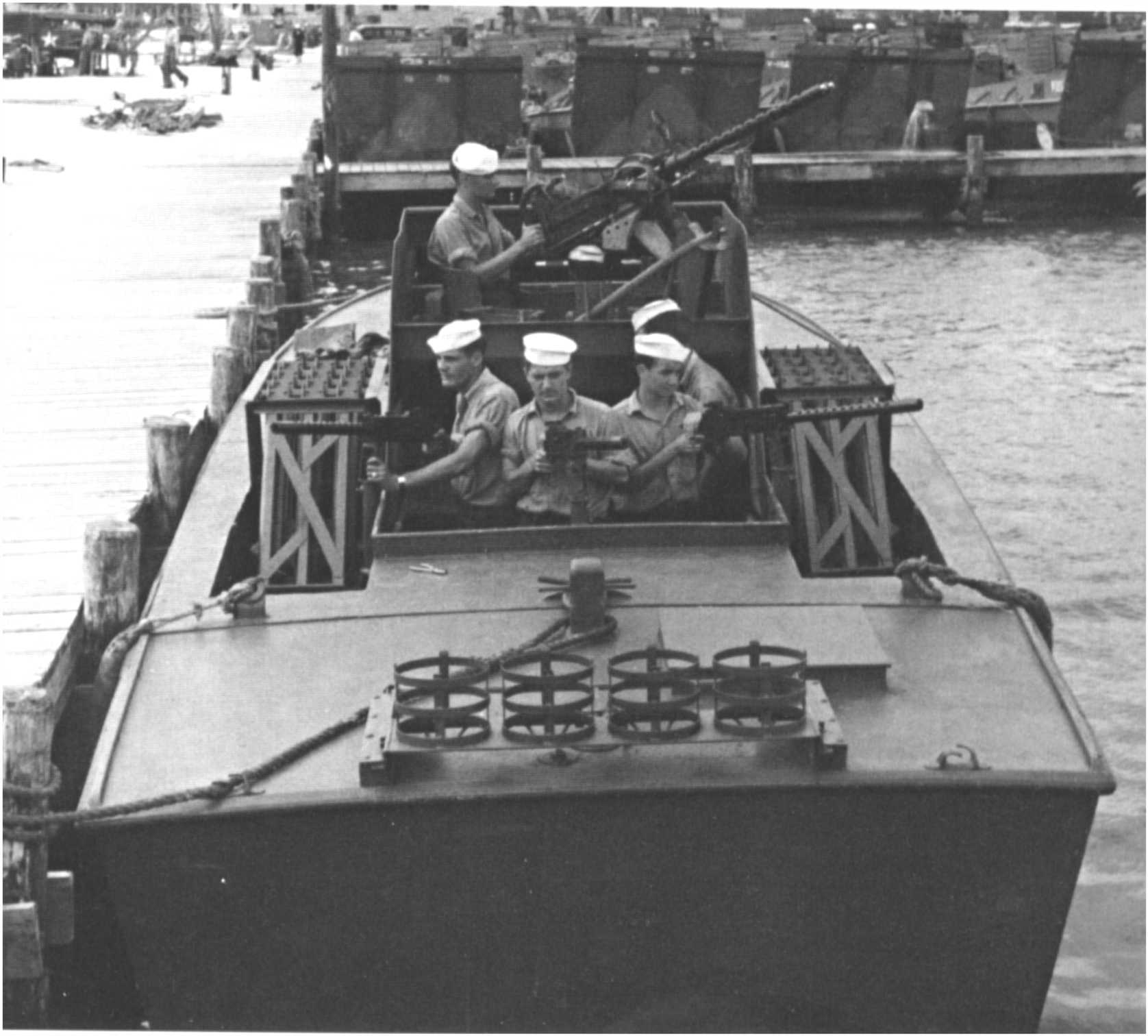
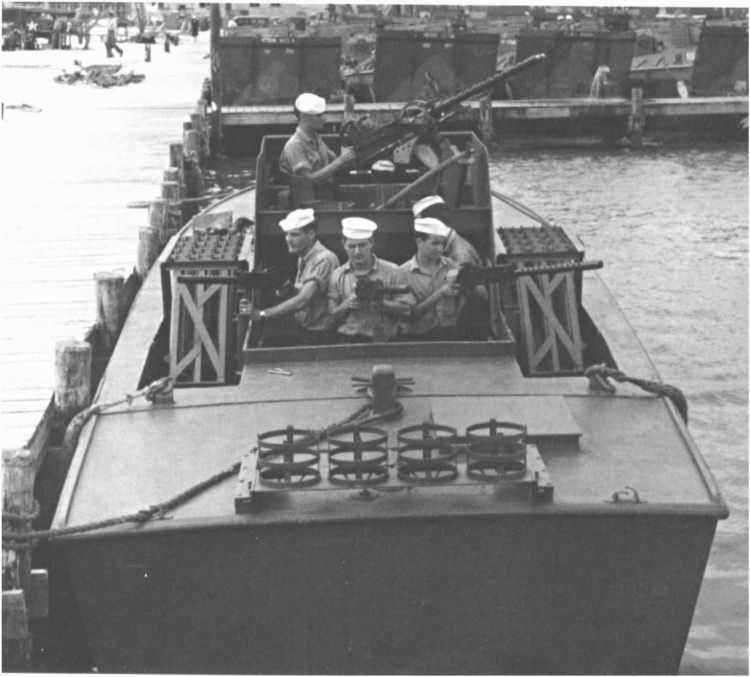
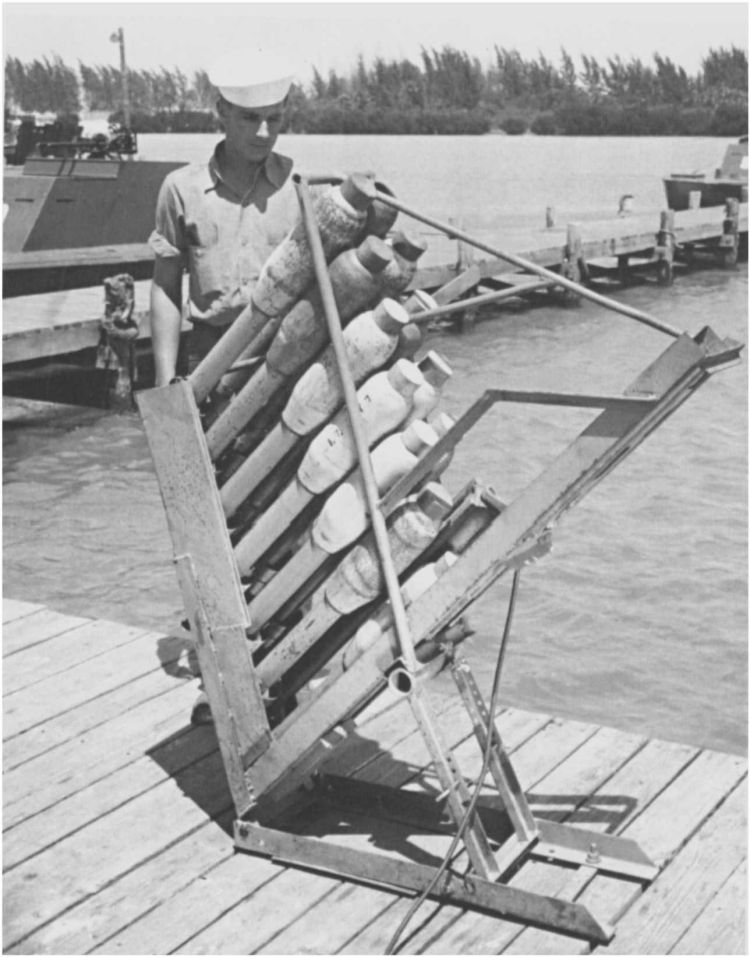
Another example of communication difficulties between ships and beaches and poor observation conditions is the report of a small LCS naval officer, FSG "Fire Support Group", armed with rockets.
Shortly after 12.00, he was close to the shore, under the fire of German cannons. "The troops were clearly visible, lying on the sand, as were the dead. An intense machine gun fire started from enemy positions halfway down the cliff. The troops were unable to move forward."
Desiring to help break what looked like a vicious circle, the officer requested permission at the upper level to fire rockets. His request was refused because of the danger to American troops "who could have infiltrated the enemy". And indeed, at this time, GIs were already well engaged inside the plateau, and they could have been hit by these rockets.
Some buildings tried to support the troops with fire from their light rooms. Ship support, which was necessarily limited during the first landings, began to weigh in the balance as communications improved between shore and vessels.
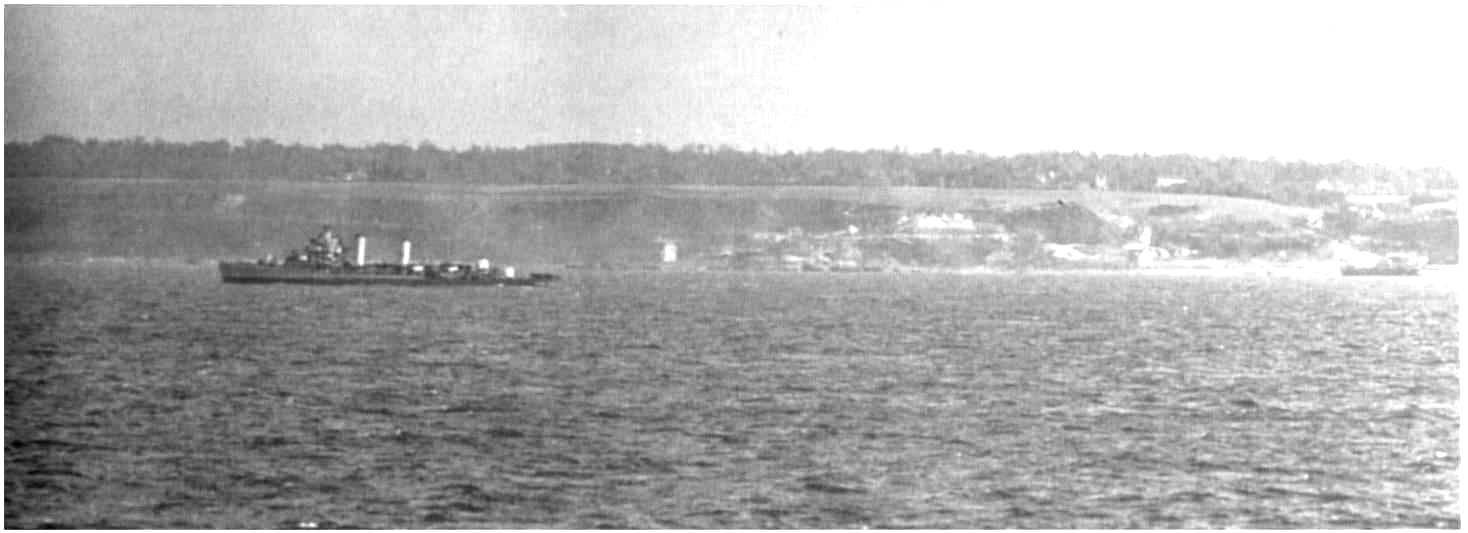
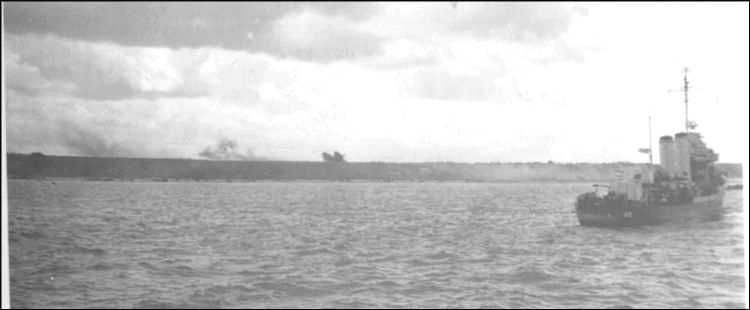
The initial positions of the 2 USS destroyers "Thompson" and "Mac Cook" who had participated in the preliminary bombings on Vierville were about 3 nautical miles from the beach. Between 8am and 10am, they advanced as close as possible, some even heeled the bottom.
The flank positions of the WN74 near Point de la Percée were almost torn off the cliff by shots from the cruiser "Glasgow" and those from the "Mac Cook".
Just west of Vierville, the "Mac Cook" (Lt-Commander Ralph L. Ramey) attacked WN74 positions at the Point of Perceia and in the vicinity of Vierville from 8:30 a.m. The 2 guns of the Percaea were attacked at 9.30 a.m., 15 minutes later one of them fell down the cliff and the other hit by the shells. At 10:30 am "Ramey the Rebel" (so known in the Navy) had reached the line of the 3 bottom braces (6m) at 1200m from the beach between Vierville and the Percaea where he spent the rest of the day shooting at casual targets because his "NSFCP" was never joined.
At 4:25 p.m. as he was shooting at positions on the cliff, Germans appeared with a white flag, trying to communicate with signals and flashlights. For 1 hour efforts were made to establish an understandable link in German or English. The helmsman of the "Mac Cook" said that he was going to resume fire, so an immediate answer "Stop fire!" came back from the beach. Ramey ordered the Germans to move and surrender. He resumed his fire on weapons still in operation, while keeping an eye on the Germans until they were seen going to Rangers. (the account of these incidents is to be compared with the accounts of the Cie Rangers C/2Rangers and by those of the HQ 1/116).
The Mac Cook fired 975 127mm shots that day.
The destroyer "USS Harding" (Commander George G. Palmer) was in front of Colleville, when he received the mission to take on board the Rear Admiral Arthur B. Cook and Major General Thomas T. Hardy, sent from Washington, to drive them from "Ancon" to the coast (8:56-15:31).
It was this building that shot at the bell tower of Vierville. in the afternoon around 2 p.m.
The destroyer "USS Carmick" (Commander Robert O. Beer), having lost contact with its controllers on shore, has been on the beach (some times 800m) from Vierville to Colleville to better distinguish from occasional lenses.
His NSFCP gave him a target at 8:10 a.m., but after a first salve, contact was lost. The destroyer could hear everything that was said in the hole sheltering the NSFCP, including the whistle of the bullets as they buried themselves deeper, but could not be heard.
By what was described as a "silent cooperation", the destroyer did his best to help a few tanks on Dog Green that had managed to climb on the walking road and were trying to advance towards the Vierville Valley. The destroyer's cannonists observed the tanks firing to find targets on the edge of the cliff and use their impacts as goals of the "Carmick" pieces.
He focused on the exit from Vierville in the middle of the day, contributing with the "Texas" to his surrender around 1:00 p.m.
This destroyer, in contact with a grounded control group at 1720, tried several times to locate the enemy battery firing at the Ruquet, but the observers had to give up, admitting that they did not know where the German guns were. (German field artillery camouflaged in the interior was never spotted).
The destroyer "Thompson" (Lt-Commander Albert L. Gebelin), after going from La Percée to Colleville and St-Laurent, finished his day by firing 12 127mm shots at an observation post at Pointe de la Percée, ending the fire when the hole in the cliff was blocked. He then went up the "USS Satterlee" at Pointe du Hoc
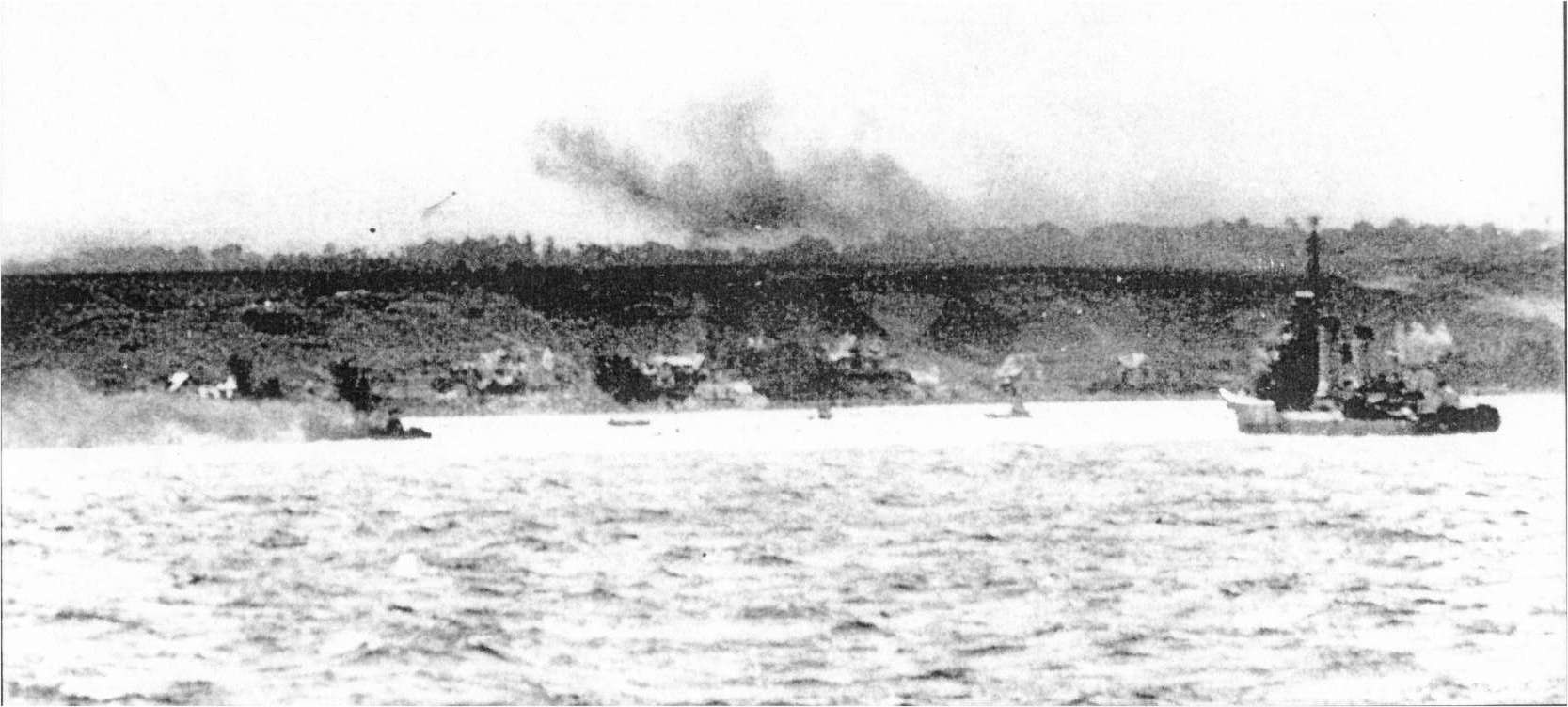
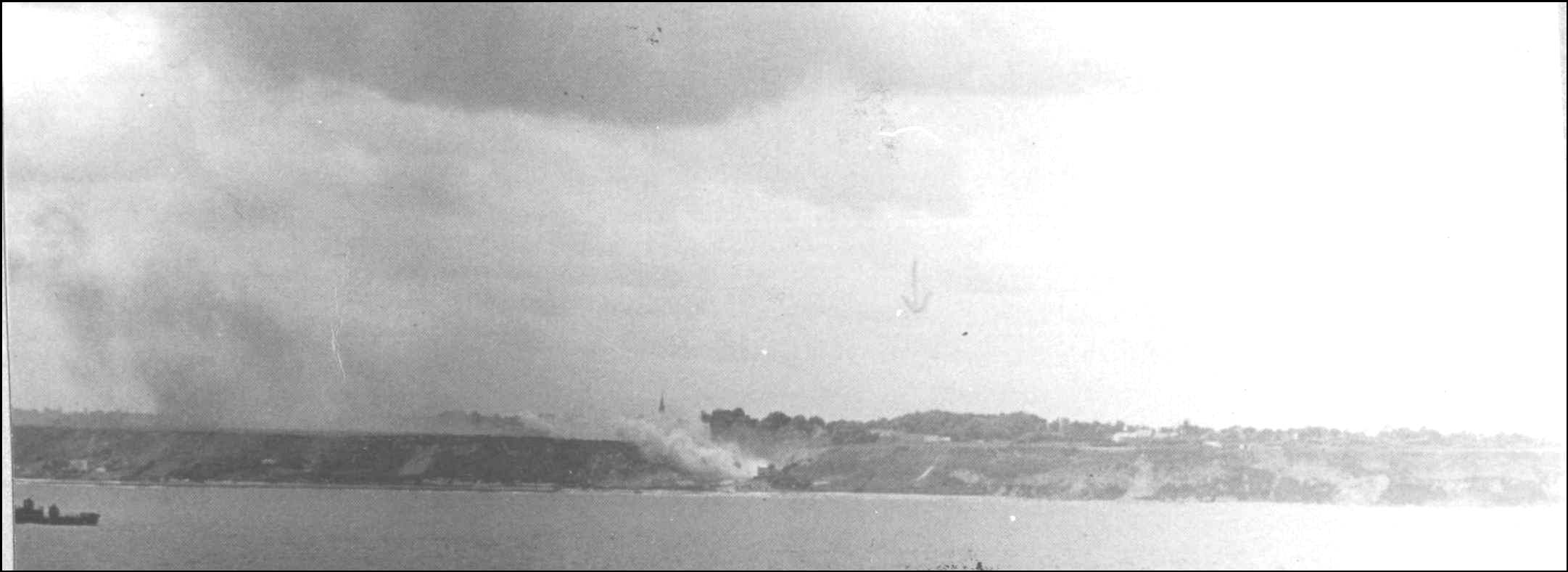
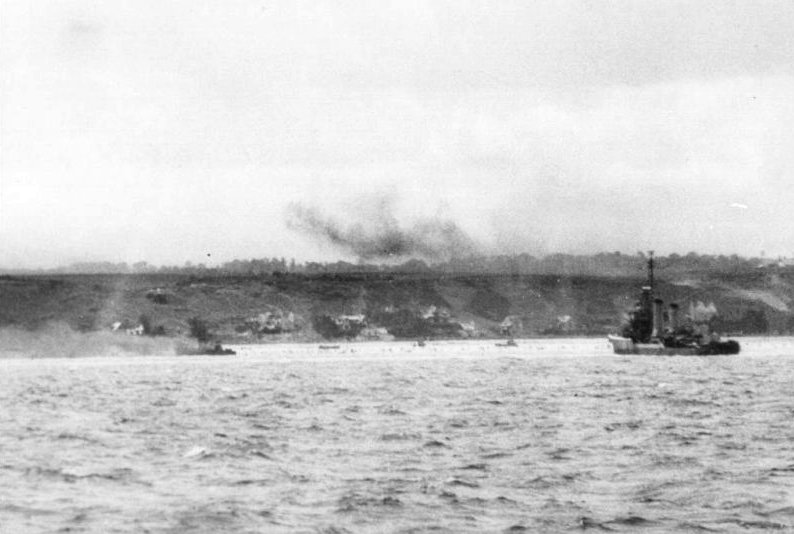
This photo of Vierville with its bell tower was taken from the "Texas" battleship around 12:30, when Texas, led by a land-based NSFCP, was shooting at the strong point keeping the entrance to the Vierville Valley. Between 12:23 and 12:30, 6 356 mm bordered by the "Texas", assisted by a destroyer (the Mc Cook) were sufficient for the Germans of this position to surrender.

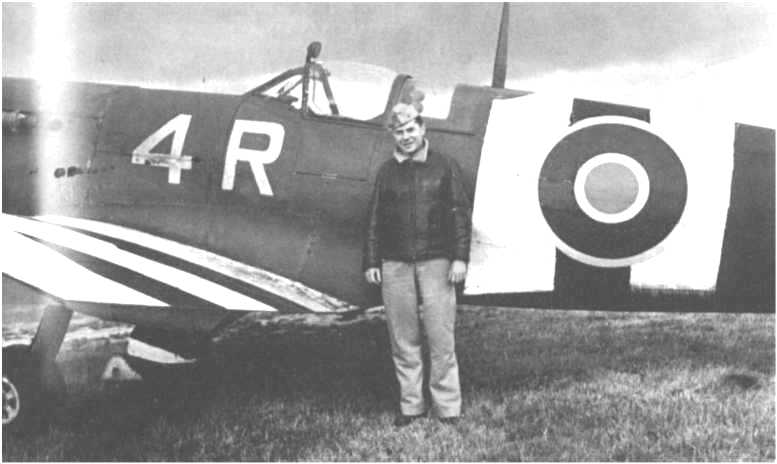
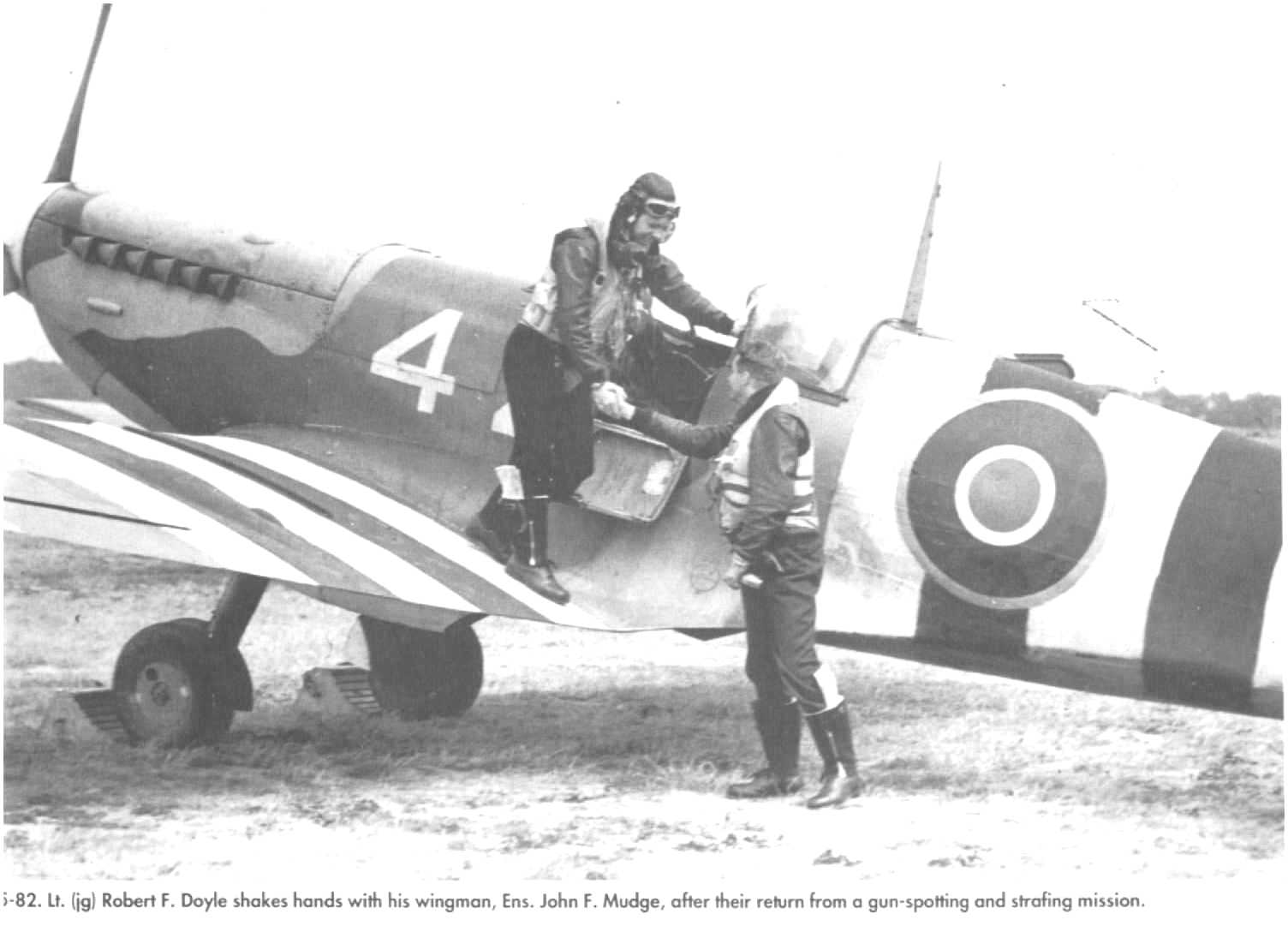
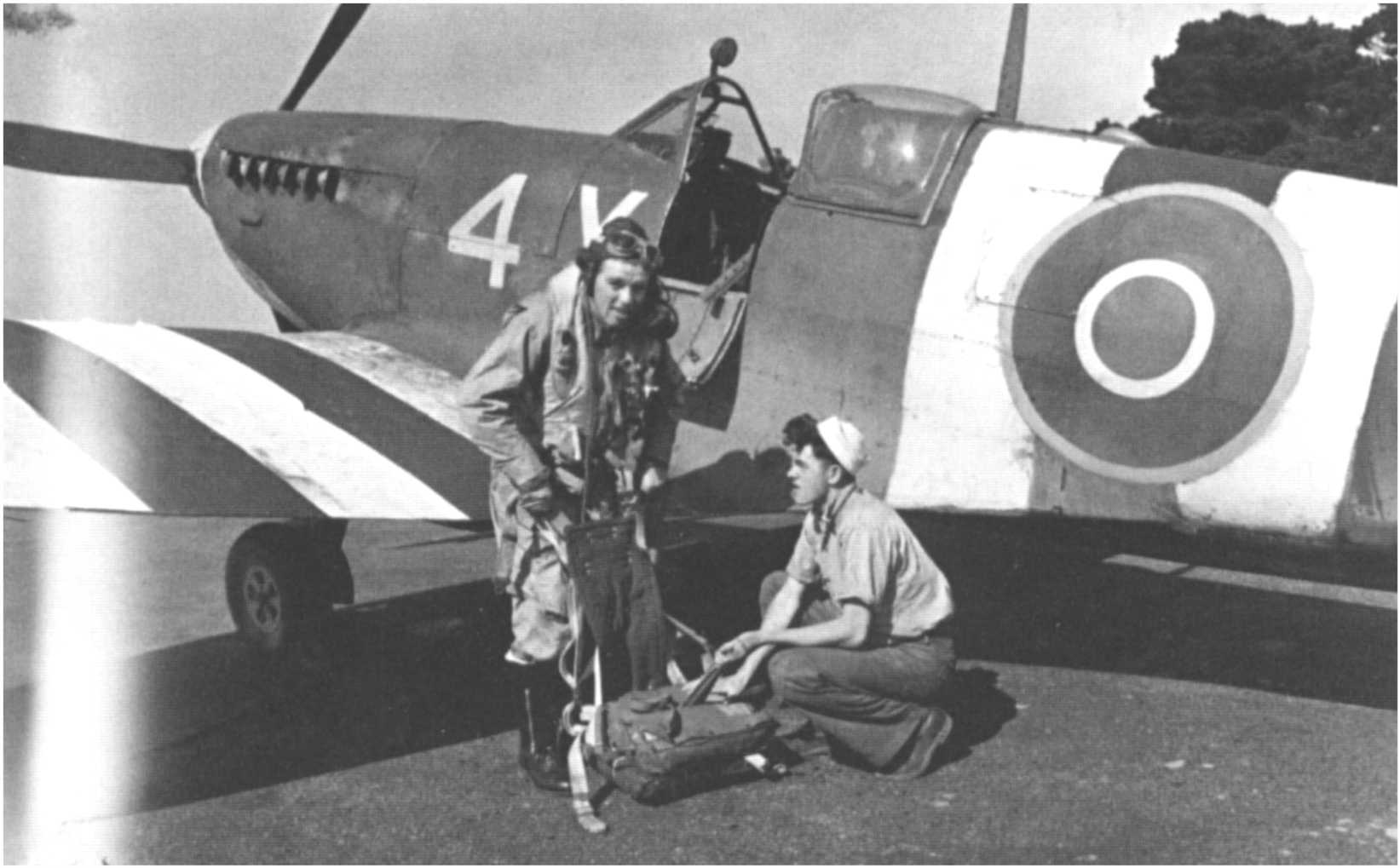
The "Texas" fired heavily on the rears of the German positions, Formigny and Longueville, on the indications of its aerial observers on Spitfire:
Report of the Saturday Evening Post on board the "Texas":
Nick Carbone of Brooklyn: "Now a rapid succession of targets: a mobile battery near Maisy, a concentration of German troops in Formigny, which was dispersed with losses, a convoy of trucks to Trevières that was crushed, and assault guns (the Marder of 352PZJAbt.) in woods near Surrain. Each time our RAF observer (he was on a "Spitfire" of reconnaissance), a bold and excited Englishman, commented warmly on our shots. "Now I'm gonna try to find you a new goal. I'm diving to see if these tanks are friends." A moment later: "Finally they are not friends at all. I'm jumping, goodbye!"
So we had a new observer and continued to shoot at occasional targets between Saint-Laurent and Pointe du Hoc."
In total the "Texas" consumed on June 6 421 shots of 356mm and 254 of 127mm.
All this activity has greatly improved the situation on the beach but without eliminating all German artillery fire. They came from many of the country guns, well camouflaged inside, in liaison with coastal observers and firing on predetermined targets.