



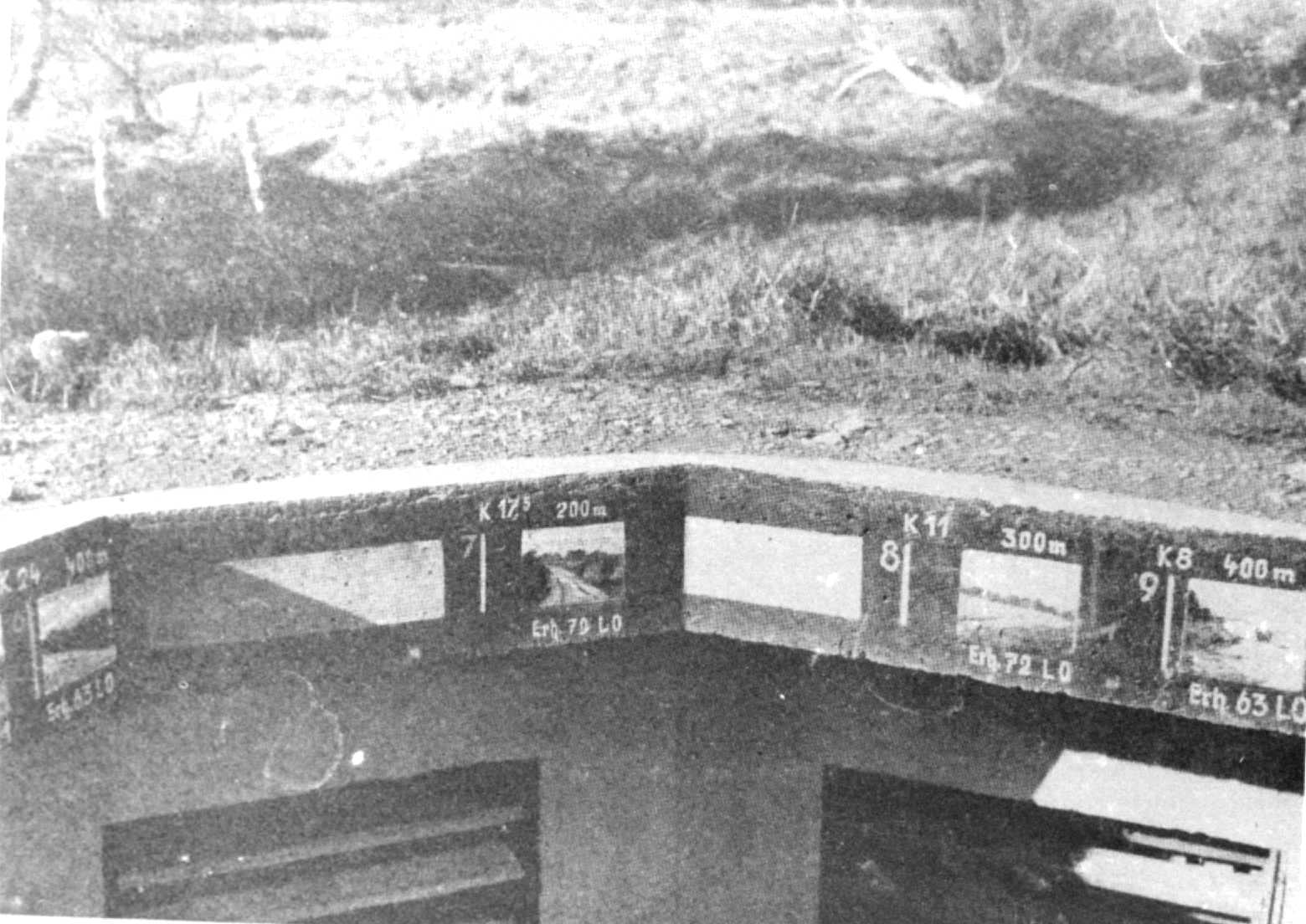
Karl Wegner was MG42 machine gunner down from Vierville, near the bunker with a 50mm gun. His sergeant had to neutralize another fort full of Russians in a state of rebellion, but was killed by taking care of it. When Karl had to escape, he came out of his fort through the back door, crossed a short open space, plunged into a hole, made his way into a network of trenches and then uncovered. He was probably shot by Rangers from CieC/2Rgr and eventually joined Gruchy.
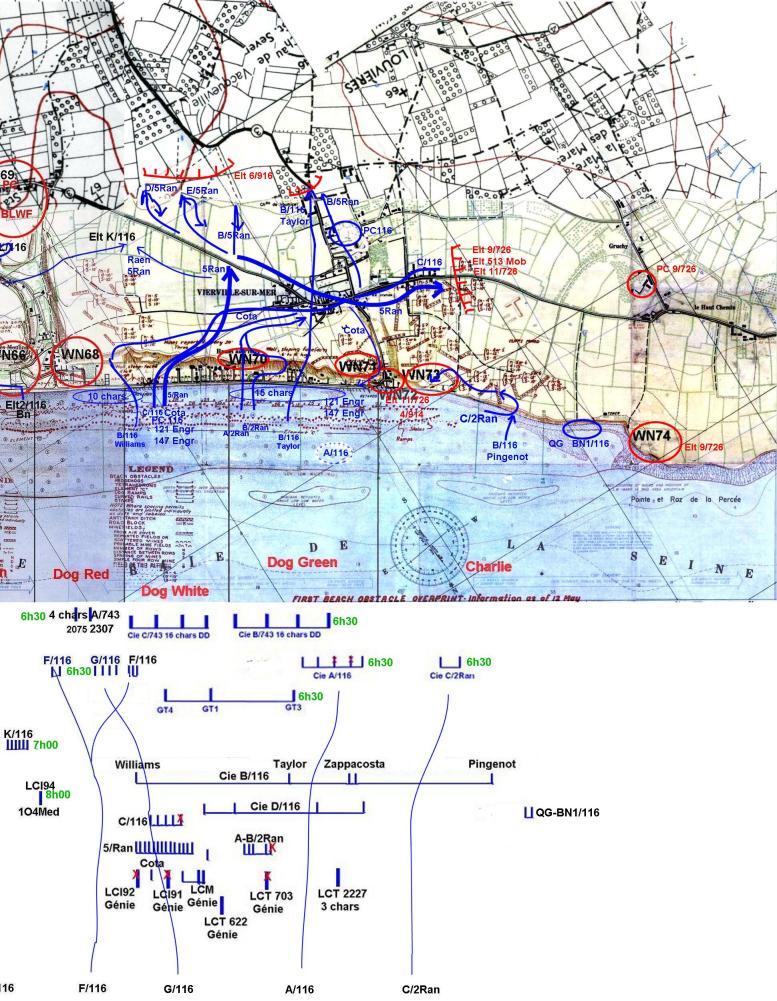
Throughout Omaha Beach, C/2Rangers Company was probably the first assault unit to reach the plateau, and this on Charlie Area, an area where vertical cliffs begin to border the west of Vierville Beach.
Landing with the first waves of assault, at 6:45 a.m., about 30 men arrived valid in the shelter of the 30m cliff, after crossing the strike under fire of the defences of the Vierville Valley.
Their officers, Captain Ralph Goranson, and Lieutenants William Moody and Sidney Salomon, were with them. They were volunteers, trained especially for difficult assaults.
(Sergeant Scribner, for example, remembers Sergeant Duke Golas: "He had half the figure carried away by a grenade and he was still standing under the cliff to fire with his weapon, calling the boaches to go down to fight.")
The officers knew that the company was isolated, that the Vierville valley was full of Germans and that their only chance was to climb the cliff. They were trained to climb, and they had what they needed.
Lieutenants Moody and Salomon and Sergeants Julius Belcher and Richard Garrett moved to the right to a fault in the cliff, about 300m west of the Gambier House. Using their bayonets as catch, helping each other, they reached the top. There, Moody tied ropes to the pickets of a minefield and sent them back to the foot of the cliff, allowing the rest of the company to climb in turn.
As early as 7:30 a.m., the 30 rangers of the CieC/2Rgr were on the ridge.
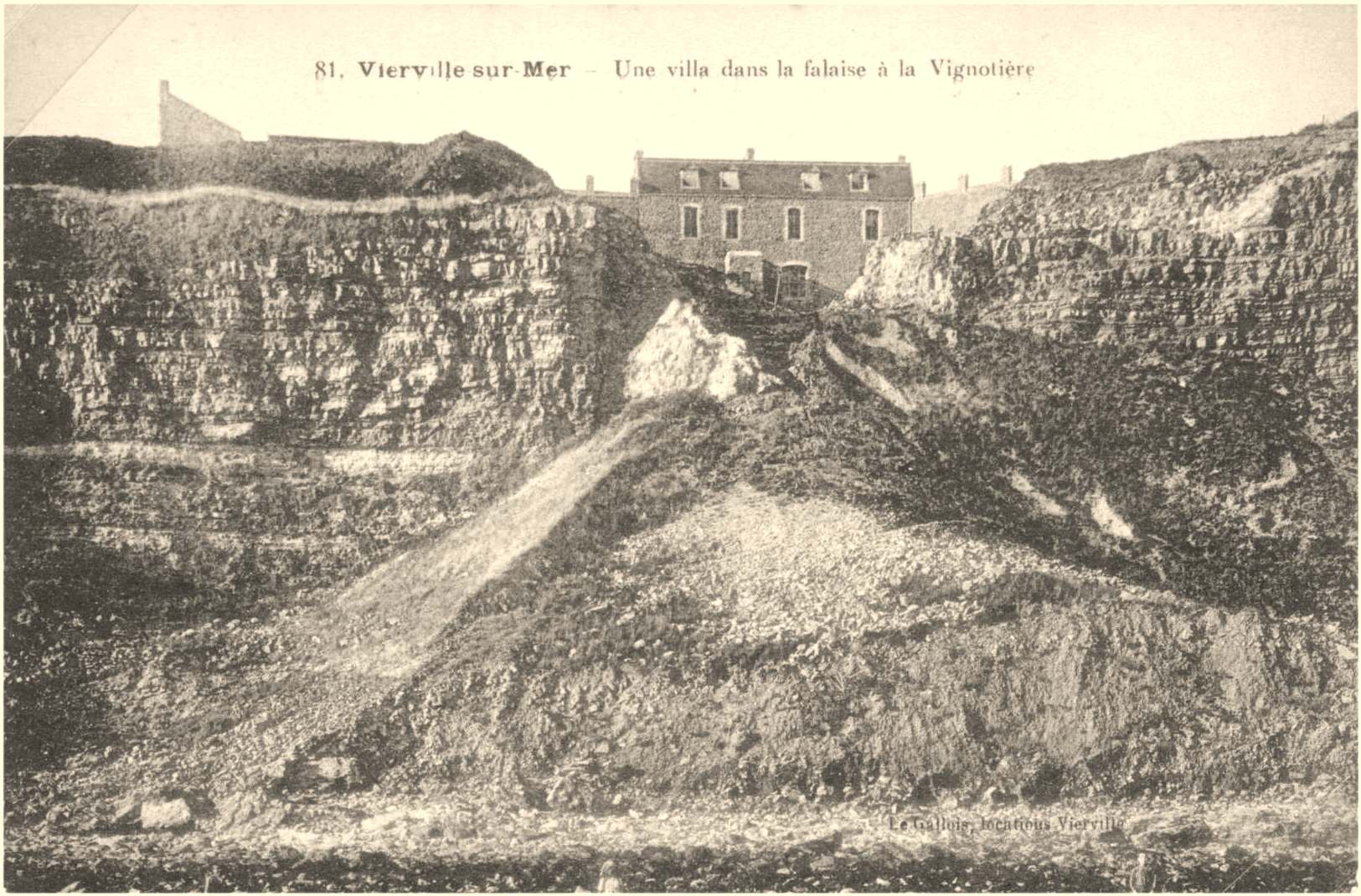
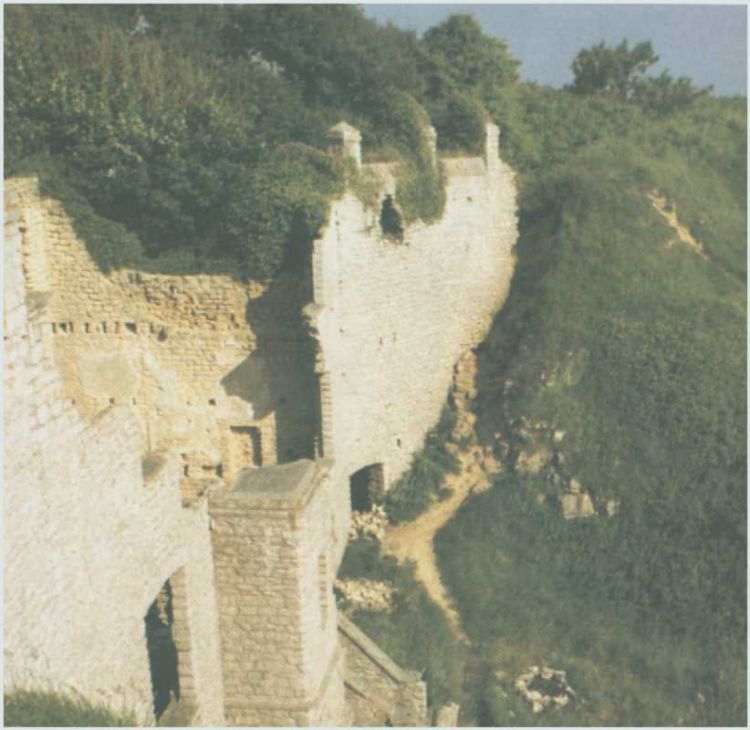
From this cliff, the Rangers saw on their left what they called a fortified house (the Gambier house, embedded in the cliff, 200 m west of the Vierville Valley). In fact it was not fortified, it could have been, being built of stone like the Norman farms. It was surrounded by a network of communications trenches linking all kinds of shelters, casemates, tobrouks, cannon and mortar sites, all forming the WN 73, a fortified point overlooking the beach and the Vierville valley.
The original mission of the company C/2Rgr was to go west along the cliff towards the Percaea, but Captain Goranson decided to clean the fortified area first. Lieutenant Moody led a patrol to attack the house. He kicked the door and killed the officers inside, then started to search the trenches. Moody was shot in the forehead. Lieutenant Solomon took over command of the patrol. He went down into the trenches, using phosphorus grenades to clean the shelters and casemates.
They quickly destroyed the mortars and the main external positions, neutralizing the WN73, without completely cleaning it. The fight lasted all day on this western side of the Vierville Valley. Goranson wasn't strong enough to dislodge the Germans. They were cleaning a trench, and were only moving forward to see that the Germans were reoccupying the position and constantly returning through the trenches.
Meanwhile, Captain Goranson had seen a boat section of the 116th regiment (of the B/116) approaching under the cliff on his left (it was 1km too to the west). He sent a Ranger to guide them to the top, obtaining his first reinforcements.
Testimonies
Sergeants George Morrow and Julius Belcher saw a machine gun that took under his fire all west of Vierville Beach, one of those weapons that had killed so many Rangers an hour before. She continued to shoot permanently on the beach. With rage, Belcher fell into this position, forgetting his own safety. He opened the casemate door, threw a phosphorus grenade into it. The phosphorus starting to burn them, the Germans gave up their weapon, and went out the door screaming. Belcher shot them as they emerged.
Not all were brave. Lieutenant Heaney remembered "an officer whose name I will keep quiet. He had been one of the best in training. We felt he would be an exceptional fighter. But I found this officer at the bottom of a trench crying like a baby, and unable to move. Sergeant White appointed one of his men to take him back to the beach for evacuation, and this is the last time I heard about it."
Lieutenant Solomon was driving a "section" of three men. He said: "We were going down a curved trench. We fell on a mortar in a concrete casemate. A few more grenades, rifles and Thomson machine guns, and we continued in the trenches."Sergeant Scribner said it would never end.
Lieutenant Solomon was losing hope. Looking down at the beach, he only saw chaos. "Until noon on D-Day," he commented later, "I thought it was a failure and I wondered if we could successfully retreat and start an assault in the near future."
"I was very worried about this cliff," said Sergeant Semchuck later, "waiting for the boaches to push us back into the water. They could have. On the night of D-Day, when we joined the A and B/2Rgr cies (in Vierville), the morale rose to 100%... I was jumping with joy. I knew the boaches missed their only chance of victory. I didn't want to start over another day."
Sergeant Lutz was of the same opinion: "Old man, never more d-day for me, if possible!"
Company C had not accomplished its initial mission to the Percaea. But his action was decisive. By attaching the Germans on the west side of the Vierville valley and on the cliff, the rangers neutralized machine guns and mortars that would have added to the carnage on the beach and contributed to the surrender of the defences at the foot of the Vierville valley at about 1:00 p.m. Without them the receding of the valley by General Cota at that time would probably not have been possible. At worst, the valley would not have been cleared until the next day.
It was not until late afternoon that the Rangers and Section B/116 succeeded in occupying the strong point and annihilating the resistance. Before going to bivouaquer on Vierville, they sent a patrol to Pointe de la Percée, where they found the WN74 completely upset by the Navy's fire.
For most Rangers it was their first combat experience. It shows the quality of their training, because they have completely beaten cut Germans. They did this not by sacrificing men, but by taking precautions and using the tactics of their training.
Their casualties in this fight were only two men, including Lieutenant Moody.
Later, the burial stewardship team counted 69 Germans dead. They probably didn't make prisoners.
For C/2Rgr and B/116, it was an isolated action. They were the only Americans west of Vierville. They were unlinked, all radios were lost. They had a little help from the navy guns (including the "Mac Cook"), but not always welcome. Not knowing that Rangers were on the ridge, the destroyers fired 20mm and 127mm guns at the position.
Sergeant Scribner saw a 127mm shell explode just on a concrete casemate; he was surprised to see a hole only 15cm deep. Germans knew how to make solid concrete.
Sergeant William Lindsay was in a concrete blockhouse when he received a direct 127mm shot. He lost a tooth, was shocked, and lost his senses temporarily. Three times that day, his comrades prevented him from emptiness. In the evening, red with anger, he yelled at a colonel, accused him of stealing his rifle, which he was wearing in a shoulder strap. After Lindsay recovered his common sense after a few hours, the Rangers had fun and sympathize with the Germans who, in their blockhouses, had to withstand the impact of the 356mm shells of the "Texas" battleship.