
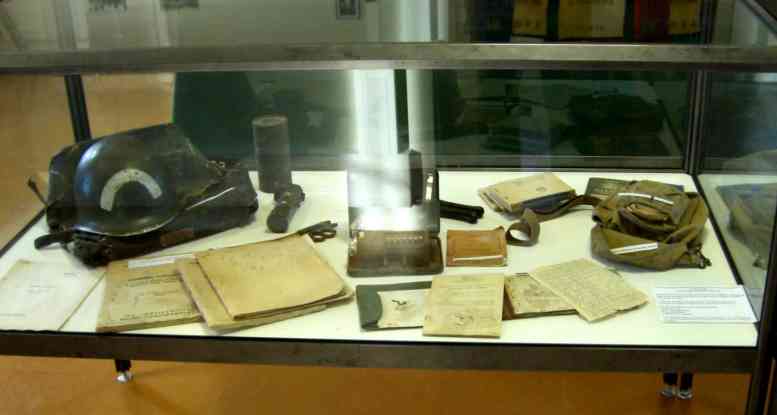


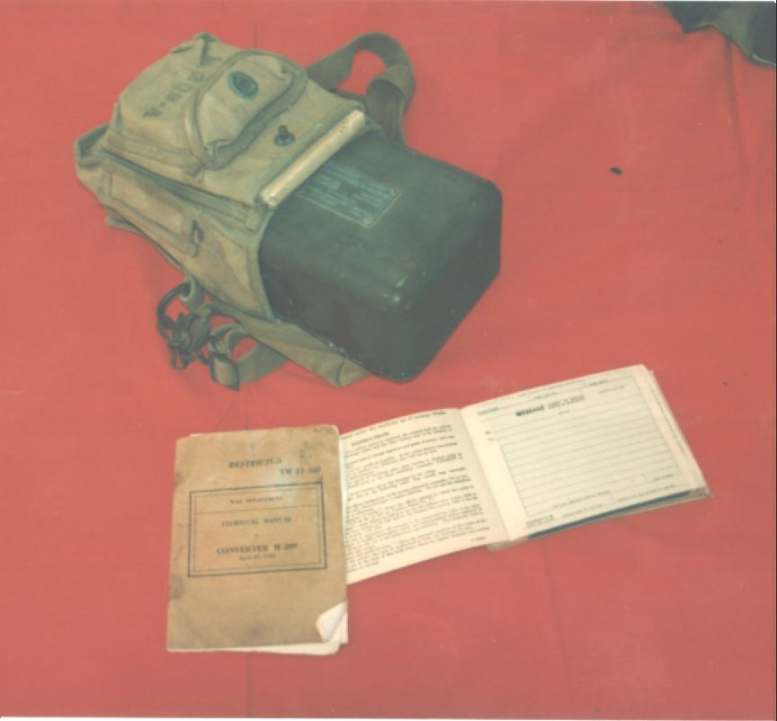

The waterproof bag model that protected the encryption equipment.
The 1°Bataillon HQ landed at about 7:20 a.m. under the Percée and was shot by the Navy
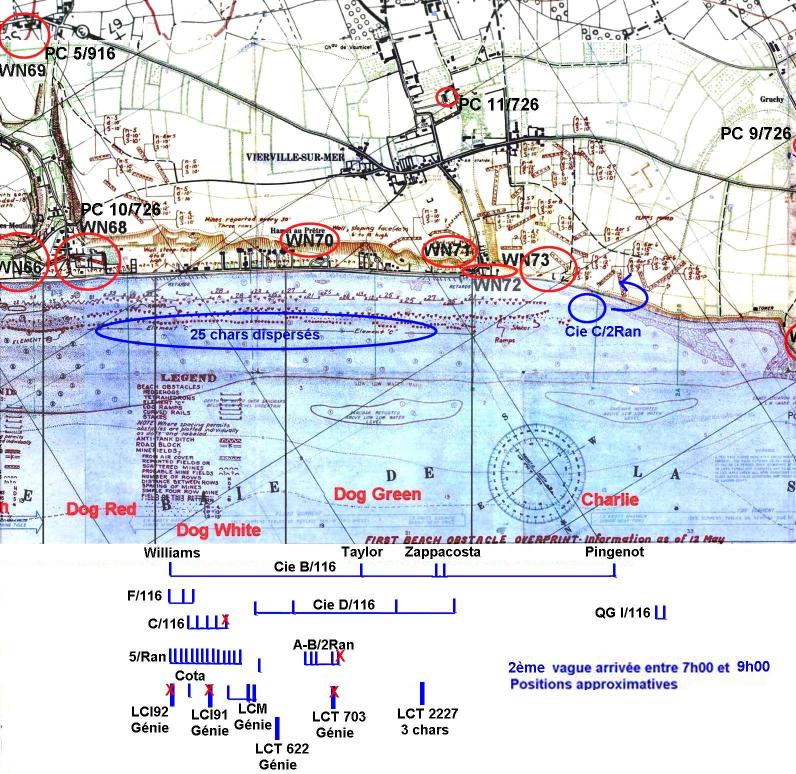
To complete the picture of the 1st Battalion's misfortunes, the LCA carrying its command company, its command group, and the Beachmaster (beachmaster) to Dog Green arrived at about 0720 hours several hundred meters west of the area, under the cliffs, halfway to the Percaea, under a concentrated fire of light weapons, coming from the WN74.
One of the 3 LCA had sunk off Vierville. Don McCarthy told us about this shipwreck. The shipwrecked reached the beach of Vierville late in swimming.
Under the cliff, 500m west of Vierville, the command company already reduced to 2/3, suffered heavy losses among officers and non-commissioned officers, including the officer commanding the 58th Battalion of Armored Artillery. Crossing the sand and rocks to the cliff cost more than half of the group. The survivors, reaching the base of the cliffs, sheltered themselves in the rock holes.
Not only was the command group separated from the other battalion units, but the members of that group were so dispersed that they had to use the radio to communicate with each other.
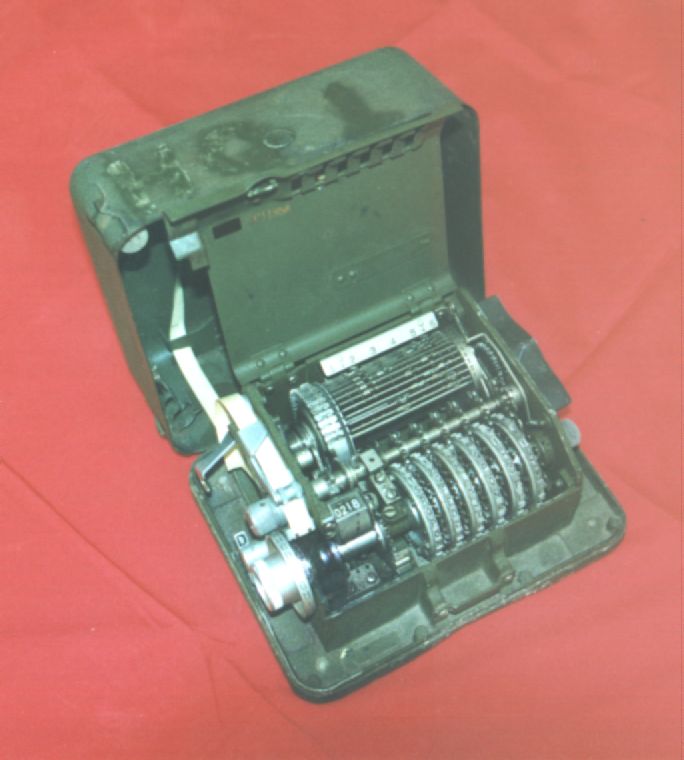
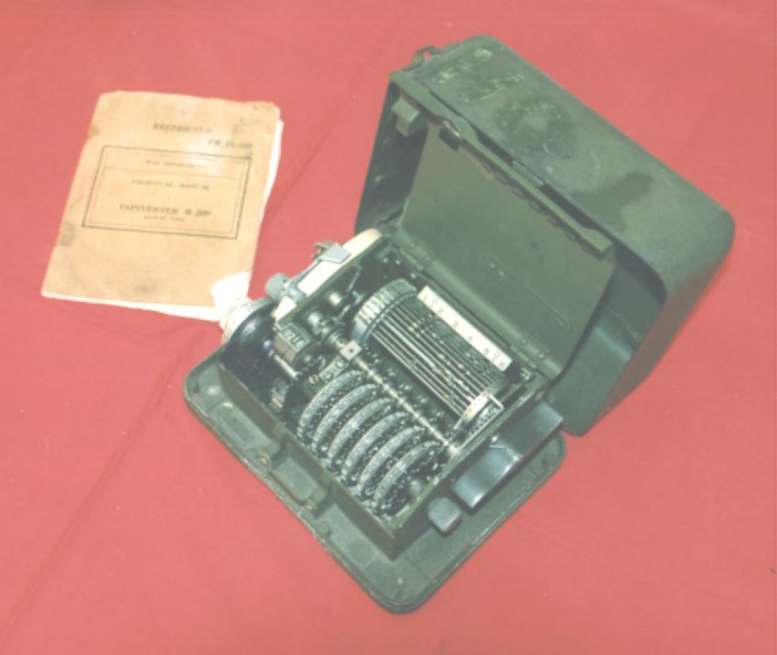
(The M209 encryption machine of the 1st Battalion Communications Officer (Lt Robert Hackett) was found in 1945, under the cliff, in a waterproof bag, in working order, with all the secret codes in use at that time, see photos below and below).
The fire of the shooters from the top of the cliffs and the firing of a destroyer (page 303) (probably the "MacCook") nailed the band to this place almost all day.
Ship fire to the coast was limited after the first landings for fear that US troops would be affected, especially with land-sea communications still unreliable. Even with these limitations, casualties were inflicted on the troops disembarked by the firing of the naval guns.
One of the most serious and spectacular incidents was the case of a destroyer who was machining the beach strip beneath the cliffs near the Point of Perceia, where the command group of the 1°Bataillon of 116°Regiment was located between late morning and late afternoon of D-Day.
Without radio to contact destroyer Major Thomas S. Dallas, Deputy Commander of 1°Bat., sent an orange smoke signal, meaning for the use of allied aircraft: "Allied Troops here". He hoped that the destroyer would interpret this signal as a request to cease fire. Unfortunately, this was not the case. He responded by sending several shells to the orange smoke. Making signals with their handkerchiefs, men tried to transmit: "We are Americans. Stop the fire!". The message flashing back from the ship said, "Meet the Americans!".
This tragic misunderstanding continued throughout the day, and Major Dallas acknowledged that he had suffered more losses this afternoon by the American destroyer than by enemy fire.
At the end of the day, after German machine gun fire stopped in the area, the Beachmaster was able to stop the ship's fire.
Material found in 1945 under the cliff between Vierville and the Percée, about 300 meters from Vierville
1 waterproof bag, model BG-160, portable, found in 1945 at the foot of the rock cliff under the "Maison Gambier" in Vierville-sur-Mer, and containing:
- 1 encryption-decryption machine M-209-A, serial No 9982
- 1 canvas cover for the M-209 machine, with 3 spare rollers of printed tape, and the "Technical Manual" of the M-209 Converter, dated April 27, 1942, TM-11-380, bearing the handwritten mark "HQ1"
- 4 Message Book M-210, virgins
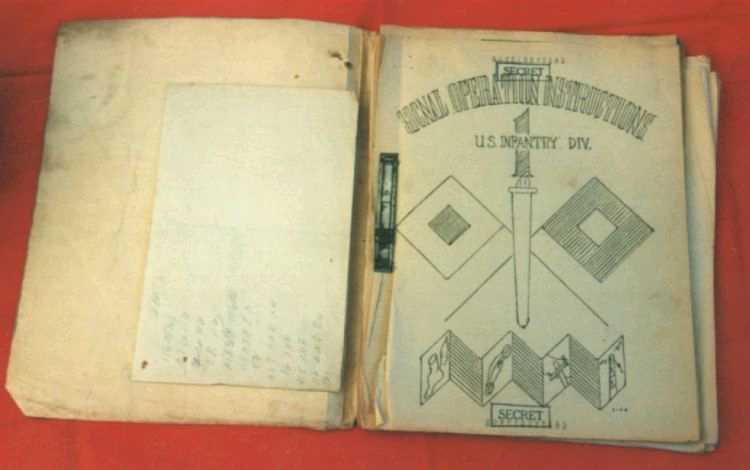
- 1 attached notebook , containing the Signal Operation Instruction (with handwritten mention:)Lt-Hackett, Commo, 1st BN, 116Inf.)
- 1 Combined Assault Code, in 2 volumes: CCBP 0130-A1 (Reg. No 6946) and CBBP 0130-A2 (Reg. No 7005)
- 1 block (Slidex RT Code) with instructions, handwritten grid and note HQ CT 116 US ARMY of 22 May 1944 indicating keys for days J to J+6
- 1 French Phrase Book TM 30-602
- 1 German Phrase Book TM 30-606
- 1 Flash Light, US, mle TL-122-B
- 1 bronze punch, broken
- 1 M2A2 hand grenade container (contains an incendiary grenade, according to my memories)
- 1 TNT bread, 1⁄2 lbsμ
- 1 small roll of detonating rope
- 1 small slow wick roller
- 2 "fuze lighter" traction, red colour
- (no detonator)
outside the bag, in its rotten cover, an insulating cutter "CHRCO, 30 Kv", beak broken afterwards.