




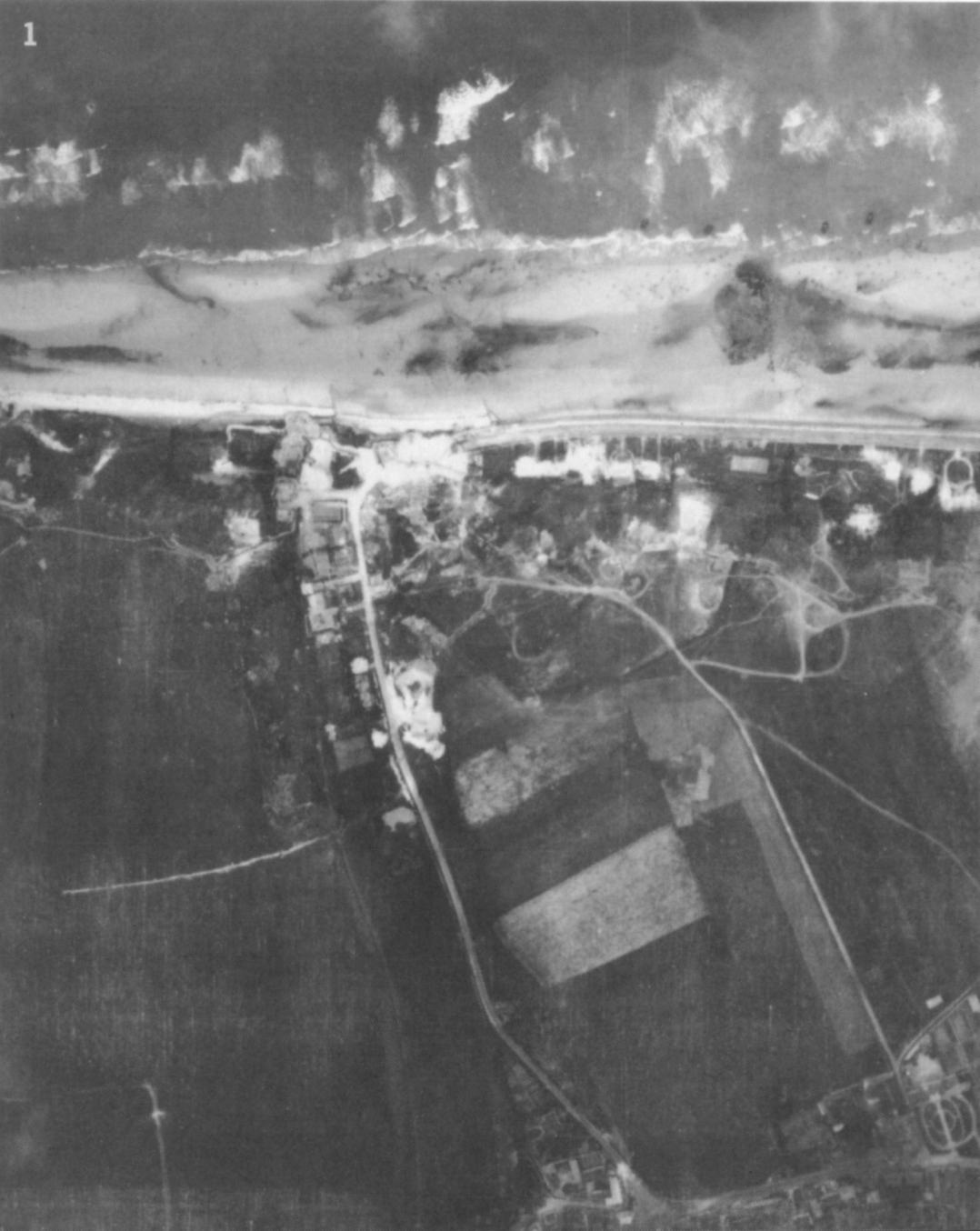


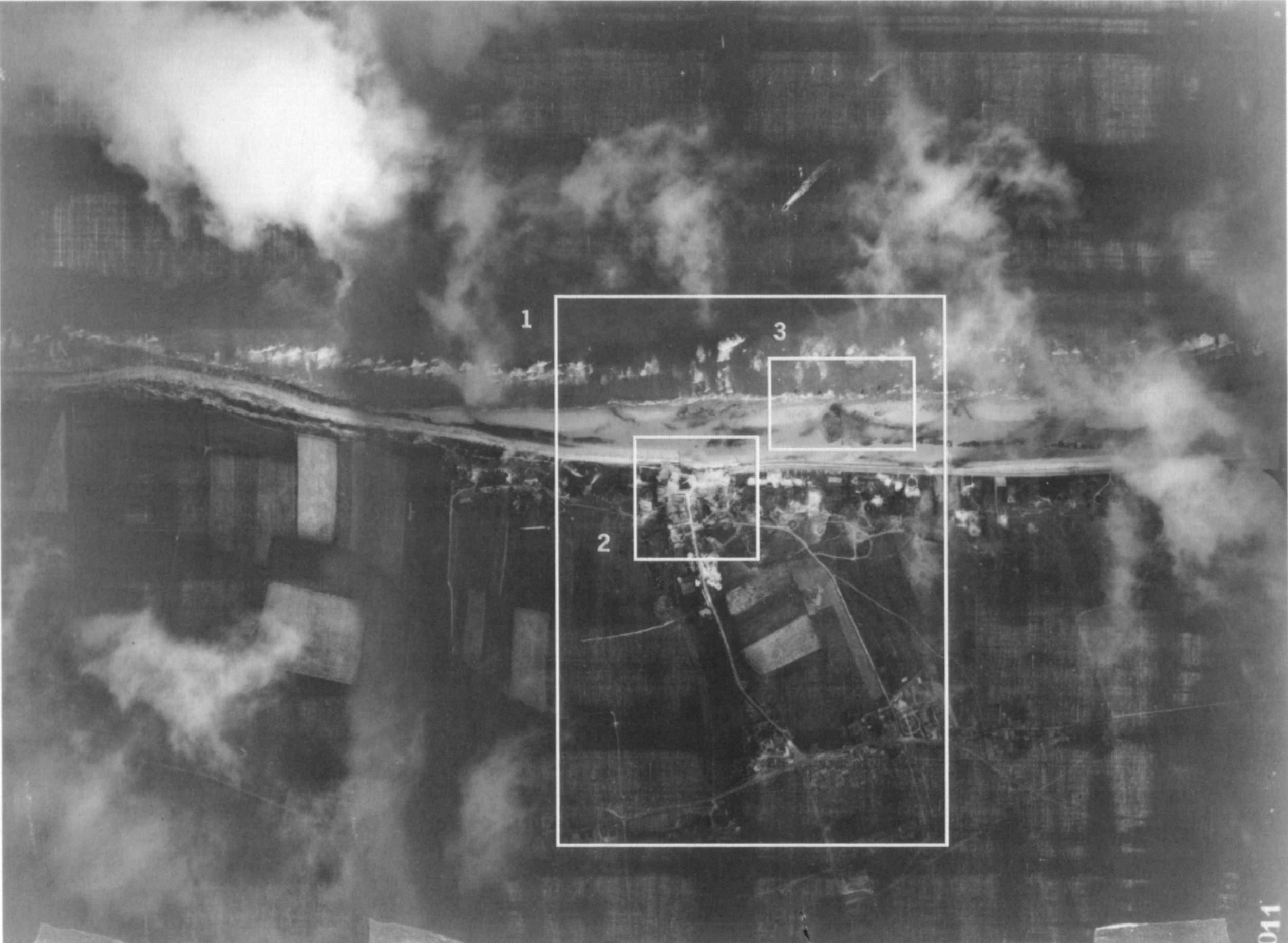
DOG WHITE AND DOG RED SECTOR
7:30 a.m.
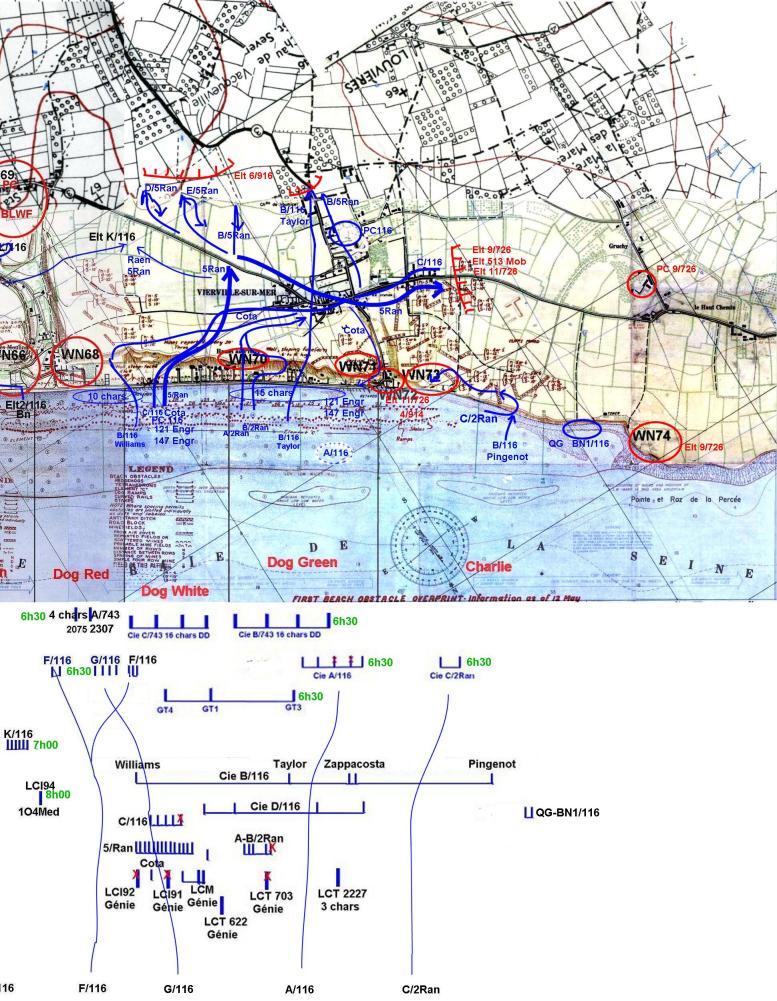
At about 8:00 a.m., after the arrival of the 2nd wave, units of the assault infantry were distributed along the 2 km of the beach front in the Vierville area and some had already begun climbing the cliff. The 116th Command Group was in close liaison with the most important.
There were also 25 to 30 dispersed tanks and scattered elements of 3 engineers battalions, still without bulldozer and lacking explosives. There was no artillery.
On the weakest area, in front of the strong German positions keeping the "D1" valley of Vierville (Dog Green), there were no longer elements capable of continuing any action. The loss of officers and non-commissioned officers was so high that the survivors were uncommanded.
German fire was still important but it was weakening and in the central sector it was very limited.
A battery of German field artillery responded to a request for fire by fire from its coastal observer: "Sorry, my Lieutenant, command of the Commander, for lack of ammunition, only shot-by-shots are allowed". Non-commissioned officer Peel, from the battery, cursed the decision taken two weeks before, to disperse the stocks in depth to ensure their safety. A wagon had already exploded approaching the battery.
At 10:00, the Artillery of the 352nd Div. German reported to the Division Chief of Staff that "the situation of ammunition at the 4th heavy battery was critical". Reserves were limited everywhere and the Corps could only resupply within 36 hours.
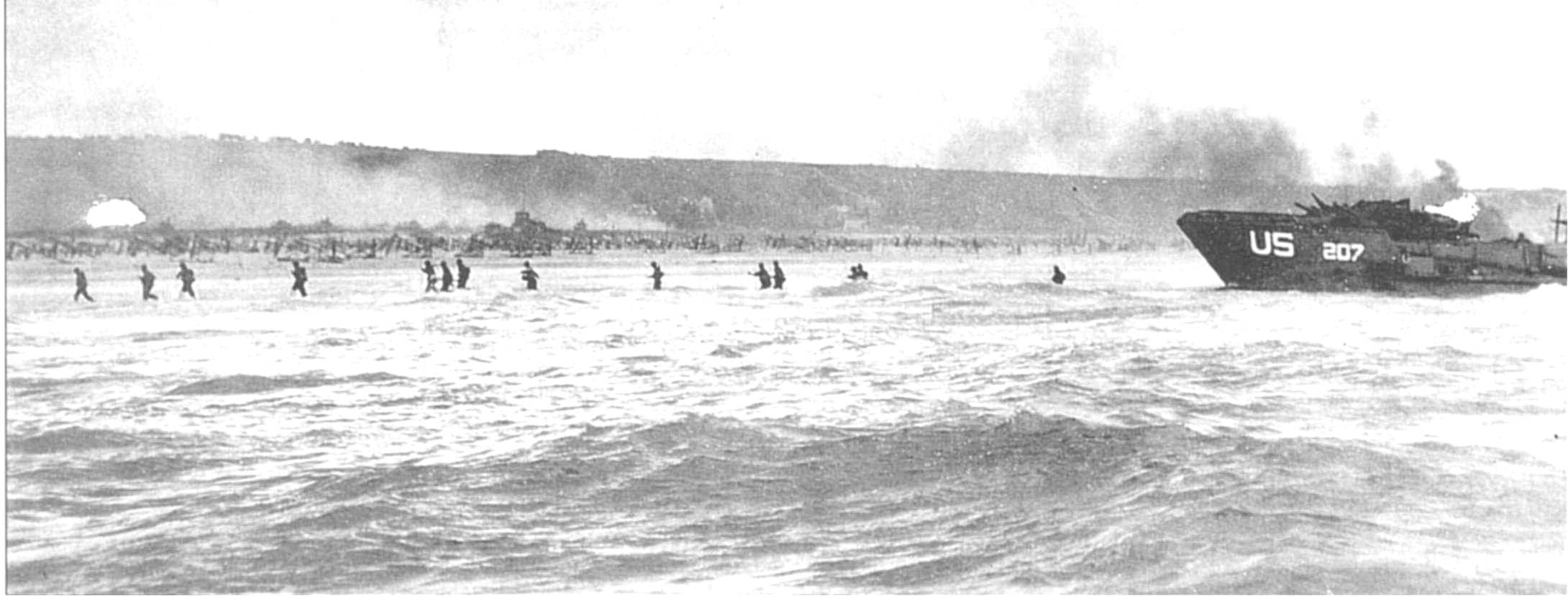
The strength of German fire was difficult to appreciate by the American troops sheltered behind the pebble slope. What they knew was what they had already suffered and they saw in front of them a naked and often smoky cliff. Apart from firing tanks, they could only rely on their own weapons.
The landings were stopped. By order of the "Beachmaster", any new arrivals of vehicles, cannons and engineering equipment were stopped between 8:30 a.m. and 10.30 a.m.
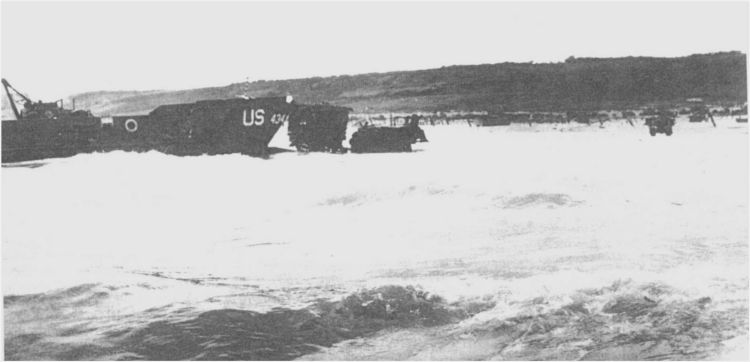
And indeed, conditions could not have been worse for the disembarkation of vehicles. Had the halftracks, jeeps and trucks been able to overcome deep water, ressack and fire, they would have found themselves on a narrowing strip of sand, without any opening through an impassable pebbly slope. The loss of equipment was very high, affecting all types of equipment, including engineering equipment needed to clean the beaches. All weapons have been put out of temporary operation by water and sand, and the first thing that some units do when they get away from the slope has been to dismantle, clean and reassemble their weapons.
Although many special equipment, such as "Bangalores" explosive poles, ammunition and heavy weapons, were abandoned when the men landed in deep water, a small part was subsequently recovered.
The losses in radio equipment were particularly heavy and the water damaged many stations. Colonel Canham reports that most of the 116° Reg radios. were unusable. This loss was expected to significantly reduce the effectiveness of the assault infantry command, both on the beach and throughout the day.
On Dog White's crowded and less exposed area, the concentration of landings between 0700 and 0800 had mixed the sections of several infantry companies, the engineers, the crews of the destroyed barges, the land-based naval fire control groups (NPSCs), and elements of other support units. At this place, those who arrived last discovered that it was impossible to find a place to shelter from the slope and they had to lie behind, on the open sand.
The disorder was inevitable and was made difficult by the lack of communications and the dispersed disembarkations of the command groups. Moreover, even by disembarking at the best place, a command group could control only a small area of beach. Many isolated units had to solve their own organizational and morale problems.
There was, for sure, also a morale problem. The survivors of the crossing of the beach, most of whom received the baptism of fire, had witnessed heavy losses among their companions. The spectacle of the many wrecks helped to break the morale of the men who watched from the shelter of the pebble slope. Behind them, the rising tide drowned serious wounded broke on the sand and brought the mutilated bodies to the pebbles. The disaster still struck those who landed behind them, recalling the power of enemy fire. In such disastrous circumstances, it was difficult to redress the moral effects of such losses.
.
Shocked by what they had just experienced, men could see the seafront wall and the slope as a providential shelter. It was not a great protection against mortar or artillery shells, but it provided a shelter against rifles and machine guns. In front of them, with the barbed wires and the minefields to be crossed, lay a flat ground, fully exposed; and beyond, the bare and steep cliffs and fortified enemy positions still in action.
And yet almost everywhere, officers and troops stormed the cliffs. The decisive factor was command. The landing of the 116th Regiment Command Group just in the same place as the 700 infantrymen and Rangers of Cie C/116 and 5th Rangers was very favorable.
But everywhere progress was linked to a few individuals, officers or non-commissioned officers who were stimulating, encouraging or literally carrying their men forward, often taking the lead themselves. Someone had to set an example for men to move. It could be a general, or a colonel, or a major, or a captain, or a lieutenant or a non-commissioned officer.
Nurse Cecil Breeden recalls: "When I arrived where the memorial monument to the first cemetery is currently located, Colonel Canham (cdr 116th Reg.), Colonel John Metcalfe (cdr 1st Battalion 116th), and a few other officers had installed a PC. Canham was hit in the hand. I treated him. A man arrived looking for a non-commissioned officer, saying there was a sniper ambushed there. Metcalfe replied that there was no non-commissioned officer available, but that he could accompany him himself. Both left and climbed the hill."
General Cota, on the other hand, was always on the rise everywhere to stimulate action and personally show how to act in every circumstance. After driving a group to the foot of the cliff at 8:00 a.m. and almost getting blown up by a salve of mortar shells, he himself drove a column towards the ridge.
The assault troops landed did not remain nailed behind the pebbly slope, despite the dead, the wounded, the loss of equipment, the disruption, and often demoralization.
In several places on the front line between the Percaea and the Saint-Laurent boundary, they found the courage to leave their cover and move towards the cliffs.
Chance was an important factor, some units were found where enemy defenses were weak, where smoke formed a screen. The engineer opened up cracks in the barbed wire, helped cross the minefields and took part as an infantry in fighting beyond the beach.
The penetrations were carried out by units of the force of a company or by mixed sections of different companies, sometimes by groups of 20 to 30 men unaware that other attacks were taking place in the vicinity. Going up the cliff was sometimes an individual affair.
The "isolation" phenomena of the battlefield frequently occurred and often units did not see what was happening a few dozen meters away on the discovered beach.
Nobody rushed down the slopes. All of them were gently, cautiously, in line with India, for fear of mines.
As soon as each of these isolated units began to climb, they discovered that they were reaching a sheltered area. Scrolls, hollows, grass fires protected them. The German trenches, above them, were placed to shoot flank on the beach and not at all to shoot underneath. Sometimes they weren't even busy.
In some cases, these units received the direct support of tank fire and Destroyers who had come closer to the maximum. But the total lack of radio links (all posts were lost or damaged by water) made direct support exceptional.
The landing of the 116th Regiment Command Group just in the same place as the 700 infantrymen and Rangers of Cie C/116 and the 5th Rangers was very favorable. This "Command Group", along with General Cota and Colonel Canham, accompanied the infantry and settled in Vierville at midday.
3 penetration zones shall be distinguished:
--- in the Charlie sector, some 60 determined men, Rangers and infantry, attacked from the flank at 0730 hours and neutralized in the morning the fortified area WN73 (the Gambier house).
--- in the Dog Green sector, several small groups of Rangers and infantry quickly neutralized the WN 70 fortified area (over Hardelay House) and then proceeded very quickly through the first Vierville.
--- in the Dog White sector, the progression of 700 infantrymen, from 0800 hours, led in the late morning to the definitive occupation of Vierville, which isolated the German positions from the coast to Vierville.
--- Meanwhile, the 2 Engineer Battalions (121st and 147th) to intervene on Dog White and Dog Green were handicapped by their dispersal, loss and absence of bulldozers and explosives until early afternoon (arrival on Dog White from 2 or 3 LCT). The morning passed in defenses against German fire, reorganizations, beginning of mine clearances, gathering the necessary means to open the road to Vierville.
All these actions, combined at 12:30 with a violent bombardment by the 356mm guns of the battleship "Texas", led to the surrender at 13:00 of the positions that surrounded the descent of Vierville (WN71 and 72). Their main cannons were since the middle of the morning rendered out of use by the firing of tanks and destroyers of the USNavy. The same was true of WN74 guns at the Percée, destroyed by the Navy.
Seen on the German sideVierville was not effectively defended for several reasons:
---- At first there was no German company installed to defend Vierville village, all the combat sections of Company 11/726 were on the coast in the WN 70 to 73, reinforced it is true since 5 June by some tens of soldiers of the 914th regiment (Jucoville).
Lt. Taylor with his section of the B/116, thus from 9:00 am easily shoved the few Germans remained in Vierville. And then on his way to the Ormel, he blocked the road for German reinforcements from Formigny.
. — The report sent by Colonel Goth of the 916th RI, who came to see himself in the middle of the morning at the Percaea, was reassuring. He thought the Americans were blocked and destroyed on Vierville beach and he noticed the landings stopped. The German Command did not become aware of the loss of Vierville until late June 6.
--- -The German Major State therefore thought on the morning of June 6 that the situation was in hand in Vierville, and they instead sent their local reinforcements to St-Laurent and Colleville, villages attacked by the American infiltrations and defended from the beginning by the 2 companies already stationed in these villages, regardless of the 3 companies installed in the coastal WN of St Laurent, Le Ruquet and Colleville. Germans were much more concerned about British breakthroughs north of Bayeux
On the American side, the Division and Army Staffs, still at sea, were little and poorly informed of the reality and their concerns were great all morning. The news began to multiply and reassure from 1 p.m.


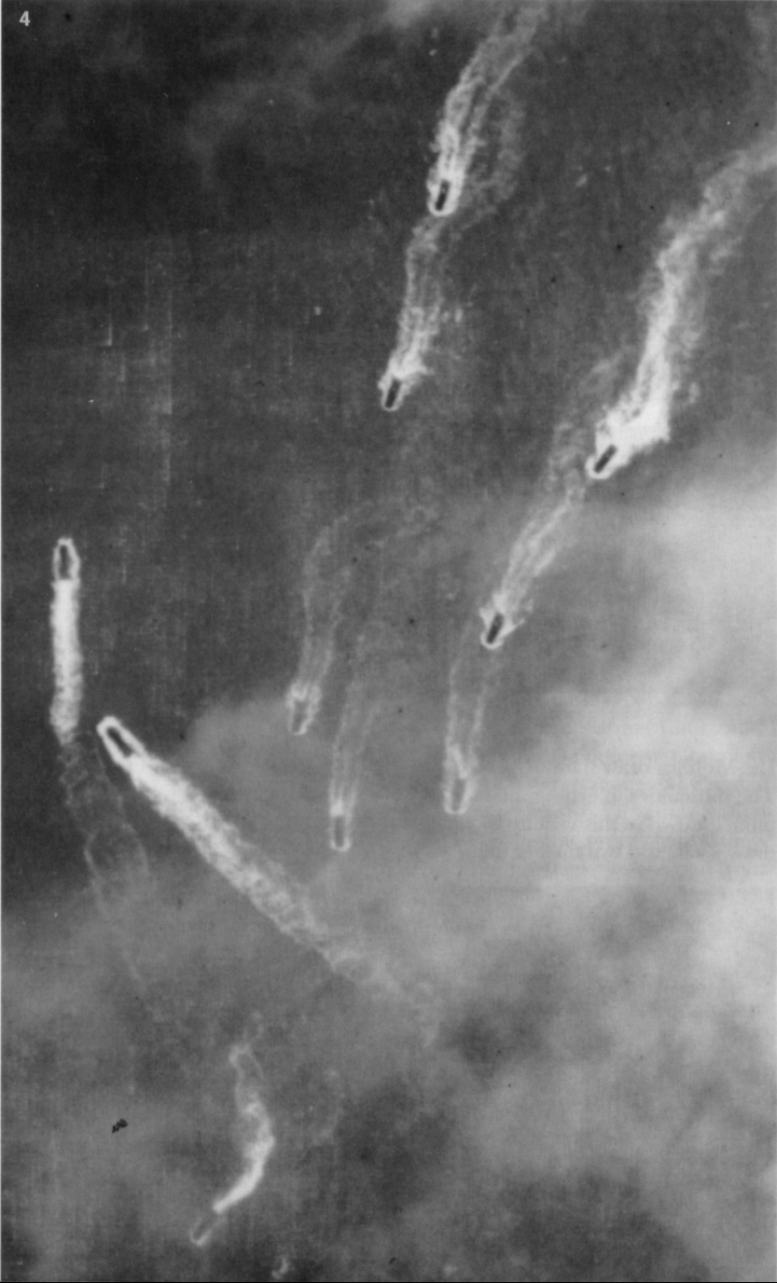
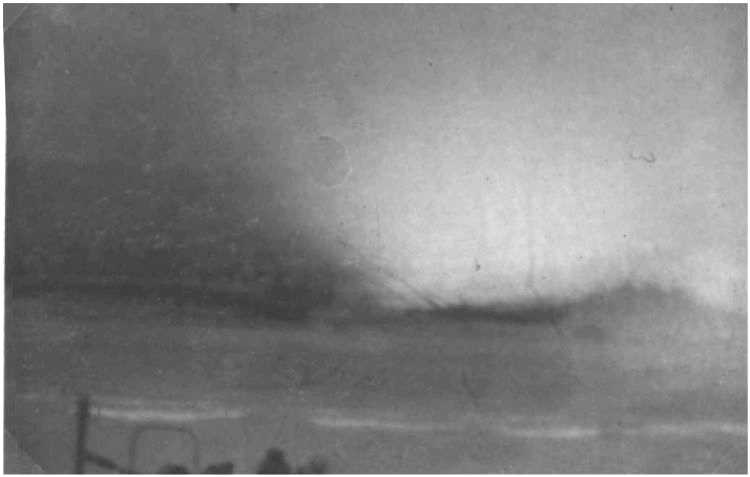
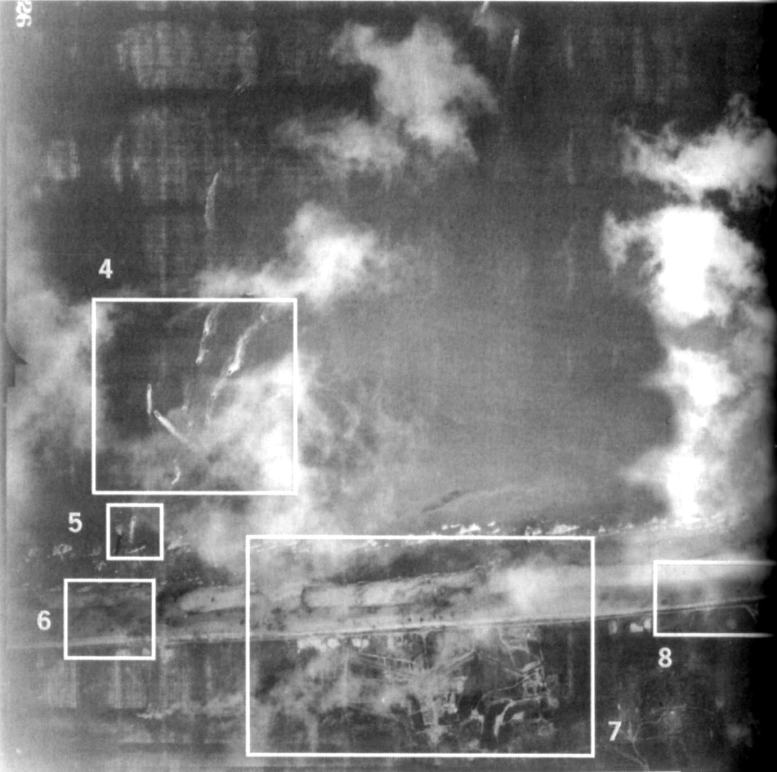
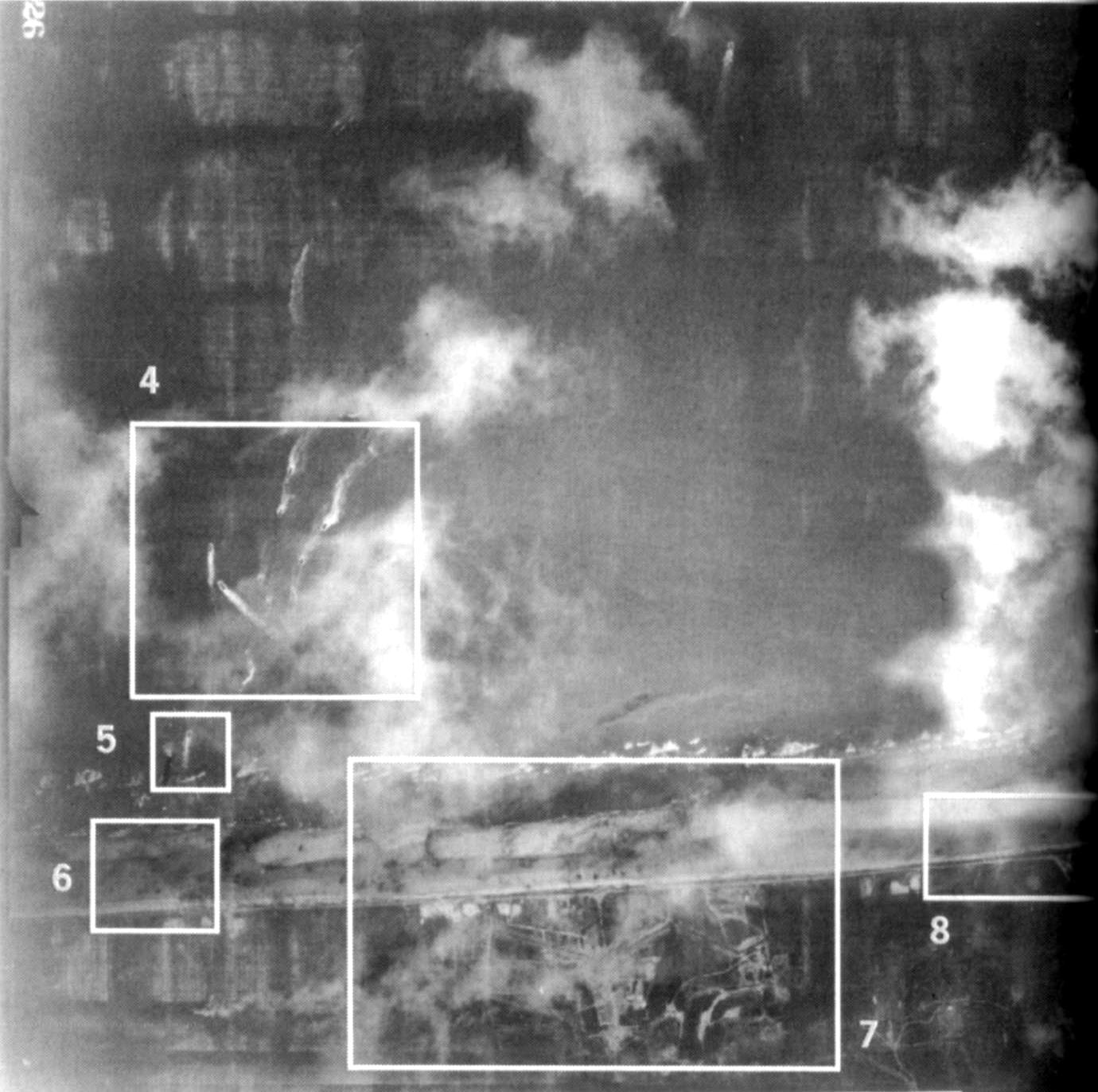
(details) 7:30 a.m., ahead of Dog White, 8 LCA from the first wave of the Rangers of the 5th Bat. go forward and pass the LCI91 (photo below). Crossing their line, 2 LCMs (probably) go offshore, they may be the LCMs who landed elementsd u 121st Bat of Engineering and in particular Colonel Ploger

