
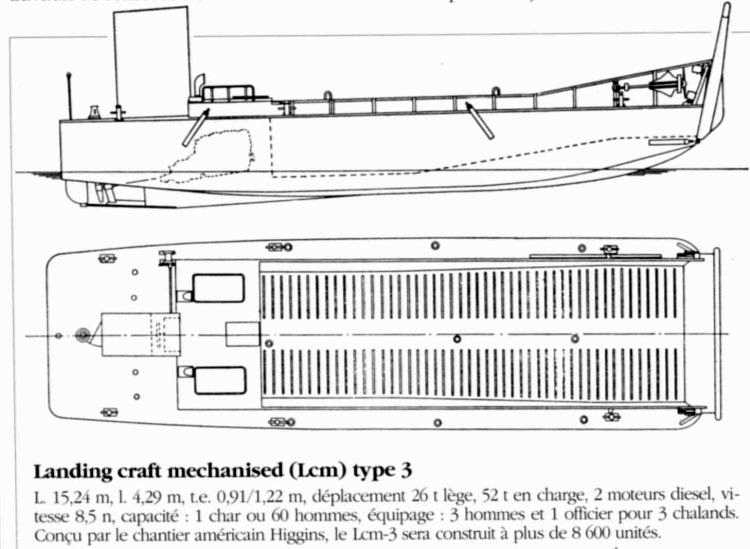
LCM3 plan
(Landing Craft Mechanized)
Length 15m, Payload 26t.


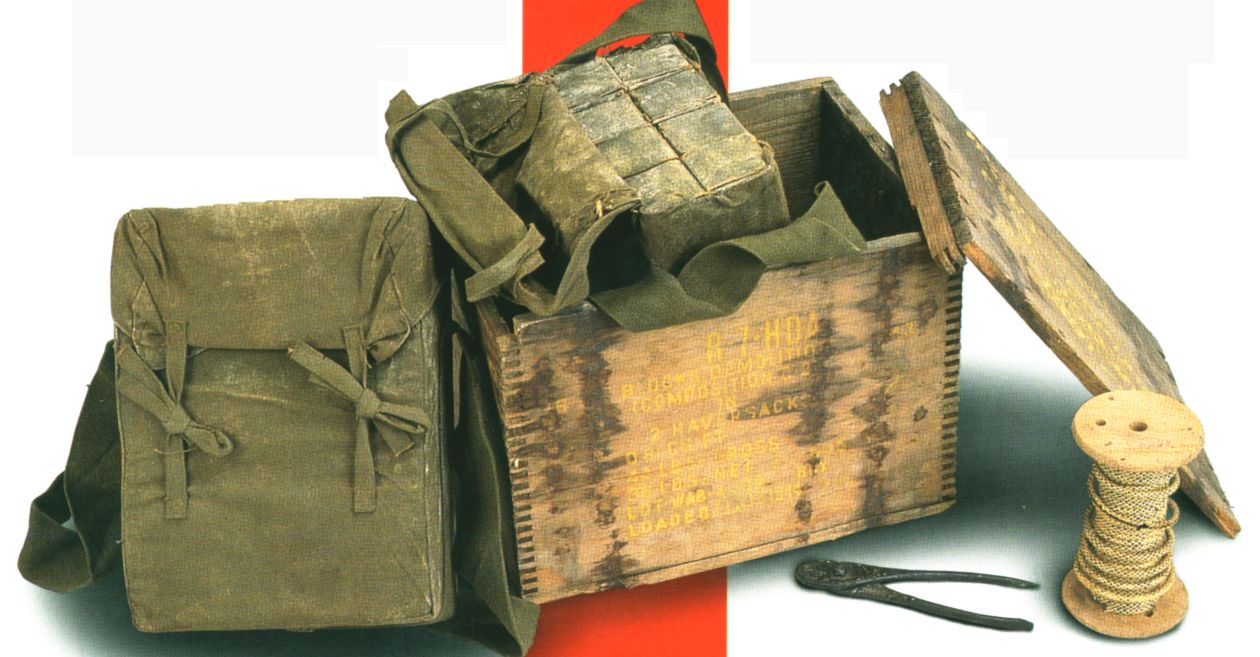
Demolition group (Gapteam) No. 1 of the SETF, Joint Engineer/Marine Force
charged to open for the landing barges the passage at high tide through the beach obstacles, just in front of the descent of Vierville
(extracts)
" Group No. 1 was to approach the westmost, so close to the Vierville descent, on Dog Green, but in fact he was deported by the current, and approached on the Dog White/Dog Red boundary.
As the LCM ramp fell, the sappers were caught under a small arms fire, but the group jumped into the water and quickly headed towards the first obstacles. The explosives were distributed in individual packages of 18kg with the 500kg reserve on a swollen canoe, to be floated to shore. The entire group (the sailors and the sappers) had to tackle the first row of obstacles (elements C or "Belgian doors", i.e. the strongest and largest and also those that were going to be the first submerged). They were concerned about the rise of the tide. The sappers quickly fixed loads on the doors, fired the red warning signals and then the detonators.
After the explosion, they continued in the direction of piles, ramps and hedgehogs. Anti-tank mines attached to piles and wooden ramps risked turning into drifting mines if a wooden beam with a mine began to float. Therefore, loads were carefully fixed on each anti-tank mine.
There was no infantry at first in the area but only Sherman DD tanks of the 743rd Battalion. The demolition work continued properly, but the German reaction was strengthened. The tanks moved to the vicinity of the first line of obstacles, seeking targets on land. Their shooting attracted the attention of the Germans, but the sappers and sailors were also targeted. Losses increased by killing and wounding. Two sailors who were trying to throw the raft loaded with explosives were shot. The army nurse who was trying to bring them first aid was killed in a row. The explosive reserves have been lost.
In the midst of these difficulties, 1 or 2 assault sections on LCVP, of the F Cie of 116th Reg. infantry arrived on the area, isolated and late on schedule, attracting a large German fire. These infantrymen then used the obstacles being mined as temporary shelter, but they stopped there. As the remaining obstacles were ready to explode, officers and non-commissioned officers had to act vigorously to get the infantry out of the hole to be created. Not only did the infantry advance but they helped the wounded sappers get out of the dangerous zone. Then and in accordance with the plans, the red fumes were triggered, followed by the deafening noise of the explosion.
After the smoke, the water sheaves and the debris fell, the demolition group N°1 had the satisfaction of seeing the result of its many months of intense training, the hole was clean and a 50m wide passage was ready for the high tide. Green buoys were attached to the obstacles on each side to guide the pilots of the future barges arriving on the high seas.
The work had been done in 20 minutes, a great performance in difficult conditions. The other waves of assault being programmed 30 minutes after the engineers, there was no more fear of a mutual gene.
The survivors and the wounded had to move to the brief shelter of the pebble slope. The sappers and sailors have lost more men. By reaching the seafront, trenches were dug into the pebbles and the life belts were used to install the wounded a little more comfortably. "