
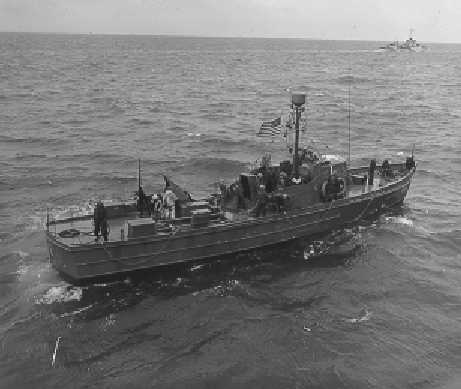


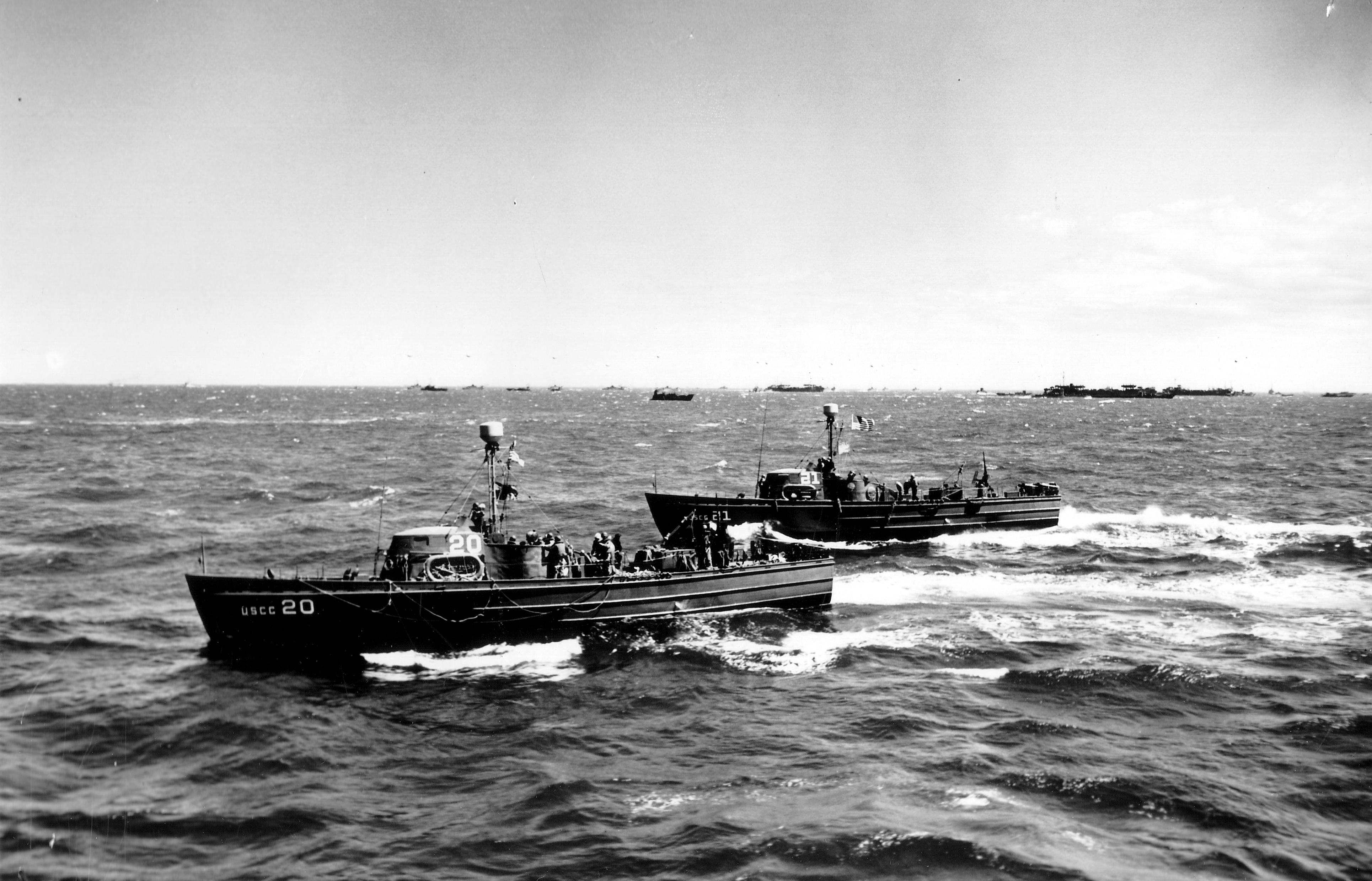

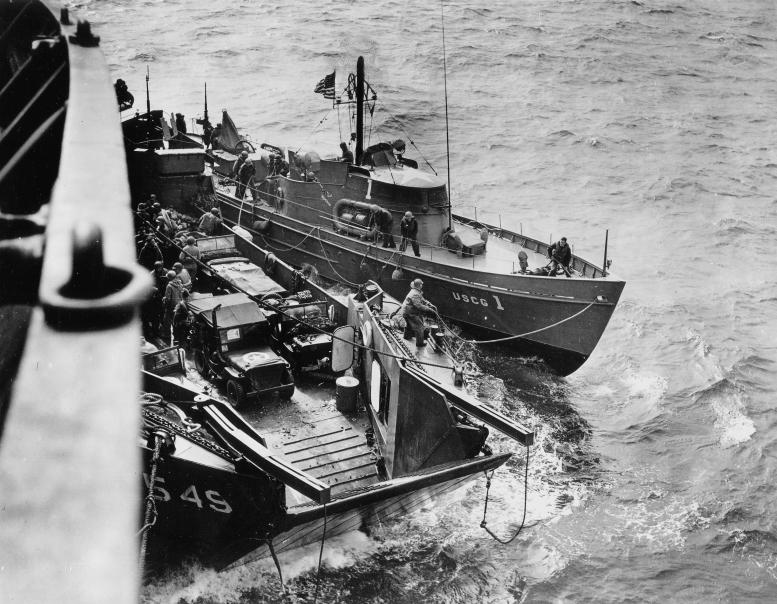

It is worth noting the participation of 19m boats from the Coast Guards, a flotilla specially formed for the rescue of shipwrecked landings. They had special lifting equipment and medical facilities (Coast Guard Rescue Flotilla).
About 20 stars were assigned to Omaha Beach, including 5 accompanying the wave of assault. But quickly the entire flotilla was brought closer to the coast in front of the loss of barges and the absence of danger in the transport anchorage area.
A few weeks prior to D-Day, President Franklin D. Roosevelt suggested that Operation Neptune needed a rescue flotilla. Since resources were stretched to the limit the commander in chief of the Navy, ADM Ernest King, looked to the service dedicated to life saving at sea. The Coast Guard had 60 83-foot patrol boats, nicknamed the "matchbox fleet," on anti-submarine duty along the East Coast of the United States. Although they were constructed of wood and had gasoline engines, hence the nickname, they were available and had trained crews. King ordered them to New York harbor where they were hastily put aboard freighters and shipped to England.
Renamed Rescue Flotilla One for the invasion, it was commanded by Coast Guard Reserve CDR Alexander Stewart. Each patrol boat was assigned a hull number sequentially from one to 60 to aid in identification, and SHAEF planners ordered half of the patrol boats to sail in support of the Eastern Naval Task Force while the other half sailed with Kirk's command. 20 assigned to Omaha Beach
The LCVPs from the assault transports circled 4,000 yards off the beach at the line of departure, shepherded by the control vessels, as they waited for H-Hour to proceed to their assigned landing areas. These small boats LCVPs and LCAs brought the first waves ashore. The LCIs and LCTs landed their troops and equipment later. The rescue cutters circled here as well.
The matchbox-fleet patrol boats kept busy rescuing survivors along the entire Omaha beachhead and the experience of one of these diminutive patrol boats typified the role of the cutters that day. The CGC-1 formed up with the Omaha assault force and arrived at its station at 6 a.m. It escorted a group of LCVPs to the beach. Two miles offshore a lookout spotted men from a sunken British LCA in the water and the CGC-1 went to their assistance. The crew had to jump overboard and tie lines to the survivors because they were too cold to help themselves aboard. They succeeded in pulling 24 soldiers and four Royal Navy sailors from the Channel. They then sailed back to the transport area and transferred the survivors to the Chase.
The CGC-1 then returned to the waters off Omaha. At 9:45 a.m. they recovered 19 survivors from the LCI(L)-91, 14 of whom were part of the LCI's Coast Guard crew and transferred these men to the Chase and once again returned to their station. They spent the better part of the day within 2,000 yards of the beach under enemy machine- gun, mortar and artillery fire. No crewman was injured and the crew returned to Britain unscathed. On the beaches, however, the day was not going well.