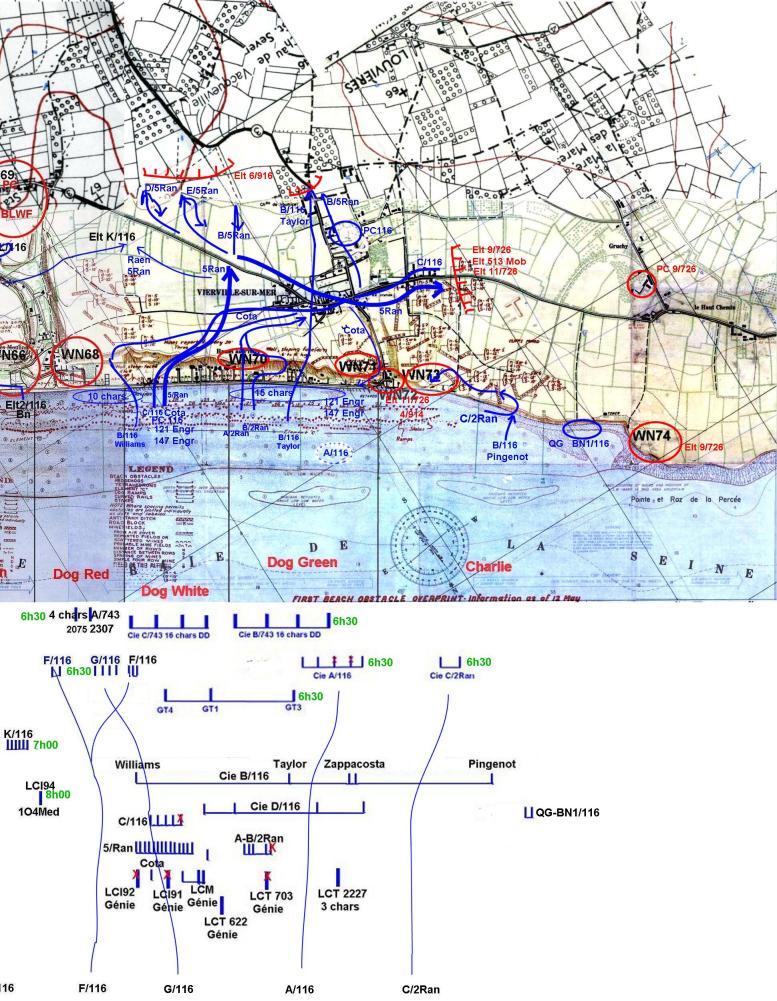


sketch based on Michel Hardelay's indications
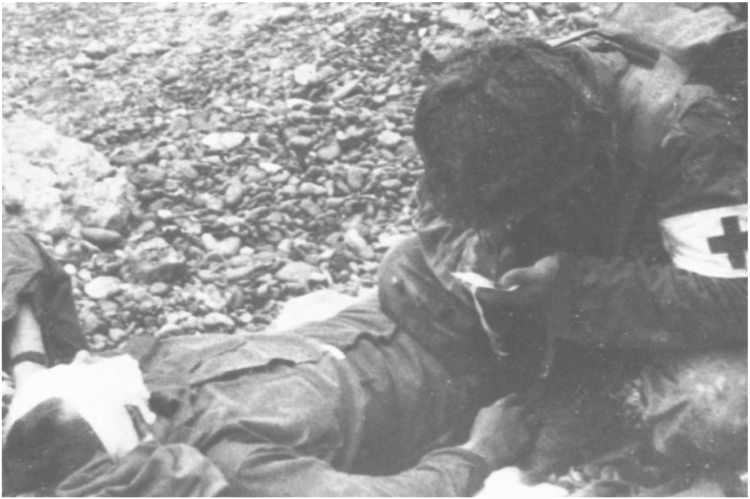
Lt Jack Shea: "The dead and dying had been collected on the beach and in the cliff, then gathered on the coastal road. Medical personnel had little capacity to treat them, their efforts being limited to bringing together and administering the drugs and materials available to the best of their ability. This involved taking the blankets of the dead and using them to protect the living from the cold air of the night. Some wounded had dug holes in the sand to protect themselves from the shrapnel of shells that were still falling on the beach... Some of the wounded had died simply by falling into their hole. A single ambulance ran by camouflaging its traffic lights, methodically picking up the wounded and bringing them back to a collection center near the ruins of the Anti-tank Wall of Vierville. There a small medical team was dressing up the wounds and preparing for evacuations by sea.
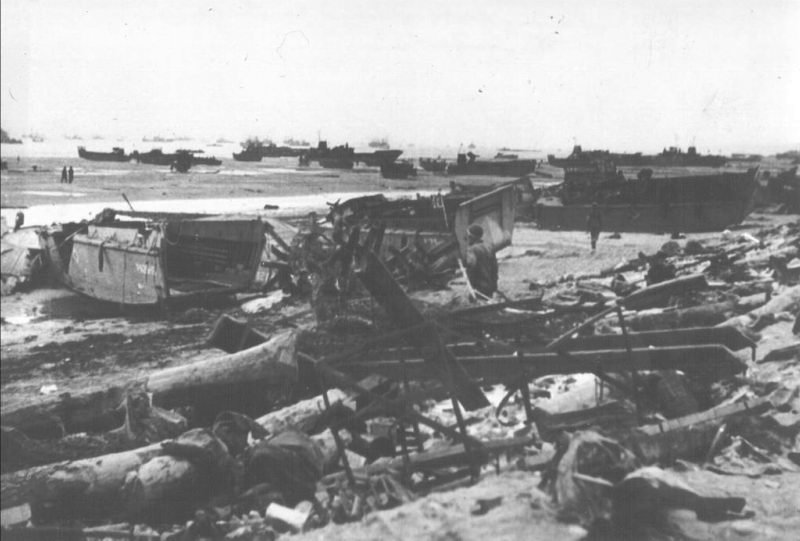


The penetrations on the cliff between Vierville and Saint-Laurent between 8 and 9 hours were a success, but a success limited to the capture of Vierville and the collapse of resistance on the beach.
Only some fractions of the assault battalion (1/16) and the Rangers, in scattered groups, had managed to occupy Vierville, but without being able to go further.
They had few heavy weapons, no tanks (until evening), no suitable artillery and connections, and no support for naval fire.
They settled around the farms of the Grandcamp road, at the western exit of Vierville, the Rangers to the north of the road, the infantrymen from 1/116 to the south.
The staff of 1/116 eventually escaped their trap under the Percée in the late afternoon and joined Vierville, reduced by their losses. Other fractions of 1/116 were dispersed to Colleville.
The Command Group of 116th Regiment was in Isles, isolated in an unsure zon and infested with German snipers. He didn't control his units for lack of radios. Mixtures were frequent and the time spent overcoming this problem was extended by the loss of officers, the remoteness of command groups and the lack of communications. It was only in the evening that Colonel Canham learned that his Battalions 2/116 and 3/116 were beyond Saint-Laurent, instead of being in their planned assembly area near Vierville.
The 23 surviving tanks of the 3 companies of the 743rd Tk Bon landed on time H remained on the beach all day. In the evening, as the road to Vierville was open, they regrouped with the tanks landed at St-Laurent and climbed to Vierville (while in the original plans they were to climb by St-Laurent, but the Moulins route to St-Laurent was still maintained by the Germans).
The 743rd Battalion, with a small trenatine of tanks, bivouaqué in the village on the evening of June 6, some of them were watching against the Germans defending the Grandcamp road.
Lieutenant Ondre de la Cie A/743Tk Bon says: "All tanks in Cie A were dragging trailers full of ammunition. But during the fighting on the beach, they were often sacrificed. Only 6 arrived on the bivouac in the evening. In each of these trailers, there were 240 75mm shots. Out of about 50 tanks landed (from the 743rd), only about 30 (other more accurate and more likely testimonies speak of 23 tanks mounted in the evening at 11pm in Vierville) left the beach, all by exit D1 from Vierville. That night we tried to reorganize, but the losses, especially among our officers, were strong. The battalion leader, Lt-Col Upham, was wounded, 4 of the 5 officers of Cie B (Dog Green) were killed. We entered the "transit area" (just beyond the town of Vierville) shortly before the night, and we bivouaked in a circle. There we restocked ammunition and fuel. We backed the perimeter and waited for orders."
On the beach, there were elements of the engineers, belonging to the 3 Battalions landed in the morning:
The SETF (146th Bat. The survivors continued to remove obstacles at the low tide of the evening.
The 147th Bat. of the beach engineers (of the 6th Special Engineer Brigade), who worked to service, organize and secure the beach of Vierville for reinforcements. But it was only the beginning. Supply was waiting for the installation of inland deposits.
The 121st Bat. of the Engineers who had to accompany I/116 and who had opened the road to Vierville from the anti-tank wall. This road remained blocked until 6:00 p.m. and its lower part was with the beach under an artillery harassment fire. As soon as this mission was completed at the end of the day, the battalion moved to Vierville in the evening, notably to Les Isles and l'Ormel.

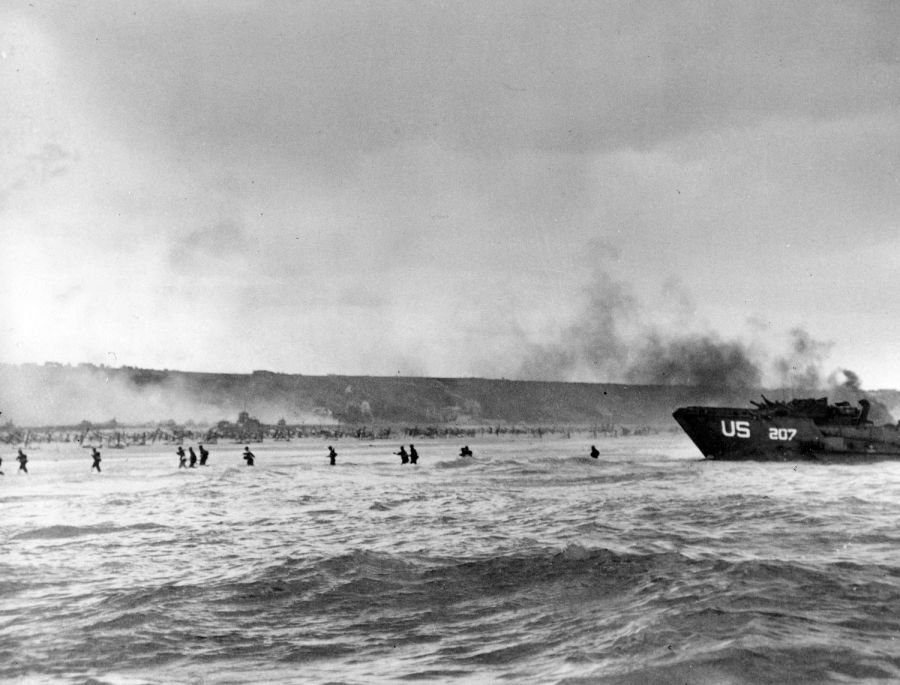
The medical units (the 104th Medical Battalion was attached to the 29th Division) had been unable to install their relief posts in the interior. They had very low positions between the beach and the Vierville cliff.
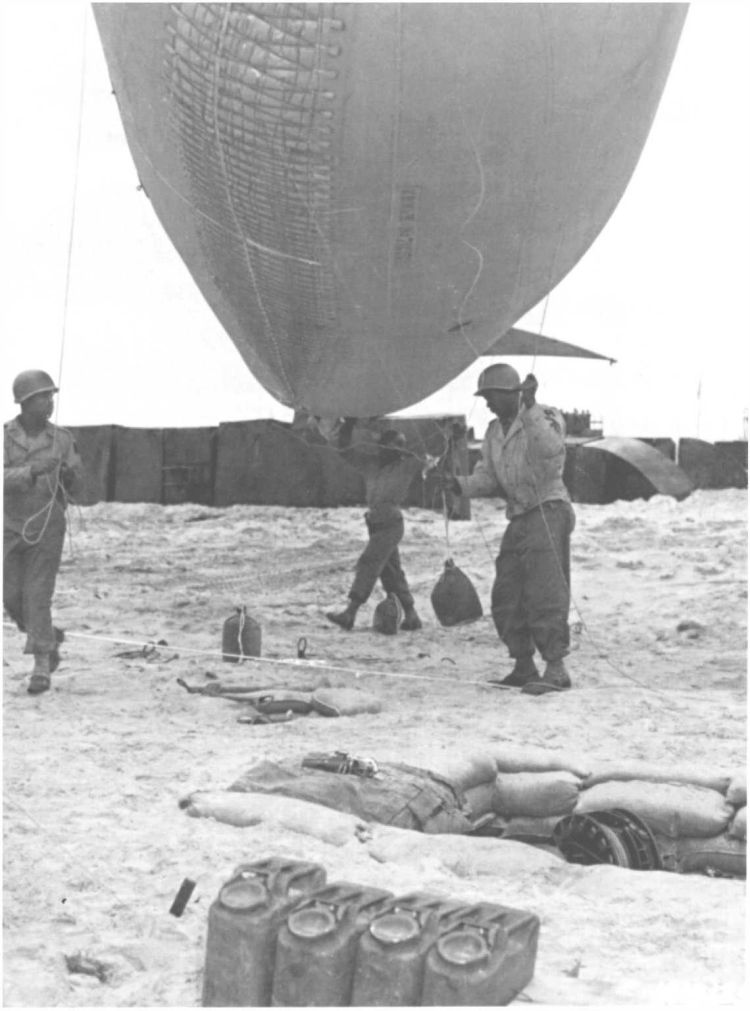
Elements of a unit composed of American black troops, the 320th Dam Balloon Battalion, landed in Vierville on 6 June and settled on the beach, ready to receive and send their balloons the next day.
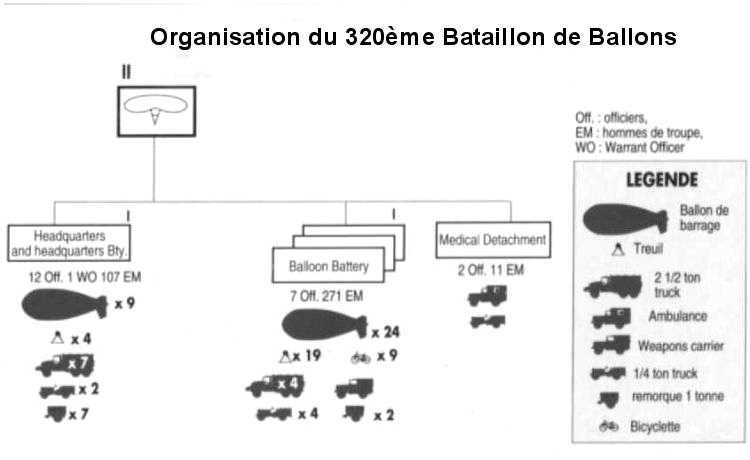
Organization of the 320th Battalion of Balloons of DCA Dam, unit composed of Black Americans.
Half of this battalion was assigned to Omaha Beach, the other half to Utah Beach
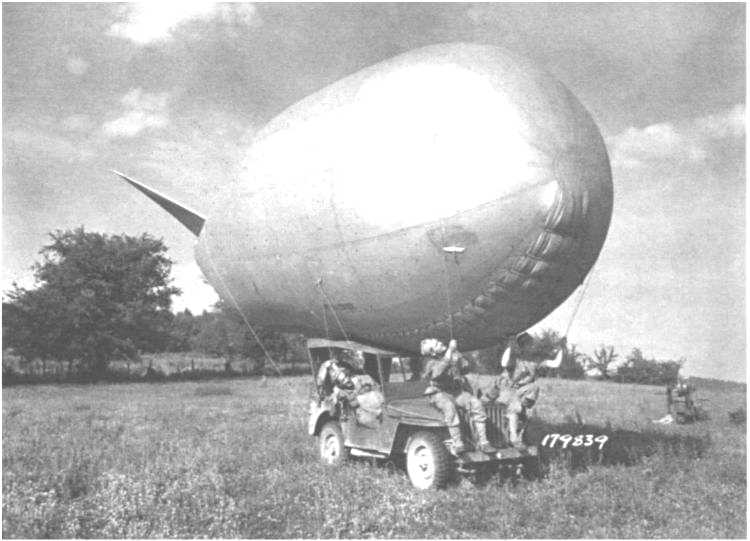
dam balloons


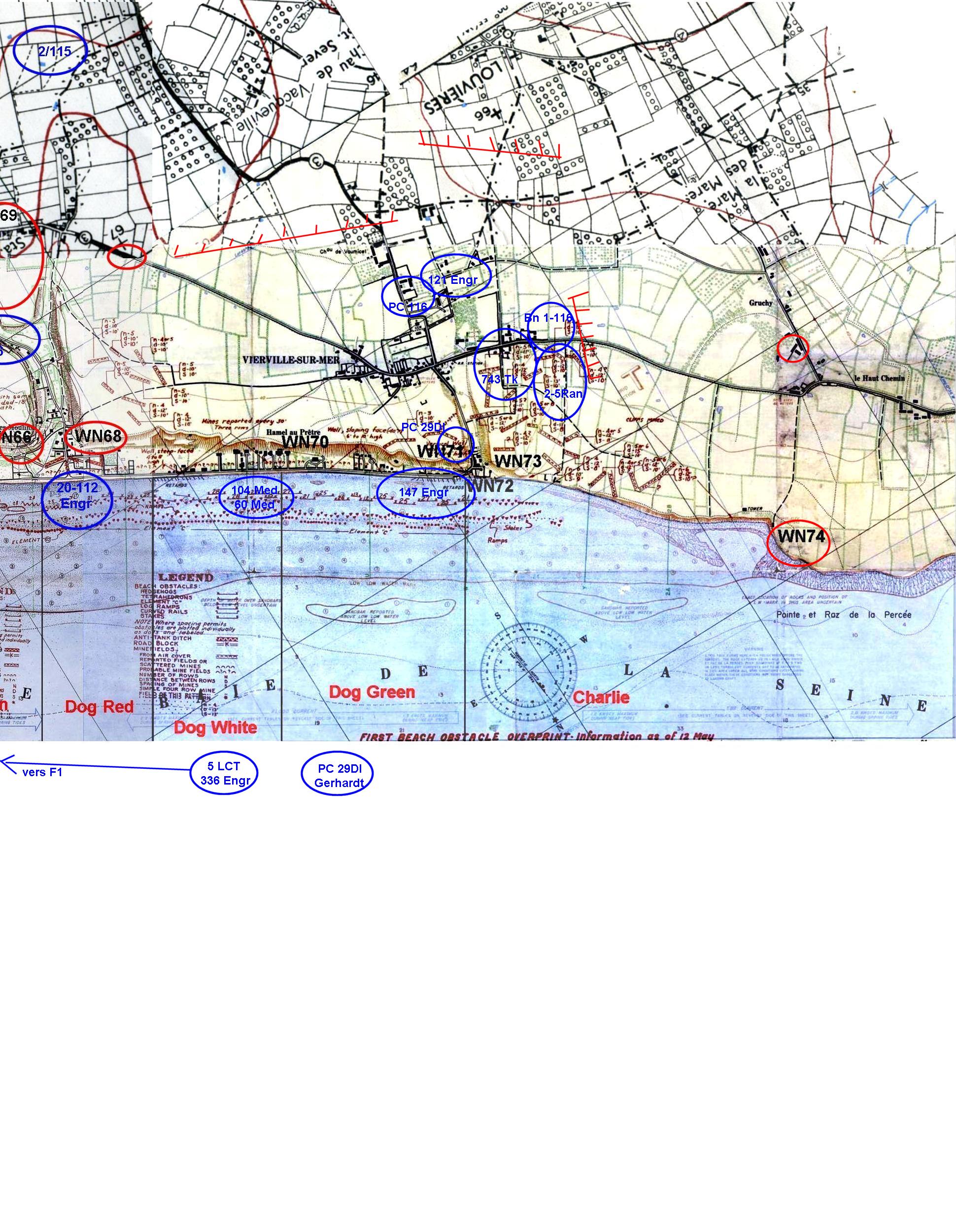




The Advanced 29th Division HQ General Gerhardt landed in the late afternoon, occupying Vierville's career. At midnight he was to take the effective command of the troops of the 29th Division, so far attached to the 1st Division (General Huebner, PC at the top of the Ruquet Valley).
The 115° Regiment of Infantry, reserve of the Division, landed late in the morning in the Ruquet sector, but too far from Vierville to strengthen the weak defenses.
The soldiers dug their individual holes for the night wherever they could, some even in the sand or on the sides of the cliff. Everywhere, the fire of the snipers caused alerts and opened fire. There were no "rear zones" on D-Day night. Lost elements of the assault infantry, reinforcements and service troops were trying everywhere to find their units.
The inhabitants of Vierville were naturally impressed. Read the memories of Michel Hardelay on the end of the day of 6 June, as well as those of the Colibeuf, des of Loÿs, of Mrs. Ygouf, of the Mrs. Dubois and Pierre and Fernand Piprel.
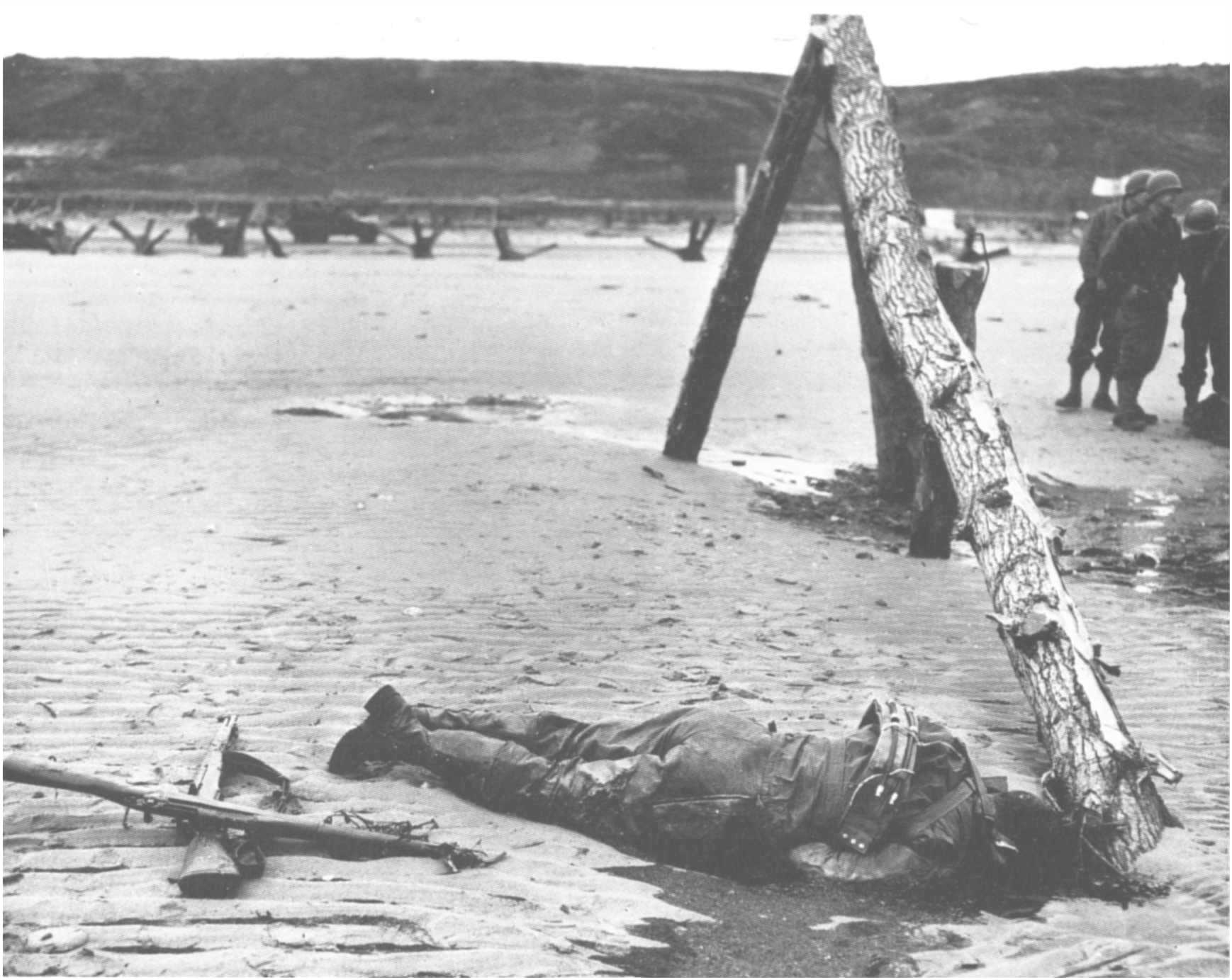
"When darkness spread over Omaha, the burning flames of the burning Landing Craft brought an intermittent and dancing glow drawing the living and dead on the beach.
Those who walked along the beach that night had to be careful to avoid walking on the corpses.
Shootings occasionally occurred in the cliffs. The soldiers of the 29th were sure there were German snipers everywhere, but General Cota believed rather that the Americans were carried on the trigger and shot at ghosts.
As if the Germans were not enough for trouble, a furious dog attacked the small group of Cota walking on the beachside road. Someone suggested that it should be a German dog. A 29th-century man drove him away with a few gunshots. "
No one could sleep in peace last night because of the noise of the G.I. who blew up TNT rolls to quickly make their individual holes. The troupe was explained how best to use the TNT by placing the load in a 25cm deep hole. After detonation, the resulting crater was supposed to be deep enough for its occupant to be quiet for the night.
But according to Private Robert Milbier, "It was a gene rather than a helper. I had found a hollow ditch in a hedge and settled there, when next to me, I heard screaming "Fire in the hole!" (attention to the explosion!), rushing me with several friends into a race to get sheltered. All night long, as soon as a newcomer decided to settle near this hedge, the cry "Fire in the hole!" echoed in the night, and made us move away from our blankets to shelter us."
Unit reports for D-Day are incomplete or fragmentary and losses of men and equipment cannot be determined with specific details. The first estimates of losses were high, with an inflated percentage of "disappeared", as many sections and isolations were separated from their companies sometimes for two or three days.
Only 3,000 of the 7,000 men planned for the morning assault in Vierville had been landed there, and they had suffered heavy casualties, perhaps 1,000 killed, wounded or missing, including about 1/3 killed.
The largest losses in proportion were incurred by units that landed during the first 2 hours, including engineers and tanks.
The loss of equipment was considerable, the majority of what had been landed was lost either by submersion or by destruction on the beach. Half of the tanks landed in Vierville were lost. No usable artillery was grounded. No figures are available for vehicles and supplies.
For the Navy, an order of magnitude gives a total for Vierville of approximately 10 LCM, LCVP and LCA, and 3 or 4 LCI and LCT destroyed (i.e. 20% of actual arrivals) and a larger number, of all types, damaged and recovered the following days.
At around 8 p.m., having accomplished their mission, the LSI, including the assault transports "Thomas Jefferson", "Charles Caroll", "Samuel Chase", "Javeli Empire"n, and "Anvil Empire", left the area of assault and headed towards England.
Moreover, the anchorage of the transports was close to the coast, as German artillery was no longer threatening the ships.
German Resistance, both at the foot of the valley and inside, had limited the American advance to a strip of land of only 1 km deep. This band was much lower than expected for D-Day (to be reached Trévières, Grandcamp and the approaches to Isigny).
Behind the advanced American positions, small German groups and isolated groups, cut off from any retreat, were still resisting. In particular, the roads to St-Laurent by Les Moulins and by the road coming from Vierville were still maintained by Germans.
The entire occupied area was still within the reach of the German field artillery in the interior, but it lacked ammunition and was forced to confine itself to harassment.