
The weather conditions were far from ideal for this landing.
Visibility was good, (10 Thousand at 5am, 8 Thousand at 10am, 12 Thousand at 3pm), but clouds hindered aerial bombardment by quadrimotors flying above the clouds.
The wind was from Sector West (at 5 o'clock and 10 o'clock West force 4, at 3 o'clock West force 3, at 8 o'clock NO force 3, which protected the beach, but offshore the sea was strength 3, the waves were 1m to 1m20 of average height in the anchorage area and sometimes reached 2m.
The air temperature was 12°C (53°F), the water temperature was 14.5°C (58°F).
Near the beach, the waves were less than 1 metre long. These sea conditions were maintained until late in the day of June 7 before the winds calm down.
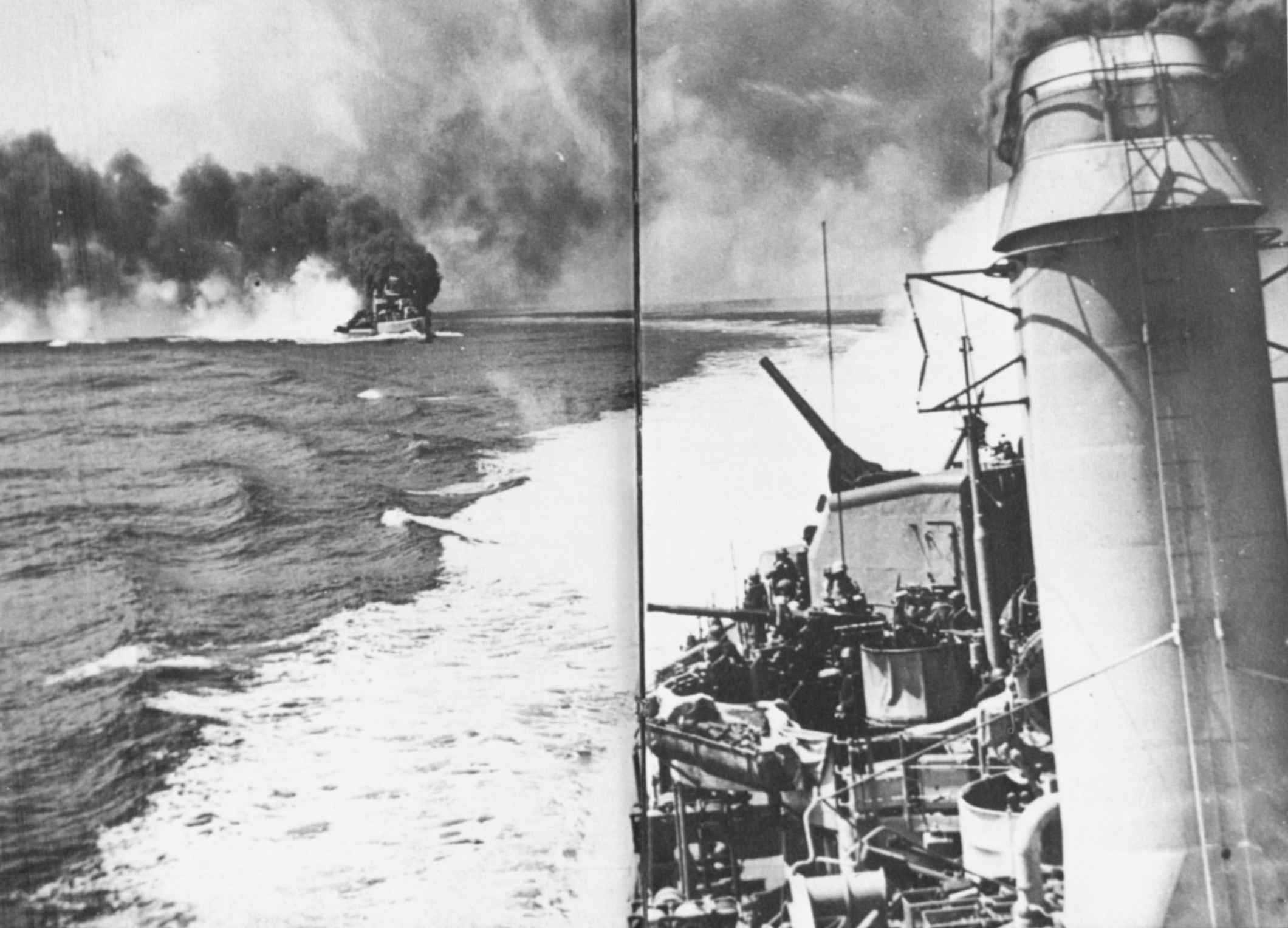
The anchorage area was initially protected by a smoke curtain stretched by destroyers. Gradually the wind dispersed it, and at dawn (6h00) many ships were visible from the coast.
The movement of landing barges from the cargo mooring area to the beach followed a complex schedule, applying to hundreds of vessels, and requiring the utmost precision to send each vessel to the right place, in the order and at the expected time.
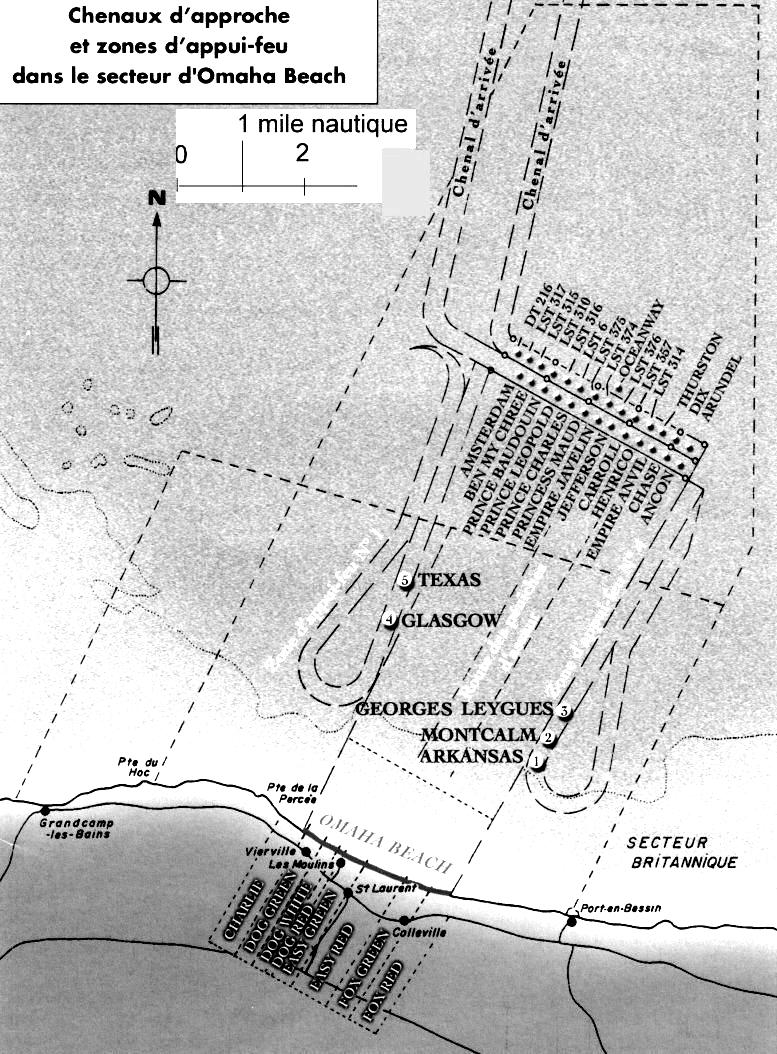
The first operation was the launch of the small LCVP and LCA suspended from the bosses of their parent ships, LSI (Landing Ship Infantry), (transformed cargo ships or liners). In some cases, men boarded the LCVP and LCA before they were launched. For the others the soldiers descended there with nets suspended from the hull of the LSI transports. The operation started at night, 3 to 4 hours before H time, and was made difficult by the rough sea, which resulted in slight delays.
For example, carrying the 2nd Battalion of the 116th Reg. (dedicated to Dog White Beaches in Easy Green), the LSI "Thomas-Jefferson" was able to launch all its barges in 66 minutes.
While waiting to go to the starting line, the LCVP and LCA turned in circles.
The "start line" was 3500m from the coast, marked by patrol boats. On this line, the LCVP and LCA rounds resumed until the start to the beach, guided by the LCC (Landing Craft Control). The LCC30 was responsible for the barges of the "Jefferson".
In Vierville, the officers responsible for launching the DD amphibious tanks 6km from the shore decided not to take any risks with these sea conditions and the 32 Sherman amphibians DD (Cies B and C of 743°Bataillon de Chars were transported to the beach by their 8 LCT (on the Dog Green and Dog White sectors, i.e. immediately east of the descent of Vierville) contrary to what was decided in Colleville and led to a disaster, most of the amphibious tanks having sank at sea.