129 (many items provided by Caen - Diving)
Background
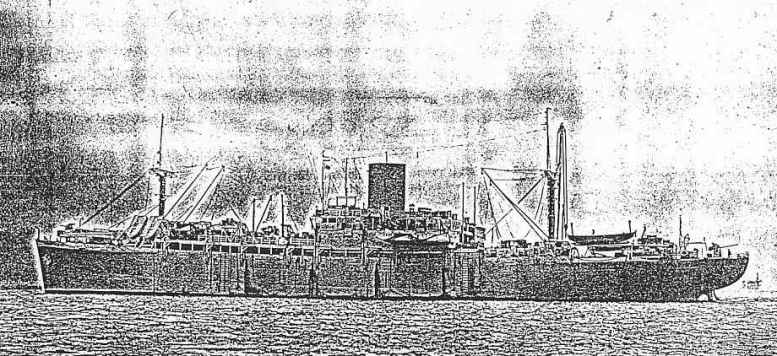
Requisitioned by the Ministry of War Transport, assigned to the "Empire" class, and renamed "EMPIRE BROADSWORD", this cargo ship is transformed into L.S.I., carrying troops on the assault zone. It is equipped with about 20 L.C.A. (Landing Craft Assaut) Assault barges with 4 crewmen and 2 machine guns, capable of carrying 35 soldiers and 400 kilos of equipment). Those L.C.A. were used to disembark the first wave troops on the beaches.
On June 5, 1944, he left England and took 1300 soldiers and 18 landing barges from the first wave to assault Sword Beach.
The sinking
A month later, on July 02, 1944, while on a routine voyage, he manoeuvred into an anchorage area to land 110 marines and at 6:05 p.m. struck two mines almost simultaneously. The violent explosions between hold 4 and 5, just above the keel, lift the back of the boat, ejecting several barges disembarking from their drop station and flooding the engine room. While the wounded are evacuated in canoes, the rear breaks quickly. In order to prevent the vessel from drifting before the evacuation was completed, Captain Patchett ordered that the two anchors be wetted, but suddenly the vessel heeled to starboard; he immediately ordered the evacuation. At 1835, while the master boarded a boat, the vessel capsized on starboard and sank. There were seven victims killed by the explosions.
Built in the USA, 1942, in series, in 49 days, in Wilmington at the Consolidated Steel Corporation Ship Yard, on a plan of "cargo liners". Launched in December 42 under the name "Cape Marshal"
CanonsAA: 1x102mm,1x75mm, 2 Bofors of 40mm, 10 Oerlikon of 20mm
Implemented as LSI
Was equipped with 18 LCA for Sword operations. Made nine ARs on Omaha and Utah. July 6th: return of the 9th trip, empty
Lieutenant G.A.O. BOURNE was second master, like all your Petty Officers in the Royal Navy. He was part of the Royal Observer Corps (R.O.C.), personnel responsible for recognizing aircraft in the sky, in order to prevent your attacks but also to prevent the Royal Navy from firing at its own aircraft or allied aircraft. As such, Lieutenant BOURNE made several round trips to L'EMPIRE BROADSWORD. He was not on board on July 2, 1944. This letter addressed to Lieutenant Bourne is written by R. Jones, gunner on board the L.S.I.
"Manchester 30 June 1945
Dear Mr BOURNE
I feel like I have to write to tell you about the Empire Broadsword, you may remember me, I was in charge of the Bofors Starboard guns.
By reading a copy of the Aeroptane Spotter dated December 14, 1944, I immediately acknowledged your photograph taken from the congratulations of the Chief of the Air Force.
Your contribution to D-Day, as we have seen, was most valuable. I'm going on with my story.
In all, we made nine crossings, most of them to land American troops in Omaha and Utah. And then on Sunday, July 2 at about 6:00 p.m., it happened. Two strong explosions and you boat starts to gite to starboard. Bofors cannons, along with your 4 inches of tail, go overboard. The LCAs. are projected at 40 meters. Wasn't it the first time for me? Did that happen to me twice? But I've never heard such explosions before.
I was thrown into the air and felt like I had just come down when I regained my mind. My lifejacket and clothes had been ripped off, and I found myself naked like a worm, I was in a very bad position when I was picked up by your American Coast Guard star who took me to a destroyer.
You probably remember Sergeant COX, and the Petty Officer HUGHES, they did a great job in the water saving the wounded, but I'm sad to say there was a lot of loss. Several gunners and sailors, killed in the explosion and especially my best friend, the one who used to cut hair? Do you remember him? A very quiet guy. There were approximately 170 injuries, some of which were very serious. The gunner and the doctor were both wounded and transported to the same hospital as me.
Although the vessel was likely to sink quickly, there was no panic. All your guys were trying to help each other, and the last time I saw the old boat was when I was lying on the American destroyer's deck. The Empire sank in ten minutes.
I was told that one of the ROCs. was killed, but I don't have confirmation. He was a young guy with a distorted hand. Maybe you know if he's missing. All survivors were landed in Southampton and transferred to the Winchester military hospital where we were treated.
I stayed in all six months at ['hospital and came out in December. After seven days of permission, I was sent to Belfast on a new boat, and I arrived just from the Pacific after visiting Australia, New Zealand and the Islands.
We're docked in a northwestern port, just next to two ships you know well: the Mace Empire and the Halberd. You know them, but I see they are now sailing under the White Pavilion. (Royal Navy Pavilion, Union Jack with white background)
I think that's all for you right now, but if you want details about a particular guy, I'll try to provide you with it.
Really, yours.
A. JONES
On July 6, 1944, a British cargo ship of the "Victory Ship" model (i.e. a little bigger and faster than the "Liberty ships", struck at about 8:00 a.m. a mine 3 miles off Omaha Beach. The ship sank quickly and 7 sailors could not be rescued. 170 men were collected.
Touched at the back, the entire stern with the 2 40-gun DCA collapsed into the water, the wreck drifted 32 minutes before sinking. As a result, the back and 8 LCA are far enough in the east.
The wreck lies by 22m bottoms (22m water at the highest low tide). Originally the mast was visible out of the water at low tide. The wreckage has since been recovered and, according to the maps, its highest point is 2.40m below the water at low tide.
Since the war this large wreckage has been reported by a buoy. First it was a "green" buoy, a classic wreckage buoy at the time, and then it was replaced by a black-yellow-black buoy, with 3 white flashes grouped indicating a danger to the west of the buoy.
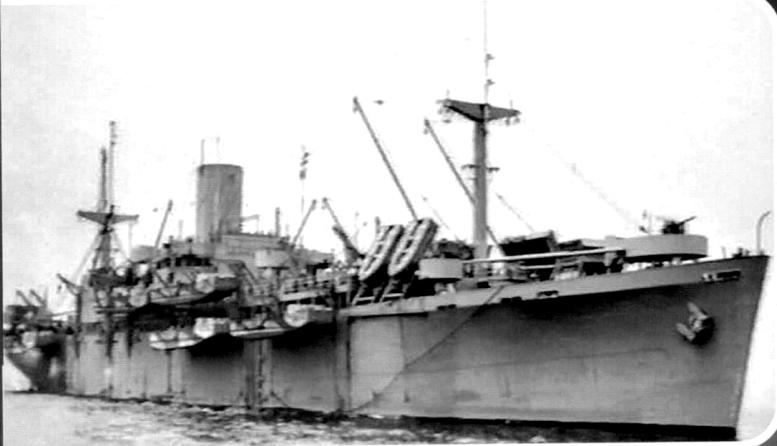
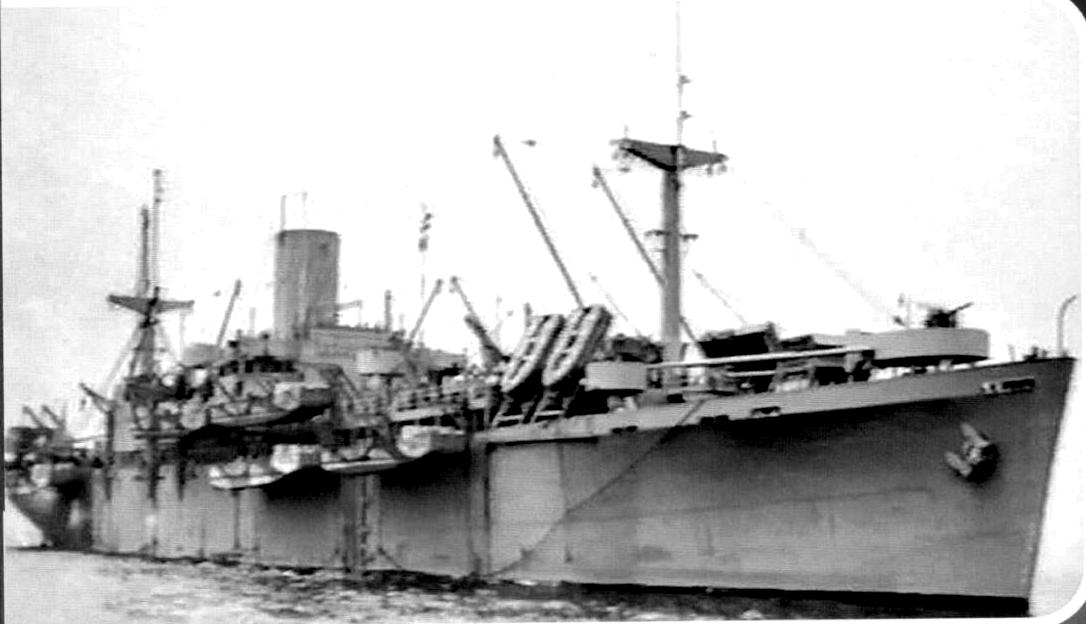
Length 121.3m, width 18.4m,
draught 10.7m
Travel 7177t
Turbine machines, speed 15 knots
Photos of the shipwreck
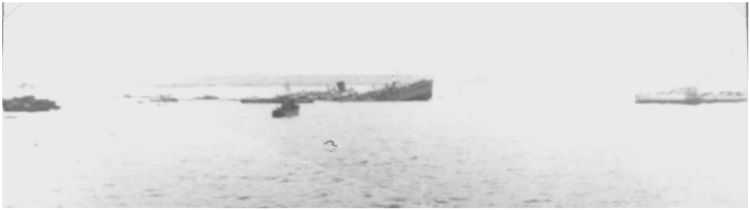
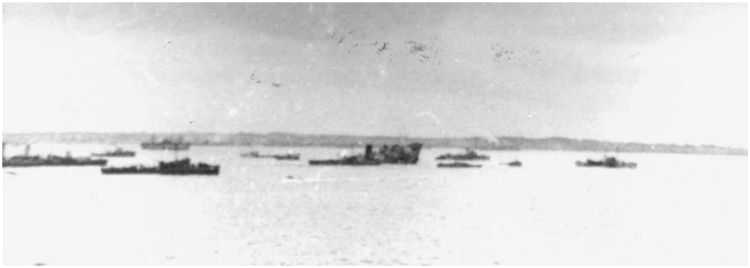
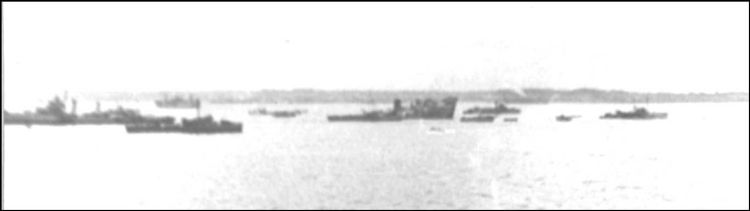



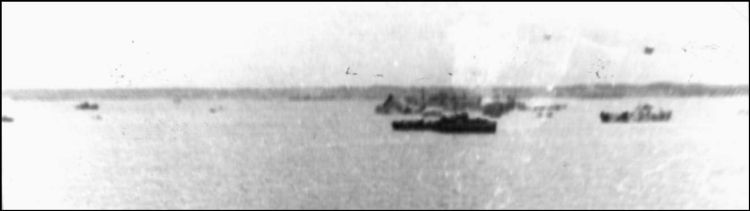
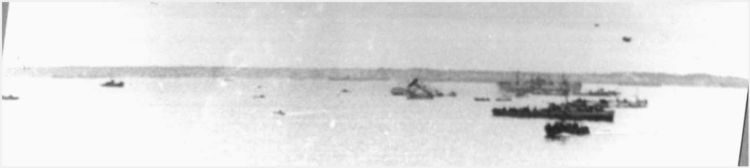
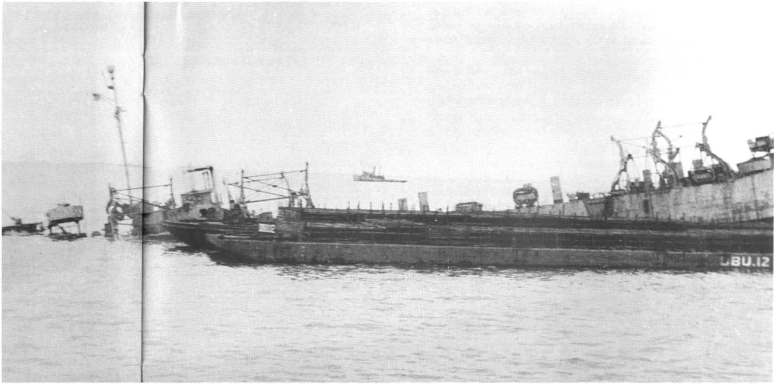

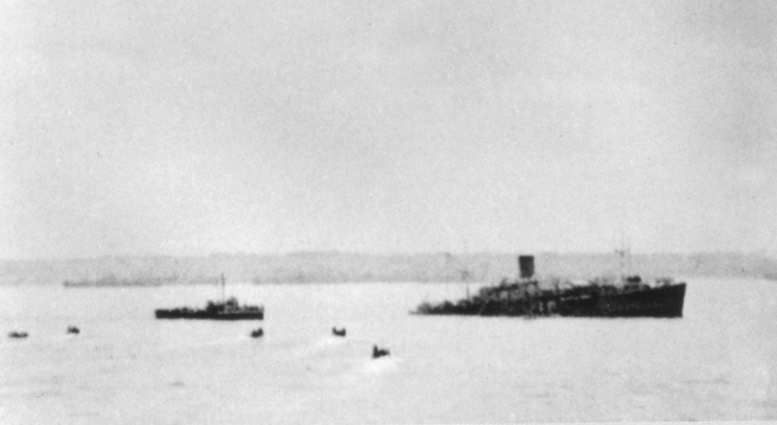
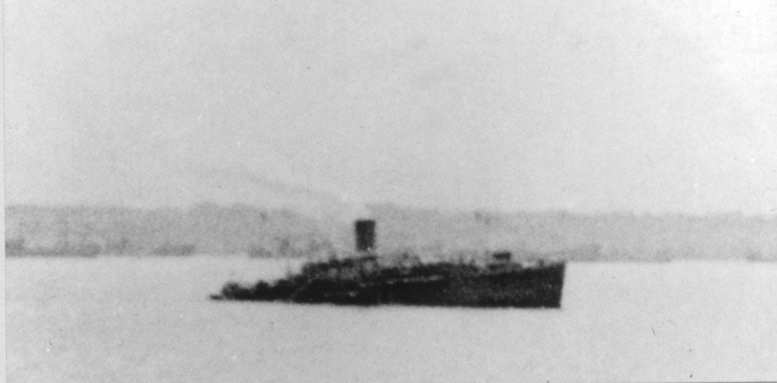
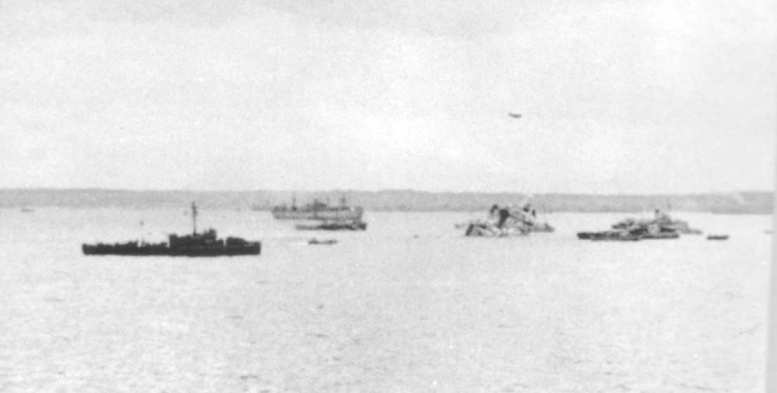
The ship has just been hit, a SC is coming to rescue

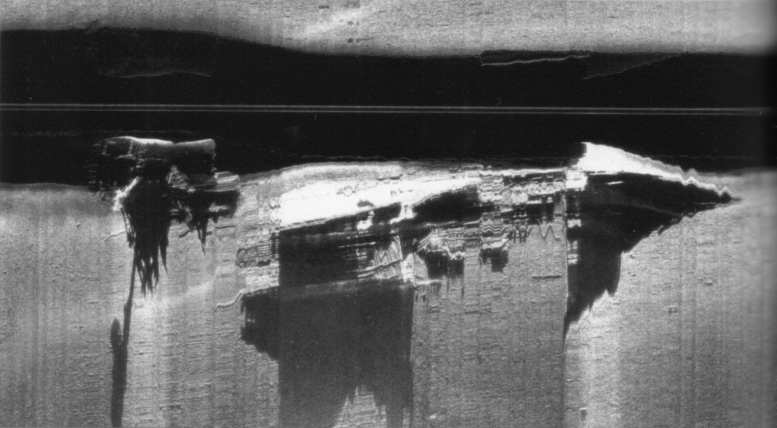
2 Images Sonar of the Empire Broadsword

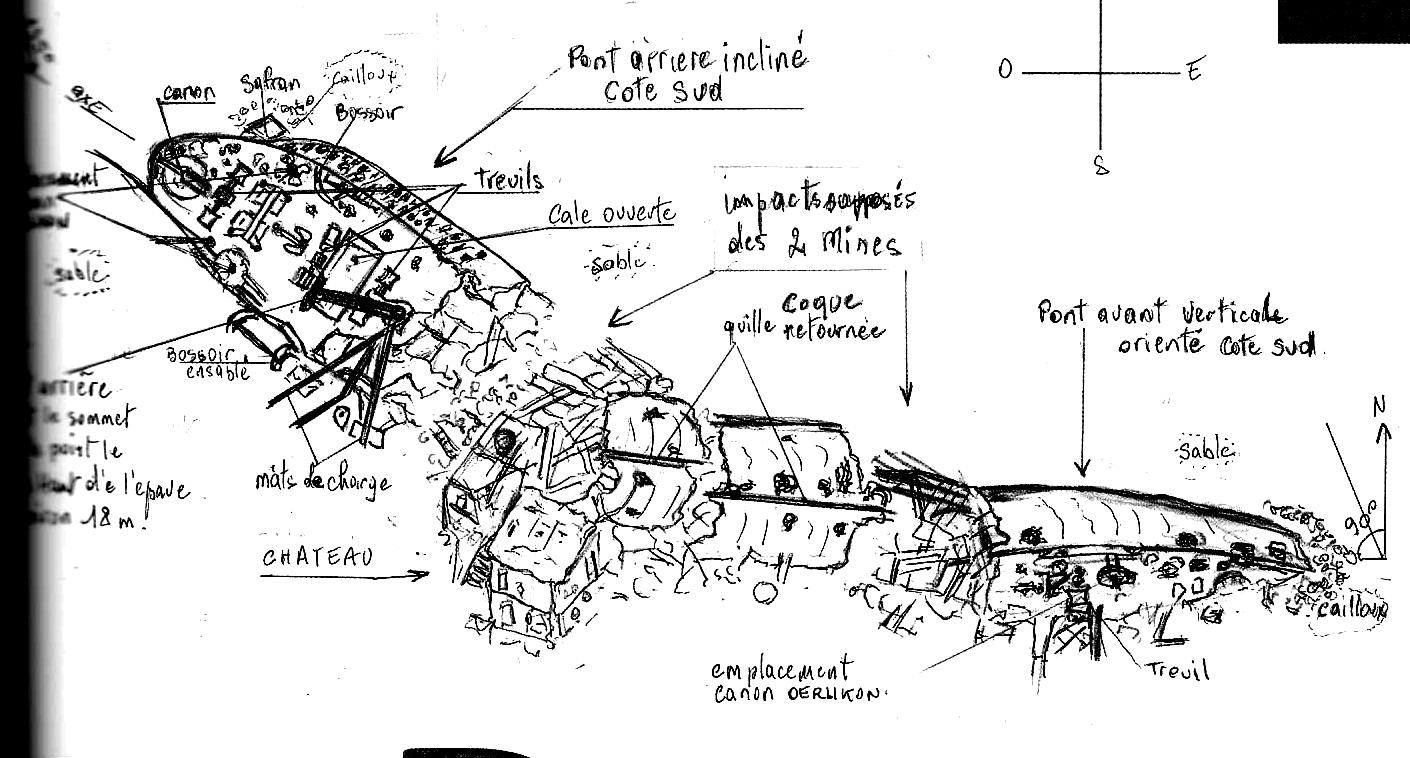
The wreck of L'EMPIRE BROADSWORD is now marked by a large cardinal buoy (formerly called the "green buoy", the divers of the time then did not know your name) about 3 miles north of Omaha in front of Vierville-sur-Mer. The size of the wreck makes this dive site a very visited place. It allows divers of different levels to evolve during the same exit. This wreck is probably one of the most interesting of the Seine Bay in the 5-mile range.
Indeed, with an average depth of 21 meters in the low sea, the "Empire" rests essentially on the sand. Exploration is derouted from west to east over a length of approximately 120 metres. The impact of the two mines separated the vessel into three parts.
The rear is the most spectacular part of your; about 35 meters long, it is oriented East?South?East, and is lying on starboard. The saffron is placed on the sand. As we go up on the deck, we discover you cannon pointing back (a few years ago, it pointed forward!), the hoists and on each edge, your locations of the 20mm Oerlikon guns and the bosses. An anchor is always fixed in the middle of the bridge. The hold, where bars are very often walking, is widely open. The loading masts still equipped with their hoists fell on the sand. Finally, the subtlety of this dive, the central mast goes back to? 6 meters, which makes it an ideal support to make its bearings.
The medium consists of a plate entanglement where it is difficult to locate. There, however, is a part of the castle with its courtyards and ladders. The floors no longer exist, the washbasins and toilets have fallen to the bottom of your structure. Towards the center, we pass over a part of the shell completely turned, the keel oriented to the East. This piece is extended by another, lower by a length of 20 meters.
Continuing our journey forward, we cross a few meters of sand, then we find a pile of scrap before we position ourselves in front of the hull lying on starboard, the bridge completely vertical, the keel on the north side. This part is about 35 meters long. The bridge is very damaged, and the holes allow to see the inside of the holds. There are also winches and cannon turrets 20 mm Oerlikon. Finally, quite to the east, the bow disappears in [the stones.
As we see, this wreck to be properly known and appreciated deserves several dives. Wildlife, light and counter-days will provide visitors with great effects where the emotion that is always present can make them forget the dangers and traps caused by the wear and tear of time. Indeed, it is recommended the greatest vigilance to audacious divers who would like to venture inside these remains. The very active corrosion has weakened superstructures, the castle is very "fatited" and threatens to collapse. Inexorably, time is doing its work.
In September 2003, during a dive, a German L.M.B.-type mine (parachuted magnetic mine), was discovered in the northeast of the wreck, near the cardinal buoy. It was destroyed on 21 October by the Cherbourg group of mine-clearing divers.