
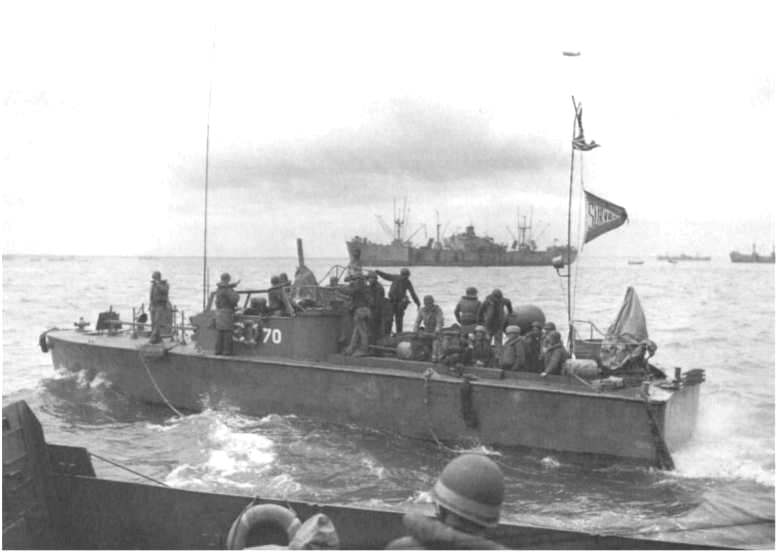
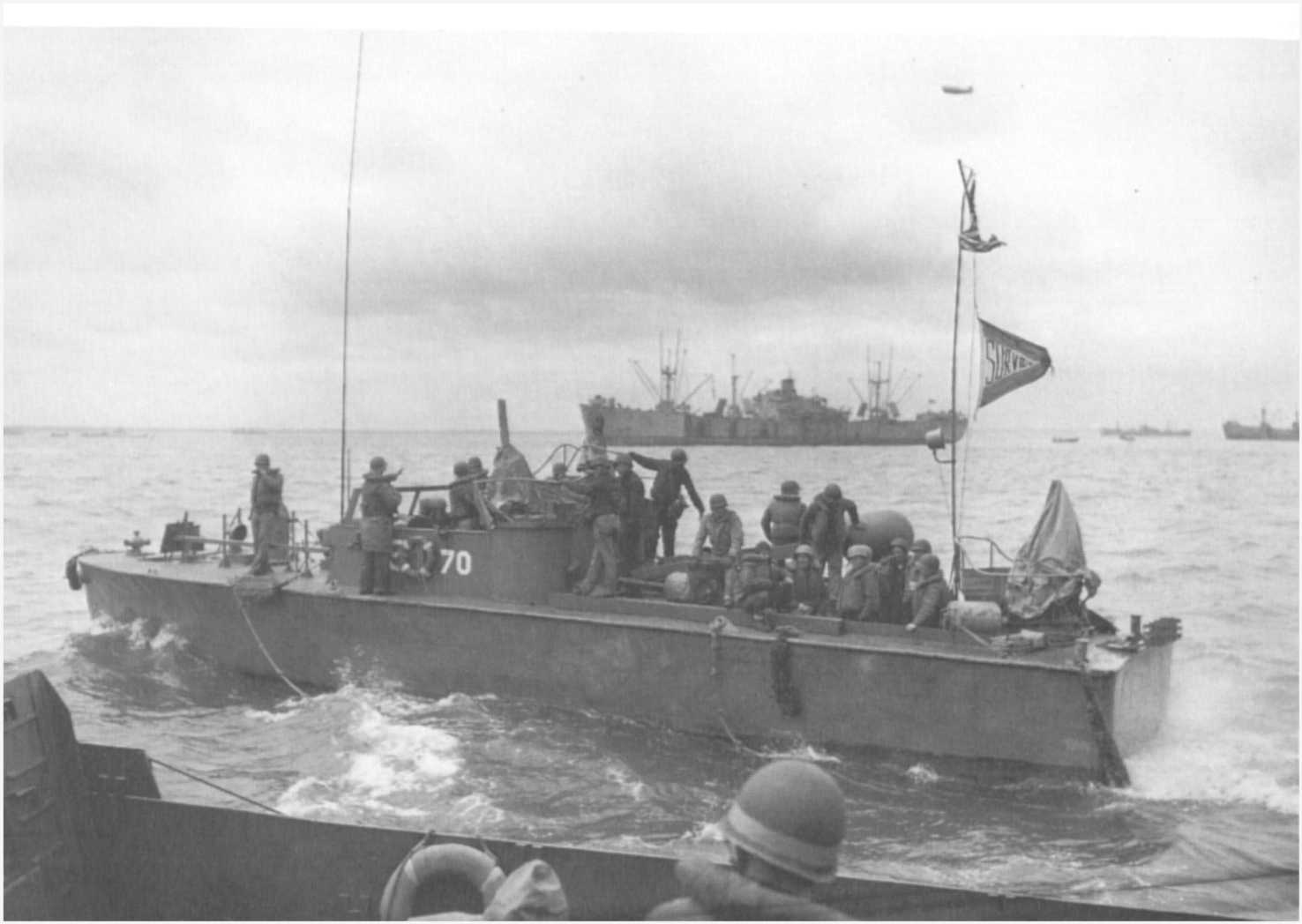
(details)the LCC 60 (Landing Craft Control) vessel equipped with tracking means, responsible for delineating the beach areas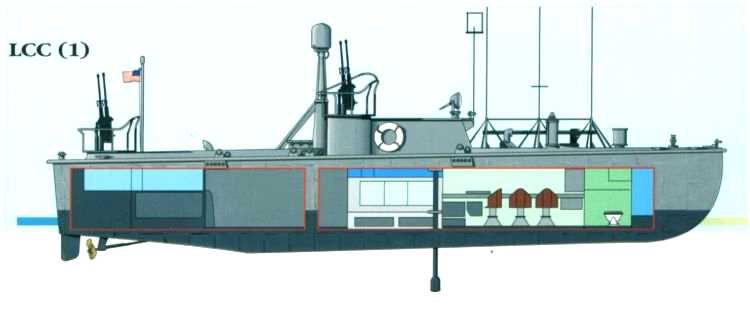

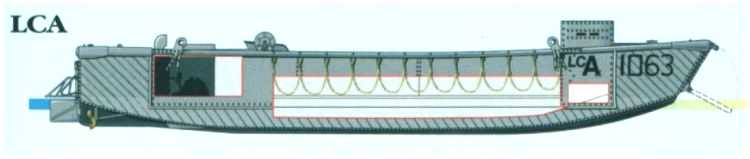
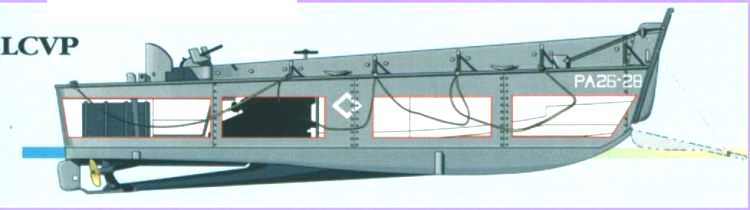

Because of the current, the small assault barges
have very often addressed East of their objectives
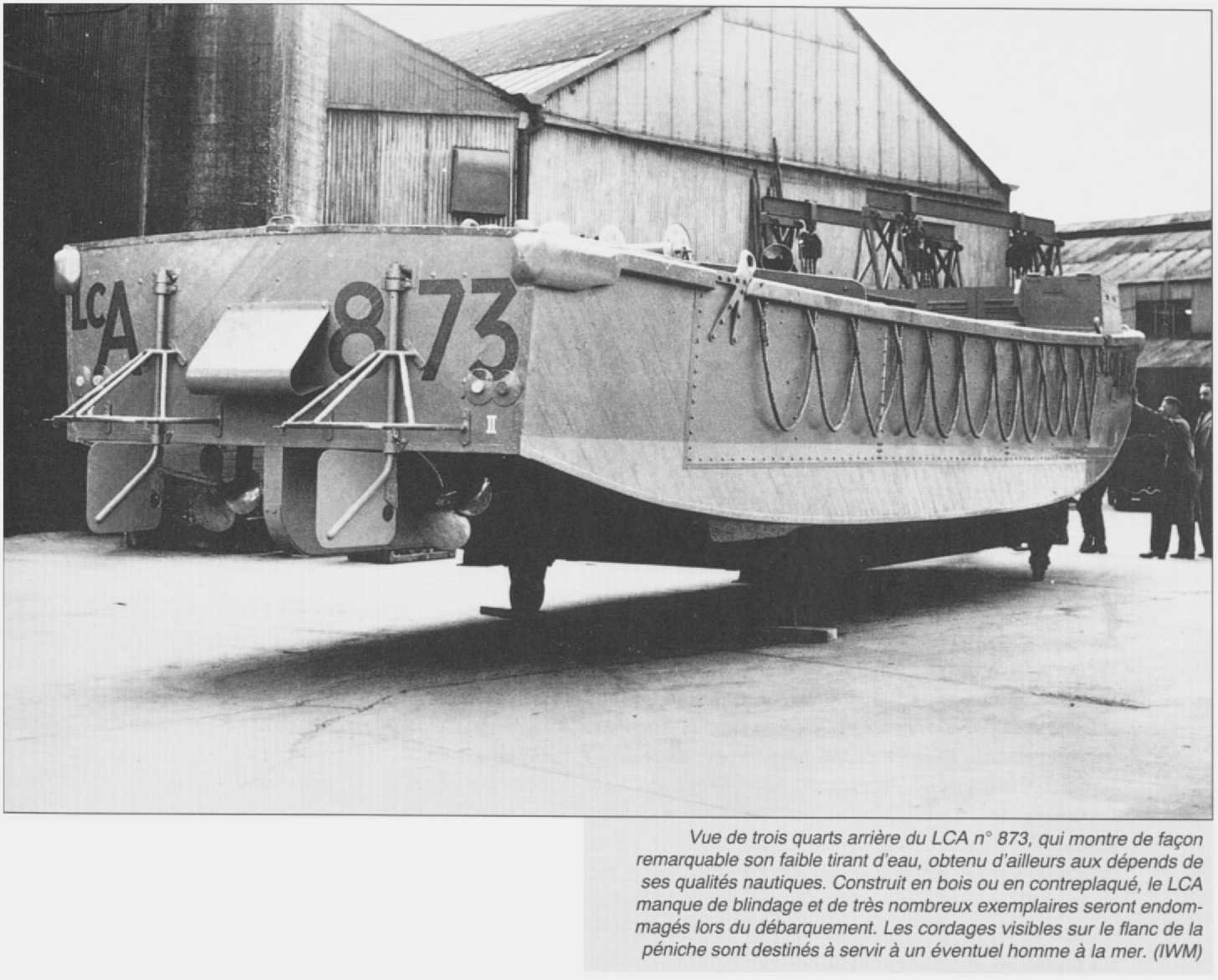
The effects of the swell were felt as soon as the barges proceeded. The LCVP and LCA were flooded immediately with sea packets and most had to use the pumps. In many barges, the pumps were not enough and the men had to get their helmets. The barges in pump trouble had to slow down and any attempt to increase speed and try to catch up led to even more water.
Only a few barges have been in serious difficulty. Of the 85 small LCVP barges, LCA, and LCM, which are expected to land on Vierville, only a few are officially known for sinking due to the sea, some from the start and others near the beach. Almost all the occupants of the cast barges were recovered by other boats, often after several hours in the water.
In most boats, soldiers were soaked in cold water packages and a large majority were victims of sea sickness. The crews of boats of the same training, carrying men who had had the same breakfast and training, were affected in a wide variety of ways, with the percentage of "malades" ranging from 0 to 100%. Men who had been iced by water, numbed by immobility in small and loaded barges, weakened by sea sickness, were in poor condition for the exhausting operations of the landing.
Similar handicaps had been encountered and overcome during the training exercises, and many men, even among those suffering from sea sickness, were used to it. An officer remembers his men chatting about "the chaos that the beach had to be after the bombing," and his personal impression was that "it looked like one of those Slapton Sands tactical exercises, and I couldn't help but think that it was going to be another one of those painful two-day missions, with a good hot shower at the end."
The program provided for the disembarkation of each assault unit in a specific area, where it had a defined mission to accomplish, such as destroying enemy defences or opening passages between beach obstacles or behind the beach.
Control vessels, the LCC, (the LCC30 for the "Jefferson" barges, and also the LCC50) were responsible for guiding the assault barges to the starting line 3500m from the coast, materialized by other control vessels at fixed stations, aircraft type PC or SC.
On Dog Red, there was PC1225 as "primary control vessel" and SC1353 as second "control vessel", but the latter seems to have been absent for an unknown cause.
On Dog Green, PC567 (to the west), PC568 (to the east) and later on, SC1332, were the "control vessel". They were to be in place around 5:15 a.m. to 4000 m. from the coast, and they also had shelling missions on the WN of Dog Green and Dog White.
Despite all the studies of currents on this part of the coast, all the visual aids to discover landmarks by panoramic photos, and all the experience of similar difficulties during the training exercises, many of the landing barges of the first waves arrived far away from their purpose, deported east. Often the large barges, which had significant power resources, drifted less with the current than the small LCMs and LCVPs that were surprised by the power of the current, not to mention the small DUKW amphibious trucks.
As the beaches of Vierville were the most westerly, they found themselves much less full of assault troops than the beaches of St-Laurent, Le Ruquet or Colleville. More than half of the landing craft planned for the assault on Vierville did not approach.
Smoke and dust along the beach, caused by bombardment, cliff fires and light morning fog, made it difficult to recognize landmarks as they approached the shore. In addition, one of the control boats in the Vierville area (Dog) drifted away from its anchoring point, which may have explained many of the difficulties in approaching this area.
Coastal currents were the main factor in the deviations. It was known that at rising tide, a lateral current was eastward, reaching a maximum speed of nearly 2.7 knots at 8 km from shore, with the west wind increasing that speed. The fact that the current was very strong on D-Day is confirmed in a report of the destroyer "Satterlee", who was sometimes forced to correct his heading from 20 to 30 degrees to keep his road.
Whatever the cause, a majority of the small barges approached east of the assigned beach area, both for engineers and infantry. The margin of error was generally a few hundred metres, sometimes much more, but this was sufficient to prevent the precise missions planned in advance. This was also sufficient to isolate units approaching an unknown area and therefore unable to properly estimate the enemy defences they were dealing with.
The difficulties were compounded by the separation of the sections of the same company. Either because of the delay of one of the ships, or because of the disagreement of the pilots seeking the benchmarks, several formations were broken causing very dispersed landings (e.g. the Cies B, D, F, G, H of 116th Regiment). In the conditions existing on the beach, the separation of the boats by two hundred meters of beach could easily lead to the complete isolation of a section.
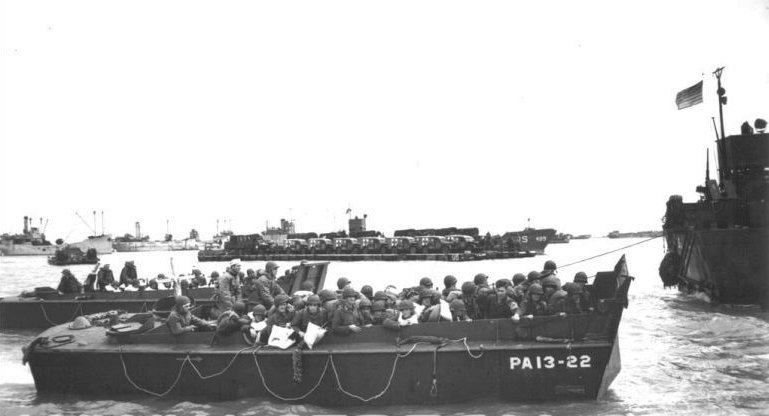

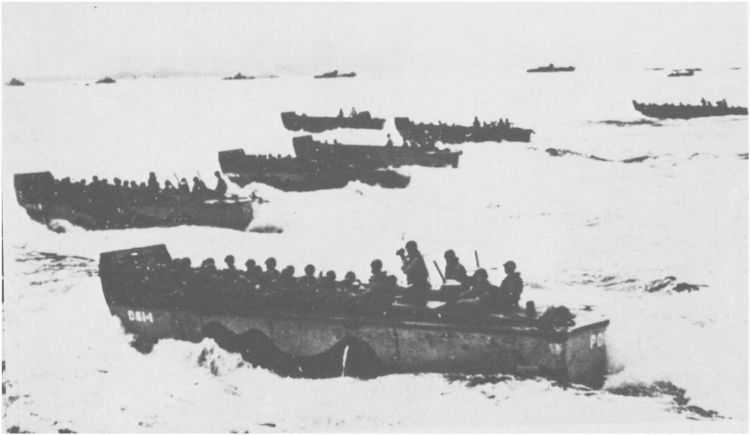
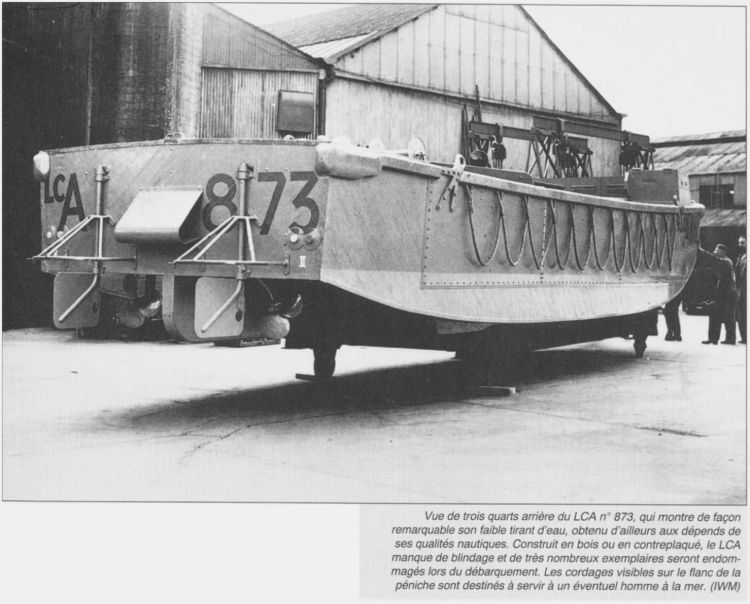
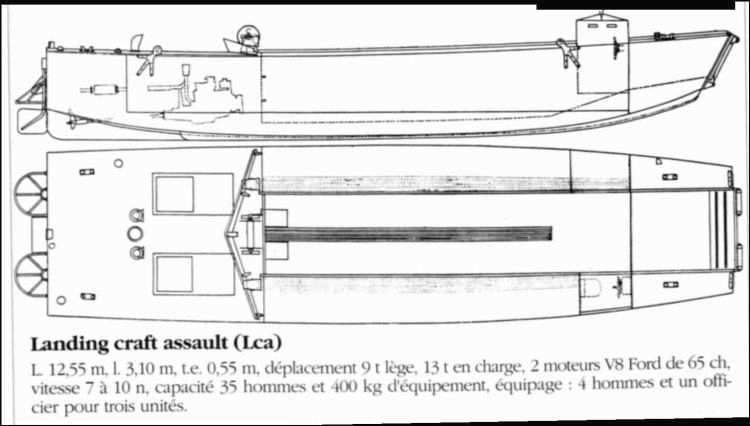


(testimony of Sergeant Slaughter who was part of the D/116 Cie on board the "Javelin Empire")
"We've climbed the league of assault boats. In order. Each has the place assigned during the long training sessions. That done, we were winched at the sea with the help of the bosses of the edge.
The Channel was agitated. She was so strong as to interfere with the manoeuvre when the ship had to be dehaled. A houseboat belonging, if my memories are good, to Company B, sank to peak, carried away by a pack of sea. The men on board were recovered in time.
Quickly, my houseboat started boarding water. Two-metre waves struck us, breaking through the bow or starboard. The pumps were insufficient to evacuate this body of water, and we all had to lend a hand with our helmets. The cold has invaded us. We shuddered, pierced to the bones by an icy wind. For my part, I tried to keep myself pretty dry by slipping inside my anti-gas cover, a kind of big plastic bag supposed to save us skin in case of a mustard gas attack. In fact, I started choking and I only won sea sickness...
The boats of our wave of assault formed a large circle, gathering before heading for France. The least we can say is that these ride towers have not brought us any comfort. And then, the flotilla was assembled, we all found ourselves aligned as for a parade, in tight formation. And the order fell: forward, walk! From then on, our wave of assault has rushed in this one-way path of destiny. The daily training was well done. On the other hand, the English homes that had welcomed us for twenty-two long months, with which many friendships or idyllus had been established...
The rumbling of our Diesel engines didn't encourage conversation. Besides, we had nothing to say to each other. I was really sick, transi by these icy jets of water and suffering from such a sea sickness that I wished only one thing, to find myself on the ground. As far as I can remember, no one on board seemed to think of avoiding the mission that had been entrusted to us. Our journey back to the United States was going well through Berlin.
At dawn (at about 6 a.m.), the armada appeared to us. The French coasts, ravaged by flames and crowned with smoke, became more precise. At six o'clock, the heavy parts of the allied ships opened fire. This was certainly the largest artillery dam in history. However, the noise of our engines stifled almost the crash of the guns and the long whistle of their projectiles running towards the earth. There was nothing to suggest that this coast would begin a holocaust. There was no state of soul in our home about this, I can tell you! Everything around us had something to reassure us. A little too much, to the point of imagining a landfall without history, objectives achieved and a return home for Christmas. These artillery fire, which was designed to forge a morale of steel, had the effect of at least making us forget how cold and sick we were.
It was approximately a thousand metres from the coast that we took on board three survivors of a barge which, obviously, had been driven by a blade a little stronger than the others. I don't know what unit they belonged to anymore, nor do I remember how long they stayed at sea. These lucky guys were happy to have gotten away with this bad mess, so go see if it wasn't back to jump better! We let their unfortunate companions float over the waves, slammed in their lifejacket. We had no room for them.
On starboard, the battleship "Texas", a giant ship, set fire to all its flights of 356 watering the coast. An infernal bust! In a few minutes, the swell, caused by the recoil of the pieces, arrived to us, like a ram, we thought capsized. One could clearly see the impact of the huge shells, nearly a ton, ravaging their targets (in fact the 356 of Texas were firing at the peak of the Hoc). P-38 double fuselage fighter-bombers were flying over us, a reassuring protection against any possible Luftwaffe attack. They confirmed this false sense of security, which led us to believe that, finally, it would be cake!